
Comparing Yourself to Who You Were Before Cutting Back
Missing who you were before cutting back is really comparing a life to a cropped photo. What the highlight leaves out, and how the new you gets its reps.
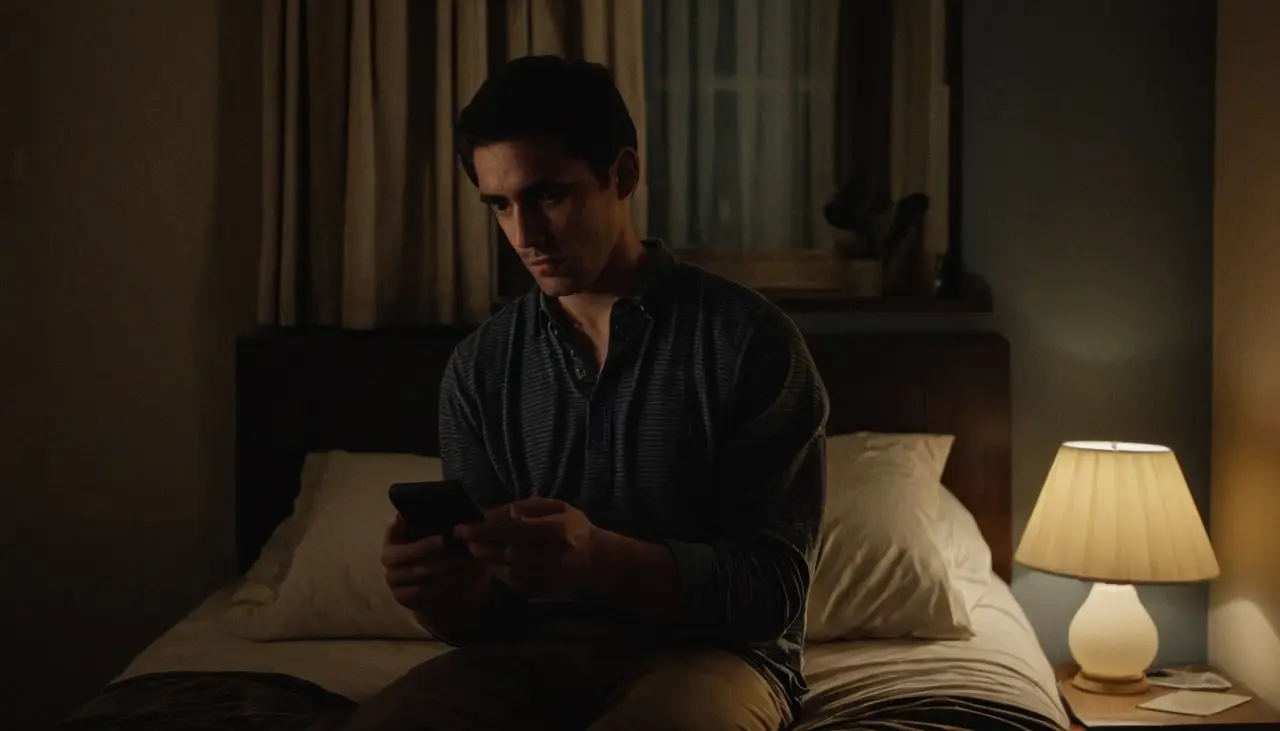
It surfaces around ten at night, usually. A photo from three summers ago, thumb still scrolling, and there you are on somebody's back porch mid-laugh, drink sweating in your hand, the whole frame gold with that late-light everyone looks good in. You stop. You look at that person for a while. And a quiet voice says the thing it always says: that one was more fun than the one holding the phone right now.
The loop has a name in your head even if you have never said it out loud. Old me versus new me. The old one was louder, quicker, easier in a room. Knew what to order. Knew when to lean in. The new one is careful, a little slower to warm, still learning where its hands go at a party. And the photo seems to settle the argument before you have finished having it.
But look again at what the photo actually kept.
It kept the laugh. It did not keep the drive home, or the text you should not have sent, or the flat gray Sunday spent apologizing to yourself. A camera is a generous editor. It saves the one gold second and quietly loses the four hours on either side of it, the loud part, sure, but also the part where you were already tired of being on, already doing math on how you would feel tomorrow. Memory works the same way. It hands back the highlight and files the rest somewhere you have to go looking.
Even sleep did this to you and you never saw it. A drink near bedtime pushes down the dreaming kind of sleep early in the night, then lets it rush back in the small hours, and researchers describe REM rebound in the second half of the night, tangled up with vivid dreams and a broken, restless kind of rest. So the version of you in the photo went home and slept badly and woke at four feeling scraped, and none of that made it into the frame. The gold light did. That is the whole trick of the comparison. You are not comparing two lives. You are comparing a life to a photograph of a life, and the photograph has been cropped by something that wanted you to keep drinking.
Here is the part the loop hides under all that gold.
The old you had thousands of reps. It had walked into that kind of room a hundred times and knew the choreography by heart, the timing, the ease, the exact moment to loosen. The new you is a beginner. Of course the beginner feels less fluent. You are not less yourself. You are earlier.
And underneath I miss drinking there is almost always a more honest, more specific sentence waiting. Sometimes it is I miss belonging without effort. Sometimes I miss the loud rooms. Sometimes I miss the one hour a day I was allowed to stop watching myself. Sometimes it is not the drink at all, but a friendship that only ever met at the bar, or a creative ritual you cannot yet picture doing sober, or the plain animal relief of not planning. Those are real losses. They are just not the loss you think they are, and they do not all get solved by pouring one.
So the feeling turns out to be information, not an instruction. It is telling you what you are hungry for. It is not telling you to go back.
None of this makes the ten-o'clock ache disappear, and no one honest would promise it will. What you can do is stop letting a cropped picture cast the deciding vote.
Compare the whole day, not the highlight. When the photo says that one was more fun, answer it with the morning that came after, the sleep, the money, the message, the low private hum of dread. Not to punish the old self. Just to see the uncropped frame.
Name the loop when it starts. This is the comparison loop is a different sentence than this is true. Said out loud, even under your breath, it puts a little air between the feeling and the phone in your hand. You do not have to litigate your entire personhood at ten at night on a scroll. You are allowed to close the app and let the argument wait for daylight.
And give the new self its reps. One dinner, one Friday, one hometown visit, one night you host instead of hide, that is how a stranger becomes a self. Fluency is not a trait you drank your way into. It is repetition, and you are simply at rep number four.
If the comparison shows up in particular places, there are quieter pieces for the particular ache: feeling jealous of friends who drink normally, FOMO when you are cutting back, feeling different from everyone at the party, the weekend that stopped feeling fun, the guilt the morning after, and, if the loop hardens into an actual pull to pour, handling cravings and urges.
There is a line, though, where this stops being a late-night mood and becomes something to hand to another person.
If the comparison curdles into weeks of flat, heavy days, if it slides past I miss the old me into I cannot stay safe as this one, that is not a scroll to close. That is a call to make. Reach a licensed clinician, and if thoughts of harming yourself are anywhere in the loop, call or text 988 now, tonight, before you finish the thought. And if your drinking is heavy or daily, do not white-knuckle a sudden stop on your own; stopping cold after heavy daily drinking can be genuinely dangerous, and a stretch without alcohol that brings on shaking, sweating, or confusion is a medical emergency, so call 911 or the free, confidential SAMHSA line at 1-800-662-HELP.
Part of what keeps people quiet in exactly these weeks is shame, the sense that needing help with the feeling of cutting back is somehow the real failure. It is not. Reaching out is the uncommon part, not the weak part.
So the next time the photo surfaces around ten, try this. Finish the sentence it started. I miss the old version because I miss and let the real word land, whatever it is. Then do the small thing that answers the real word, not the drink the loop was pointing at. The person in the gold light was not more real than you. Just better lit, in a photo that forgot the rest of the night. You are the one who gets to keep the rest of the night.
This is general education, not medical advice or a diagnosis, and questions about your own drinking belong with a licensed clinician. If thoughts of self-harm ever enter the loop, call or text 988 right away.
- Social events & holidays
How to Handle FOMO When You're Cutting Back on Drinking
FOMO is rarely the whole night — it is the people, the place, the drink, or the feeling. Name which corner is hot, give it one small move, and set the phone down.
- Social events & holidays
How to Handle Thanksgiving When You're Cutting Back on Drinking
Thanksgiving is an all-day drinking cue: plan the timeline, family lines, and first sober holiday pressure before the table fills.
- Cutting back & moderation
What Is Mindful Drinking? The Practice Behind the Buzzword, Explained
Mindful drinking means deciding when, why, and how much you drink before the room decides for you. The three parts, five concrete moves, and who it fits.
- Social events & holidays
How to Handle Summer BBQs and Cookouts When You're Cutting Back
A cookout has no clock, so bring your own: pick your first drink, your spot, your line, and your exit before you go. Decide once, not forty times.
- Social events & holidays
Drinking at a Wake or Funeral When You're Cutting Back
You can decline the drink and still be there for the goodbye. How to handle the glass at the door, the toast, and the late-night kitchen while cutting back.
- Quitting & sobriety
Completed Treatment And Stayed Sober For About Three Months
A post-treatment support reflection for people who stayed sober for about three months and feel vulnerable again, without relapse prediction or a plan.


Be the first to hear when Clero launches.
Join with email only. Clero is still in development, so this is educational content today — not treatment, a prescription request, or medical advice.
First to hear at launchLaunch news only — no spamUnsubscribe anytime