
Why Do I Crave Alcohol After Exercise?
Exercise and alcohol share the brain's reward wiring, so a workout can prime a craving — and habit wires the two together. How to tell which cue is pulling.
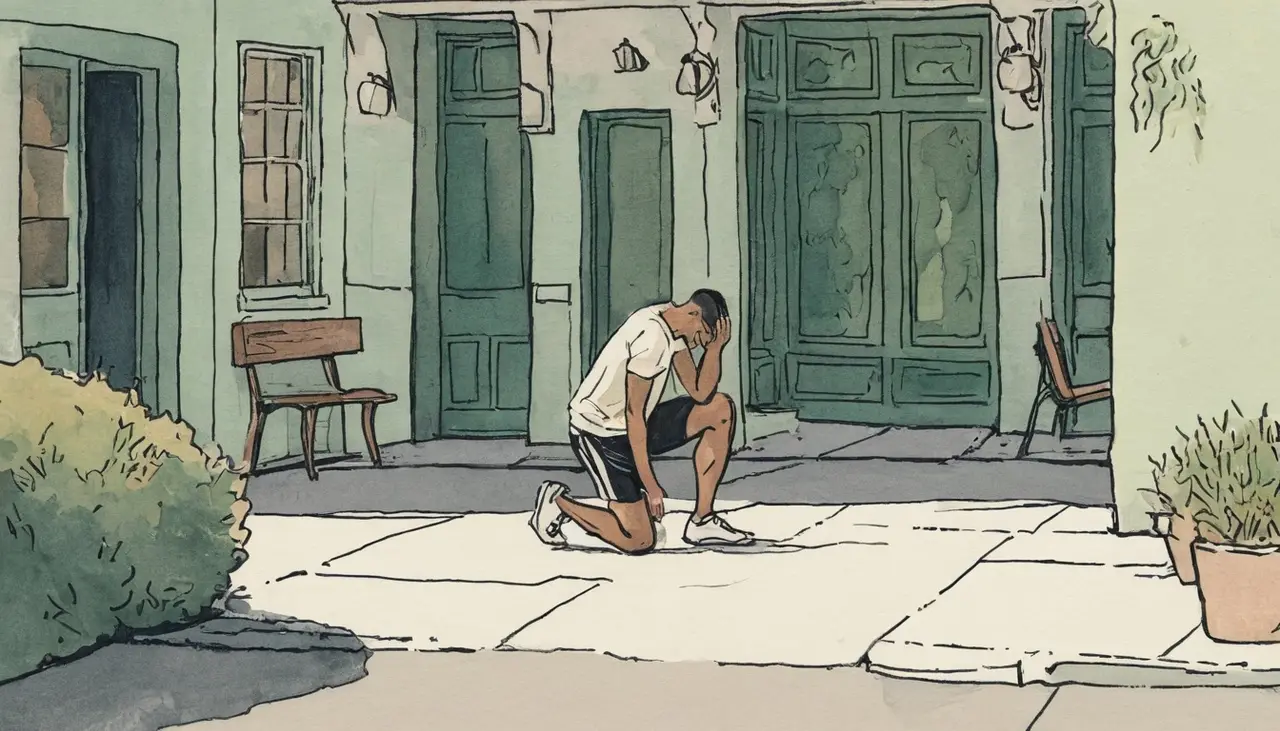
Exercise and alcohol pull on some of the same wiring in the brain. That is the short version of why a workout can end with a craving for a drink — and why the craving feels so contradictory, since the workout was supposed to be the healthy part of the day. Before that pull is worth judging, it is worth understanding. Most of the time it is not your body flagging a medical problem; it is a reward system doing exactly what it learned to do.
What a hard workout does to your reward system
A tough session does more than tire you out. It briefly lifts the brain's own feel-good chemistry — the mix of endorphins and dopamine behind what people call a runner's high. That lift is real, and it is part of why exercise is a habit worth keeping.
Here is the overlap that matters. Alcohol leans on some of that same machinery. The American Academy of Family Physicians explains that the body's opioid receptors — the same endorphin system a workout stirs up — likely help produce the pleasant effects of a drink. That is the reason a medication like naltrexone, which sits on those receptors and blocks them, can make alcohol feel less rewarding. So when a workout leaves that reward system warm and primed, a drink is one of the fastest, most familiar ways the brain knows to keep a good feeling going.
There is a second piece, and for a lot of people it is the bigger one: a downshift. After intense effort your nervous system is revved — heart rate up, still buzzing. Alcohol works in the opposite direction. NIAAA's overview of alcohol and the human body describes it acting broadly on the central nervous system as a depressant — it slows things down. So the craving can be the brain reaching for a known off-switch after being turned all the way up.
Why it is usually a cue, not a need
The third mechanism is the quietest and the most powerful: learning. Reach for a drink at the end of enough workouts — the run club that finishes at a bar, the gym that shares a parking lot with the liquor store, the reward you promised yourself for showing up — and the two get wired together. After that, the cue does the work. The end of the workout arrives, and the brain fires off the prediction of a drink before you have consciously decided anything. Nothing is wrong with you when that happens. It is the same conditioning that makes a certain song remind you of a certain person.
This is where exercise plays a strange trick. Because the workout sounds responsible, it can become evidence in your own defense: I work out, so this can't be a problem. A healthy routine can still have an alcohol cue bolted onto the end of it. The workout can be genuinely good for you and the attached cue can still deserve a look. Those two things are not in conflict.
Is my body actually asking for something?
This is the obvious next question, because the craving can feel deeply physical — you are thirsty, hungry, wrung out, still keyed up. It is worth being straight about it. Your body may well be asking for something after a hard effort: water, food, rest. But those needs are answered by water, food, and rest. A pull specifically toward alcohol is not a hydration signal or an electrolyte deficit talking; nothing in a drink refills what a workout drained. When the craving points at alcohol in particular rather than at fluid or fuel, that is the reward-and-cue system, not a mineral your body is short on. The question running the other way — what the drink then does to tomorrow's session — is covered in drinking and your cardio fitness or workouts.
That distinction is a useful thing to test, and you can do it with a short mental checklist right when the craving lands:
- Am I actually thirsty or hungry — and does water or food take the edge off?
- Am I keyed up and looking to come down from the intensity?
- Am I being cued by a group, a route, a time of day, or the season itself?
- Am I chasing a reward for finishing something hard?
- Does this happen after every workout, or only certain ones — the intense ones, the social ones, the ones on a particular route home?
The point is not to score yourself. It is to notice which lever is really being pulled, because a thirst cue, a social cue, and a decompression cue each have different, low-effort answers. And you do not solve any of them by buying a recovery drink, an electrolyte mix, or a new training plan because an article made the craving sound technical. The cheap first move is clarity about the pattern.
What the evidence can and cannot tell you
The research is solid on the general picture: exercise and alcohol share reward circuitry, alcohol quiets an overstimulated nervous system, and repeated pairings turn ordinary settings into cues. What no study, and no lab test, can do is reach into your particular evening and name which of those is driving your craving after your workout. That part is individual — it depends on your history, your routines, the people you train with, and how tired and underfed you happen to be. So the honest handoff is this: the mechanism explains why the pull exists in general; only watching your own pattern tells you which version is yours.
Testing the pattern instead of white-knuckling it
Before your next workout, pick one small thing to observe rather than one rule to enforce. Willpower at the moment of craving is the hardest and least reliable place to intervene; the cue is easier to study than to resist.
- Notice when the craving shows up — before you leave the gym, or only once you pass the usual bar or store.
- Eat something normal afterward before deciding anything, and see whether the pull softens.
- Take a different route home once, and watch whether the cue travels with you or stays with the old road.
- Separate the workout from the group drink a single time — go, then head out — and see what is left of the craving.
If the craving eases when you change the route, the timing, the group, or the reward, you have found the hinge, and hinges can be adjusted. If it stays just as strong no matter what you change, that is also real information — and it points toward a pattern worth more than a self-experiment.
When the pattern is worth taking seriously
Take the craving seriously if it repeatedly ends with you drinking more than you meant to, if you find yourself scheduling workouts around the drinking that follows, if the social workout always resolves into alcohol, or if you keep drinking after promising yourself you would not. Those are not moral failures; they are signs the cue has more grip than a route change will fix.
If drinking keeps overriding what you actually intended, that is a fair thing to bring to a licensed clinician — this is the kind of pattern they help sort out, including whether something like medication has any role for you. If you do not already have someone to ask, Clero can connect you with a licensed clinician by telehealth to talk it through. And keep two harder lines in view: if you ever feel unsafe with yourself, call or text 988 for the Suicide and Crisis Lifeline; and if a stretch without alcohol has ever brought on shaking, confusion, or a seizure, treat that as a medical emergency and call 911 or go to an emergency room — that is not something to manage with willpower or a plan.
None of this makes exercise suspect. It only asks a narrow question: has a drink quietly attached itself to the end of your workout, and does that attachment keep winning? If the answer is yes, the workout is not the problem to solve — the cue is.
This is general education, not medical advice; if the craving is part of a drinking pattern you cannot steer on your own, or a break from alcohol ever leaves you physically unwell, talk with a licensed clinician.
- Body & physical health
Does Alcohol Cause Anemia? How Drinking Affects Your Blood
Heavy drinking can cause anemia by disrupting blood-cell production and nutrition. Why fatigue cannot diagnose it, and which bleeding signs need urgent care.
- Body & physical health
Why Do I Crave Salt After Drinking Alcohol or When Hungover?
Salt cravings after drinking are real: alcohol flushes sodium and fluid, and your brain rewards salt. What helps when you're hungover — and what doesn't.
- Mind & mood
Can Alcohol Cause Panic Attacks? Why They Hit After Drinking
An answer-first explanation of alcohol rebound anxiety, 3 a.m. panic, medical red flags, and how to read the pattern without self-diagnosing.
- Body & physical health
Can You Develop Alcohol Intolerance? Why Drinking Feels Different
Yes, someone who drank comfortably for years can start reacting badly. Intolerance hits during or soon after a drink; a hangover arrives hours later. How to tell.
- Cravings & triggers
Why do I crave alcohol?
Alcohol cravings are your brain's learned shortcut — cues, stress, and habit loops firing together, not weak willpower. What drives the pull and what helps.
- Cravings & triggers
Why Do I Crave Alcohol More in the Summer?
Summer packs your week with drinking cues — patios, cookouts, long evenings — and hot nights erode the sleep that helps you resist. Why urges climb in July.


Be the first to hear when Clero launches.
Join with email only. Clero is still in development, so this is educational content today — not treatment, a prescription request, or medical advice.
First to hear at launchLaunch news only — no spamUnsubscribe anytime