
Waking Up at 3am After Drinking
Why some people wake in the middle of the night after drinking, how to read the pattern, and when symptoms need care.
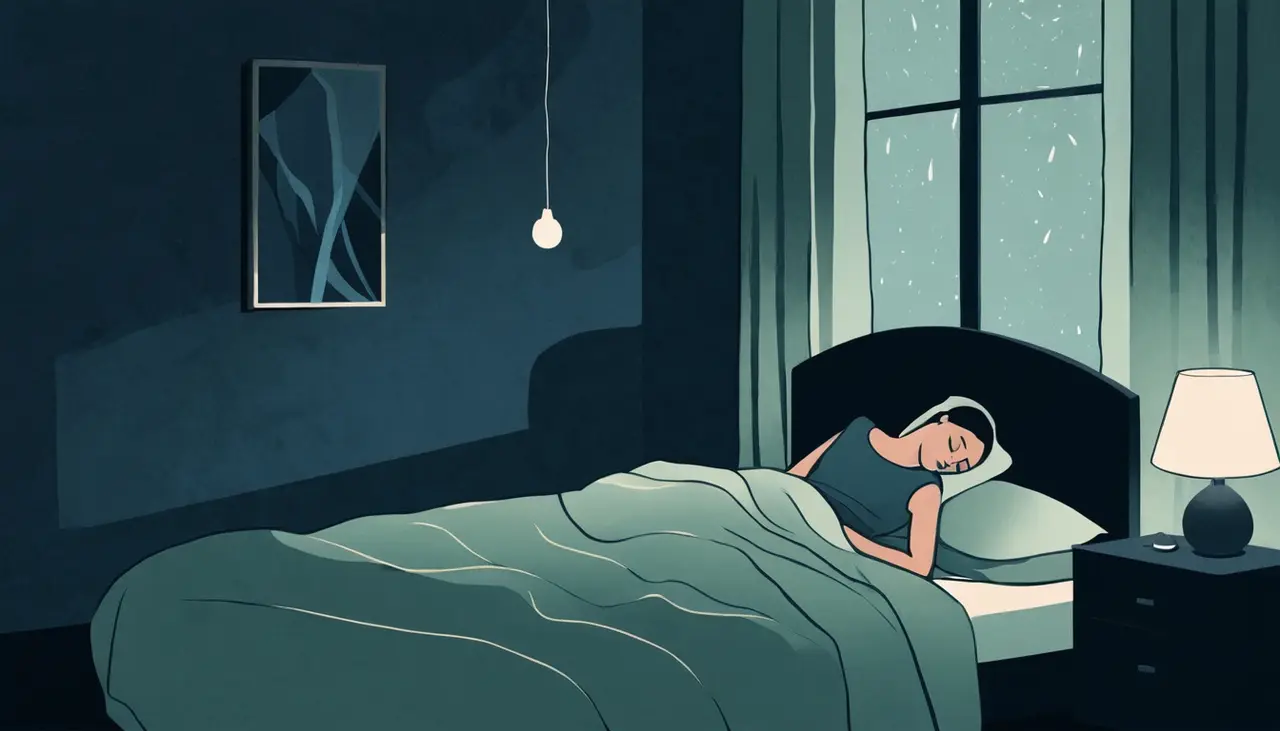
A drink is one of the few things that can put you to sleep faster and then wake you at 3 a.m. — and both effects trace back to the same glass. The falling-asleep part is easy to notice and easy to like. The waking-up part arrives a few hours later, sharp and unwelcome, often with a racing heart or a mind that will not switch off. So why does alcohol hand you sleep and then take it back in the middle of the night?
The two halves of a drinking night
The clearest way to picture it is to split the night in two.
In the first half, alcohol acts as a sedative. It quiets the brain's activity, which is why sleep often comes quickly after drinking. NIAAA's overview of alcohol and the body describes how alcohol acts on the central nervous system and reshapes normal sleep. One of the things it pushes down early on is REM — the dreaming stage of sleep.
The second half is where the trouble is. Your body clears alcohol at a fairly steady pace, so a few hours after your last drink the sedative effect is fading. While it was working, your brain didn't sit still: to keep functioning against the drug, it turned up its own stimulating signals. When the alcohol finally clears, those signals are left running with nothing to push against. Researchers reviewing the neurochemistry of that shift describe a rebound into an over-alert state — restlessness, anxiety, and wakefulness as the brain overshoots. On top of that, the REM sleep suppressed earlier comes back with interest. A review of alcohol and disturbed sleep found that alcohol near bedtime suppresses REM in the first half of the night and is followed by a REM rebound in the second half, tied to vivid dreams or nightmares and a night that keeps breaking apart.
Add those together and 3 a.m. is roughly when the sedative has worn off and the rebound is peaking. That is the wake-up.
The rebound is not the only thing that can pull you out of sleep, though. If the thing that wakes you is your bladder rather than an over-alert brain, that runs on a separate mechanism — why alcohol has you peeing all night covers it.
What the evidence can and can't tell you
The trade — easy sleep now, broken sleep later — shows up even when the total hours look fine. A peer-reviewed review of alcohol and sleep problems puts it plainly: alcohol speeds how fast you fall asleep, but the back half of the night turns lighter and more fragmented, so overall quality drops even when total sleep time appears unchanged. You can spend eight hours in bed and still wake unrested.
There's a wrinkle worth knowing if you drink most nights: the sedative effect doesn't last. The same review notes that tolerance to alcohol's sleep-inducing effect can develop within about three to seven days of regular use. The "it helps me sleep" reason fades faster than most people expect, while the 3 a.m. disruption stays.
Now the limits, stated as facts. Not every 3 a.m. wake-up is about alcohol. Alcohol also relaxes the muscles of the upper airway, which can worsen snoring and obstructive sleep apnea and cause dips in oxygen overnight — sometimes in people who don't normally snore. If you wake gasping or choking, or a partner notices pauses in your breathing, that points somewhere alcohol timing alone won't explain. Stress, pain, hormones, and medications overlap too. The drinking pattern is one variable to name clearly, not the whole answer.
The question most people ask next
Two follow-ups come up almost every time.
The first: is one glass enough to do this, or only heavy nights? A single drink close to bedtime can still nudge the architecture of the night — the effect isn't reserved for heavy drinking. What heavy or daily drinking adds is a bigger rebound, because the brain has adapted harder to being sedated night after night. That's also where the middle-of-the-night wake-up starts to shade into something more serious (below).
The second: if I cut back, will my sleep just fix itself? Often not right away, and that surprises people. Insomnia is common in heavier drinking, and a framework review of alcohol and sleep found that disturbances — taking longer to fall asleep, more waking, less deep slow-wave sleep — frequently persist well into the early weeks of cutting back rather than clearing in the first month. Knowing that ahead of time keeps a rough patch from reading as failure.
What you can actually do about it
None of this is a cure, and none of it is something to buy. It's about lining up the timing and reading the pattern.
- Move your last drink earlier. The wake-up is driven by alcohol clearing mid-sleep, so finishing earlier gives more of that clearing time to happen before you're deeply asleep, not during it.
- Track it by night, not by feel. For a week, note the nights you drank, roughly how much, when you stopped, when you woke, and any symptoms. Counting in standard terms helps — NIAAA defines a U.S. standard drink as 0.6 fluid ounces, or 14 grams, of pure alcohol. The point is to see whether the 3 a.m. wake really tracks with drinking or shows up regardless.
- Don't turn the clock into a verdict. Checking the time at 3 a.m. tends to start the worry spiral that keeps you up. If you're wide awake, get up, keep the lights low, do something dull, and go back when you're sleepy — rather than lying there arguing with the ceiling.
When it's more than a rough night
There's a line worth watching for. A racing heart at 3 a.m. can just be the rebound. But if reducing or stopping alcohol brings on shaking or tremor, heavy sweating, agitation, confusion, hallucinations, or a seizure, that's not a sleep problem — MedlinePlus lists those as signs of alcohol withdrawal, and seizures, severe confusion, hallucinations, or an irregular heartbeat warrant emergency care. Call 911 or go to an emergency room. If any night brings thoughts of harming yourself, call or text 988.
This is also the reason not to white-knuckle a sudden stop if you drink heavily every day: in that situation, stopping abruptly can be dangerous, and it's worth talking with a clinician before you change anything. If you don't have someone to ask, Clero can connect you with a licensed clinician by telehealth to talk through your drinking and whether a medication for alcohol use disorder fits — a separate question from the sleep itself.
Most people who might benefit from one of those medications are never offered it. Family-medicine guidance notes that medication for alcohol use disorder is broadly underused — an awareness and access gap, not a sign the treatments don't work.
A short FAQ
Is waking at 3 a.m. after drinking a sign of withdrawal? Usually it's the ordinary rebound described above, not withdrawal. It crosses into withdrawal territory when cutting back brings shaking, sweating, confusion, hallucinations, or a seizure — those need urgent care, not a sleep fix.
Will a sleep aid solve it? This page doesn't recommend sleep aids or doses. Mixing sedatives with alcohol carries its own risks, so that's a question for a clinician or pharmacist who knows your health and your drinking.
The honest landing is small: alcohol buys you the front of the night and charges interest on the back of it. Watching when the wake-up happens — and whether it tracks your drinking — tells you more than any single sleepless morning can.
This page is educational and isn't medical advice. If a middle-of-the-night wake-up comes with withdrawal signs like a seizure, confusion, or hallucinations, call 911 or go to an emergency room; if you have thoughts of harming yourself, call or text 988.
- Mind & mood
Alcohol and Brain Fog
Brain fog after drinking is mostly a wrecked night of sleep, not alcohol still in your blood. Why it lingers some mornings, and what else stacks into it.
- Mind & mood
Alcohol and Vivid Dreams When You Cut Back
Vivid dreams after cutting back are usually REM rebound, not withdrawal. Why the dreams get so loud, how long the phase tends to last, and the signs that need care.
- Body & physical health
Drinking and Tinnitus or Ringing in Your Ears
Ringing after drinking is usually a short spike, and the loud bar and thin sleep may matter as much as the alcohol. How to read your pattern, and when it's urgent.
- Cutting back & moderation
How to Restart a Cutback Week After a Bad Night
One heavy night doesn't blow a cutback week — the pattern absorbs a bad data point. Steady the body first, review tomorrow, and rejoin the plan you already have.
- Body & physical health
Can Alcohol Damage Your Heart? Understanding Alcoholic Cardiomyopathy
How chronic heavy drinking can weaken the heart muscle, how holiday heart differs, and when heart symptoms need urgent care.
- Understanding your drinking
Wanting a Drink in the Morning: What It Can Mean, Without the Panic
No, a morning craving is not the same as dependence — but relief drinking is medical information. What the timing can mean, and why stopping abruptly can be risky.


Be the first to hear when Clero launches.
Join with email only. Clero is still in development, so this is educational content today — not treatment, a prescription request, or medical advice.
First to hear at launchLaunch news only — no spamUnsubscribe anytime