
Dry January When You Slip
One drink does not delete the days you already did. Salvage what they taught you, count the slip in plain drinks, and pick the next hour, not the next month.
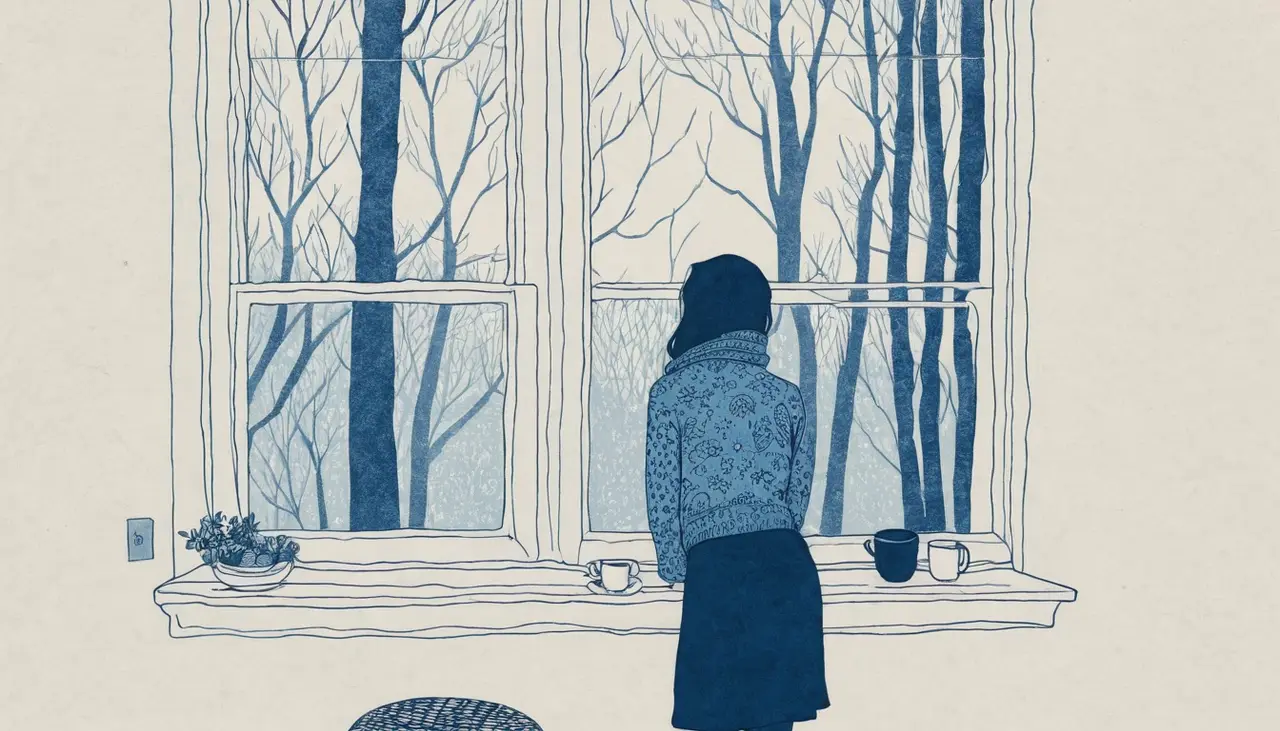
It is the morning after. You had one drink, or maybe several, somewhere around day eleven of a month you had promised yourself would stay dry. The glass is in the sink. And the voice in your head has already done the math: the streak is broken, the month is ruined, you might as well wait and start clean next month. You are not hungover from the drink so much as from that verdict.
Here is the turn. That verdict is a story, not a fact — and it is the wrong story. A dry month is not a pane of glass that shatters the moment it cracks. It is closer to a row of knitting. You dropped a stitch. Dropping a stitch is not the same as unraveling the sweater, and you do not have to start the whole thing over to pick it back up. What follows is a way to do exactly that, one hour at a time.
First, take the all-or-nothing story off the table
The pull to restart from zero is not weakness and it is not vanity. It comes from how streaks work on us. A running count feels clean and total, so a break in it feels total too — as if the eleven days you already did have been deleted. They have not. Nothing that happened before the drink got erased by the drink.
That black-and-white flip has a name in the research on relapse — treating one lapse as proof the whole effort has collapsed, which then makes another drink feel pointless to resist. Naming it is most of defusing it. The month was never a pass-fail test you either aced or failed. It was information-gathering, and a slip is just more information.
So the framework here is small on purpose. Call it the Next Right Hour. When the whole month feels blown, you shrink the frame until it is manageable — not the streak, not tomorrow, just the next hour and what you do in it. Four moves, in order.
Salvage what the eleven days already taught you
Before you decide anything about the rest of the month, take five minutes and mine the days you did complete, because a slip makes them feel fake and they are not. If you went six, eleven, eighteen days without a drink, those evenings happened. You learned which nights were hardest, which swap actually worked at 8pm, who you could text, and what you genuinely did not miss.
Write down three things, plainly:
- What was easier than you expected?
- What was harder than you expected?
- What is one thing from those days you want to repeat tonight?
Do it now, before the story convinces you there is nothing to keep. This is the stitch you are picking back up — the thread was never cut, it just needs finding again.
Count what actually happened, without the insults
The morning-after voice deals in blurred absolutes: "I blew it," "I had a bunch." A slip is easier to learn from when you count it in plain units instead. NIAAA describes a U.S. standard drink as 0.6 fluid ounces — about 14 grams — of pure alcohol. If the slip was one glass of wine you sipped at dinner, that is a very different night from a session that kept going, and lumping them together as "I drank" hides the difference you most need to see.
You can also describe the slip using the Centers for Disease Control and Prevention (CDC) definition of "moderate": two drinks or fewer in a day for men and one or fewer for women. That category and the standard-drink unit help describe what happened; neither tells you whether a particular night was harmless. No single amount is safe for every person or harmful for every person. What a given number does to you rides on how much and how often you drink, your body size and sex, your genetics, what else you take, and what your liver and the rest of you are already carrying. So use the count to see your night clearly, not to hand yourself a grade.
Do this: write one sentence naming what you actually drank, in drinks. Not to punish the number — to stop letting a vague "a bunch" run the story.
Choose the next hour, not the whole month
This is the core move, and it is deliberately narrow. The morning-after brain wants to relitigate the entire month before breakfast — restart or keep counting, moderate or quit, was the whole thing a failure. You cannot answer those on no sleep and full shame, and you do not have to. Pick only the next hour.
In practice that looks like the smallest possible next action:
- Eat, drink water, sleep if you can. A steadier body argues less catastrophically.
- Take the same day off again today. Whatever the count says, another alcohol-free day is available to you right now, and it is worth more than a clean number.
- Tell one person, if the secrecy is the heavy part. Shame grows in private. NIAAA names stigma as one of the most consistently reported barriers to getting help for drinking — and the version that runs quietly in your own head counts too.
- Leave the big verdict for later. Whether you restart the count, keep counting the days you did, shift to a moderation goal, or stop the challenge and get support is a real decision — but it is a rest-of-the-week decision, not a 7am one.
Get one small right hour and the next one is easier to reach. That is the whole mechanism. You are not rebuilding the month; you are knitting the next stitch.
When one rough morning is telling you something bigger
Here is the honest admission this framework needs: sometimes the slip is not a dropped stitch. Sometimes it is a signal that the drinking underneath the challenge is heavier than a self-directed month can hold, and no amount of reframing changes that.
Pay attention if the slip did not stop at one, if you keep drinking more than you meant to, or if this is the fourth "next month" in a row. And there is a safety line that overrides all of the above: if you drink heavily most days, stopping suddenly can be genuinely dangerous, and a white-knuckle restart on your own is the wrong move. If a past stretch without alcohol ever brought on shaking, sweating, a racing heart, confusion, or a seizure, that is a medical emergency — call 911 or go to an emergency room, and do not try to power through it. For substance-use support any time of day, SAMHSA's National Helpline (1-800-662-HELP) is a free, confidential 24/7 referral line.
If what has stalled you is the sense that "seeing someone" means accepting a label you are not ready for, the step can be smaller than that. Clero is built to make the first conversation an easy one to start — describing the slip and the pattern around it to a licensed clinician by video, from home, without having to call yourself anything. Most people whose drinking might warrant a medication are never even offered that conversation; having it is the uncommon, capable move, not the failing one.
The next stitch
So: name the all-or-nothing story and set it down. Salvage what the completed days taught you. Count the slip in plain drinks. Then choose only the next hour, and get it right. The month is not a pane of glass you shattered. It is a row you are still knitting, one stitch at a time, and this morning is where you pick the thread back up.
If you want the wider version of this — restarting after any broken streak, not just a named month — read how to restart after breaking a sober streak. And for the moment the urge to pour returns as you keep going, how to handle alcohol cravings and urges is the fuller toolkit.
This is general education, not medical advice or an endorsement of any paid challenge; if the pattern behind the slip is heavy, daily, or physically hard to change, the next step is a conversation with a clinician who can see your whole situation.
- Medication & treatment
Scared to Stop Drinking? What to Ask a Doctor
If you are scared to stop drinking, ask a licensed clinician about your current drinking pattern, any symptoms you notice when you drink less, your medical history, and what level of support is appropriate. This page is questionprep only. It does not give detox instructions, taper schedules, or personal risk assessment.
- Body & physical health
Does Alcohol Dehydrate You? What's Actually Happening
An answer-first explainer on alcohol, vasopressin, urination, next-day thirst, and why hydration is not a hangover cure.
- Medication & treatment
Do You Need a Prescription for Naltrexone?
A narrow, plain-language answer to whether naltrexone is prescription-only, what that status does and does not tell you, and what to ask a licensed clinician.
- Body & physical health
Alcohol and Weight Changes
No page can tell you whether alcohol changed your body, only what to watch. Count standard drinks, note the calories in the glass, and read what moves with them.
- Understanding your drinking
I Only Drink on Weekends. Is That a Problem?
Weekend-only drinking can still include binge drinking. Dry weekdays do not offset a heavy Saturday; the amount and pace of each sitting matter.
- Helping someone who drinks
Effects of Growing Up With an Alcoholic Parent
A parent's drinking can shape responsibility, trust, and wellbeing. Increased risk is not destiny; support can focus on your own life and needs.


Be the first to hear when Clero launches.
Join with email only. Clero is still in development, so this is educational content today — not treatment, a prescription request, or medical advice.
First to hear at launchLaunch news only — no spamUnsubscribe anytime