
Drinking and Your Joints or Morning Stiffness
Alcohol has no direct line to your joints — stiff mornings trace to inflammation, dehydration, and lost overnight repair. How to tell if drinking is the lever.
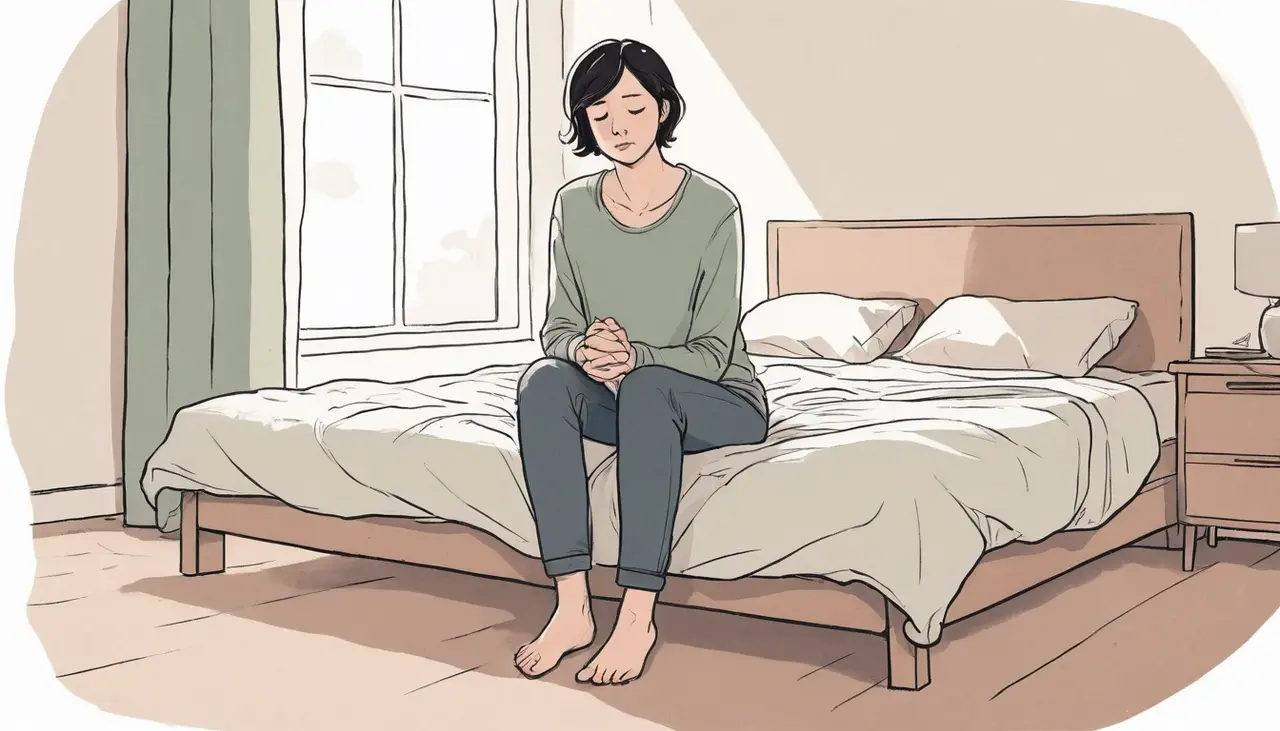
A stiff, achy morning after drinking is a common thing to notice, and the usual question behind it is a fair one: is the alcohol doing something to my joints, or is this just a bad night's sleep talking? The honest answer is that alcohol doesn't have a tidy, direct line to your knees or knuckles the way it has to your liver. What it does have is a set of indirect effects — on inflammation, on fluid balance, on how the body repairs itself overnight — that can all land in the same place: a body that feels older and creakier the next morning. When that fluid side shows up lower down instead, why feet and ankles swell after drinking covers it directly.
That is worth understanding before you decide the stiffness means something is wrong with your joints specifically. Often it is the recovery night that went badly, not the joint.
What alcohol actually does that can reach a joint
Start with inflammation, because that is the most plausible connection. When you drink, some of the alcohol reaches your gut, and alcohol and the substance your body breaks it down into can loosen the junctions between the cells lining your intestine — the barrier that normally keeps gut bacteria and their byproducts where they belong. A peer-reviewed review from NIAAA's own research journal describes how that leakier barrier lets bacterial byproducts (endotoxins) cross into the bloodstream, where they "activate proteins and immune cells that promote inflammation." Inflammation is your immune system's general-purpose response, and when it is running body-wide, one of the ways it can show up is as achiness and stiffness.
Then there's recovery. Alcohol is a diuretic — it makes you produce more urine, so a heavier night can leave you mildly dehydrated. It also interferes with the overnight repair work your body does. A sports-medicine review found that alcohol "decreases muscle protein synthesis in a dose- and time-dependent manner" — plainer version: the more you drink and the closer to when your body is trying to rebuild tissue, the more it slows that rebuilding down. That review is about muscle and post-exercise recovery, not joints directly, but the muscles and connective tissue around a joint are part of what makes a morning feel loose or tight.
None of this proves alcohol is damaging your joints. It explains why a body can honestly feel stiffer after drinking without any joint disease being involved. The stiffness is real; the cause is usually upstream of the joint itself.
Why the "how much" question doesn't have one answer
There is no single number of drinks that switches joint achiness on. The effects above scale — the inflammation nudge and the slowed overnight repair both tend to be larger after a heavier night and after nights stacked close together, which is why a two-night weekend can leave a worse Monday than a single evening does. Duration matters too: an occasional rough morning is a different thing from a pattern that shows up week after week.
It also varies by person. Age, existing inflammatory or joint conditions, sleep, hydration, how much you moved the day before, other medications — all of it stacks with the alcohol, so the same two drinks can read very differently in two different bodies, or in the same body on two different weeks.
A note on the standard numbers, because they get misread as thresholds: a U.S. standard drink is 0.6 fluid ounces, or 14 grams, of pure alcohol, and NIAAA counts binge drinking as the pattern that brings blood alcohol to about 0.08 percent — often 5 or more drinks for men, or 4 or more for women, in roughly two hours. Those are shared ways to describe how much you drank, not a line where joint harm begins. Their only real use here is that "two standard drinks" tells a clinician something "a couple" doesn't.
Reading your own pattern
If you want to know whether alcohol is part of your stiff mornings, the useful move is to make the signal easier to read rather than to guess. A few things that help:
- Compare drinking nights against non-drinking nights. Note stiffness the morning after you drink and the morning after you don't. If the two look the same, alcohol probably isn't the lever. If drinking mornings are reliably worse, you've found a pattern worth acting on — not a diagnosis, but a lever you can pull.
- Time it, don't just feel it. Stiffness that eases within a few minutes of moving reads very differently from stiffness that lasts an hour or more. New morning stiffness that drags on for hours is one of the things a clinician actually wants to know about, so put a rough number on the minutes.
- Give a lighter week a fair test. A week with more alcohol-free days won't cure a joint condition, but it clears away one of the biggest sources of overnight noise, which makes whatever is left easier to interpret. If the mornings improve, that is information; if they don't, that is information too.
The point of all this is not to turn a stiff morning into a project. It is that a cutback, better sleep, and steady fluids tend to help the same recovery night, so trying them costs little and tells you something.
When stiffness is not a recovery problem
Some morning stiffness is not about alcohol or a rough night, and it is worth knowing the difference. Get a same-day or urgent evaluation for a sudden, severely painful joint that is red, hot, or swollen, especially with a fever; a joint you can't bear weight on; one-sided joint pain after a fall; new numbness, tingling, or weakness alongside back stiffness; or morning stiffness that is new and lasts for hours rather than minutes. A cutback article is not the tool for any of those — an exam is.
Separately, if a stretch without alcohol has ever brought on shaking, a racing heart, repeated vomiting, agitation, confusion, hallucinations, or a seizure, treat that as an emergency and call 911 or go to an emergency room. That cluster is alcohol withdrawal, not a joint problem, and it can be dangerous. If you drink heavily every day, that possibility is a reason to plan any big cutback with a clinician rather than stopping cold on your own; the free, confidential SAMHSA National Helpline (1-800-662-HELP) can point you to that help around the clock.
One quiet barrier is worth naming: NIAAA describes stigma as a consistent reason people leave alcohol out of the conversation with a clinician. If achy mornings are the thing that finally gets you to a doctor, the drinking pattern is exactly the kind of detail worth mentioning, not hiding — it changes what they look for.
FAQ
Does alcohol cause joint pain?
Not in a direct, provable way, and this page can't tell you what's causing yours. What alcohol does do is nudge body-wide inflammation and slow overnight recovery, either of which can make a body feel stiffer without a joint disease being present. Persistent, severe, or unusual joint symptoms need a clinician who can actually examine you.
Will cutting back fix my morning stiffness?
Maybe, maybe not — and no article can promise it. A cutback removes one common source of overnight noise, so it can make a real difference if alcohol was part of the picture. It won't cure an underlying joint or inflammatory condition, which is a separate thing to have evaluated.
Should I take something for the achiness after drinking?
This page doesn't recommend pain relievers, anti-inflammatories, or supplements, partly because some of them interact with alcohol and with each other. That is a question for a clinician or pharmacist who knows your health and how much you actually drink.
This is general education, not a diagnosis or a treatment plan. If your joints keep telling the same story — or start telling a worse one — bring it to a clinician who can examine you.
- Body & physical health
Alcohol and Your Liver
Alcohol-related liver damage runs a spectrum: fat, then inflammation, then scarring, rising with how much and how long. What a flagged AST can and cannot tell you.
- Body & physical health
Alcohol and Inflammation: How Drinking Stokes the Body's Alarm System
Heavy drinking can drive inflammation beyond the gut and disrupt immune defenses. How this affects the liver, tissue repair, and symptoms worth checking.
- Understanding your drinking
Is My Husband an Alcoholic? What a Quiz Cannot Tell You
A quiz cannot diagnose your husband. Describe what you have observed, how his drinking affects you, and what support you need next.
- Social events & holidays
How to Handle Summer BBQs and Cookouts When You're Cutting Back
A cookout has no clock, so bring your own: pick your first drink, your spot, your line, and your exit before you go. Decide once, not forty times.
- Social events & holidays
How to Handle a Day Drinking Event When You Want to Cut Back
A day drinking event has no dinner bell and no last call, so set your line before you arrive and keep something in your hand. Three anchor moves, no speech.
- Body & physical health
Drinking and Your Kidneys or Fluid Balance
How alcohol can affect urine output, swelling, thirst, electrolytes, and the kidney-related questions to bring to a clinician.


Be the first to hear when Clero launches.
Join with email only. Clero is still in development, so this is educational content today — not treatment, a prescription request, or medical advice.
First to hear at launchLaunch news only — no spamUnsubscribe anytime