
Drinking and Your Cardio Fitness or Workouts
Drinking can make the next day's run feel harder — it slows overnight muscle repair, dehydrates, and breaks up sleep. What your watch is catching, and what helps.
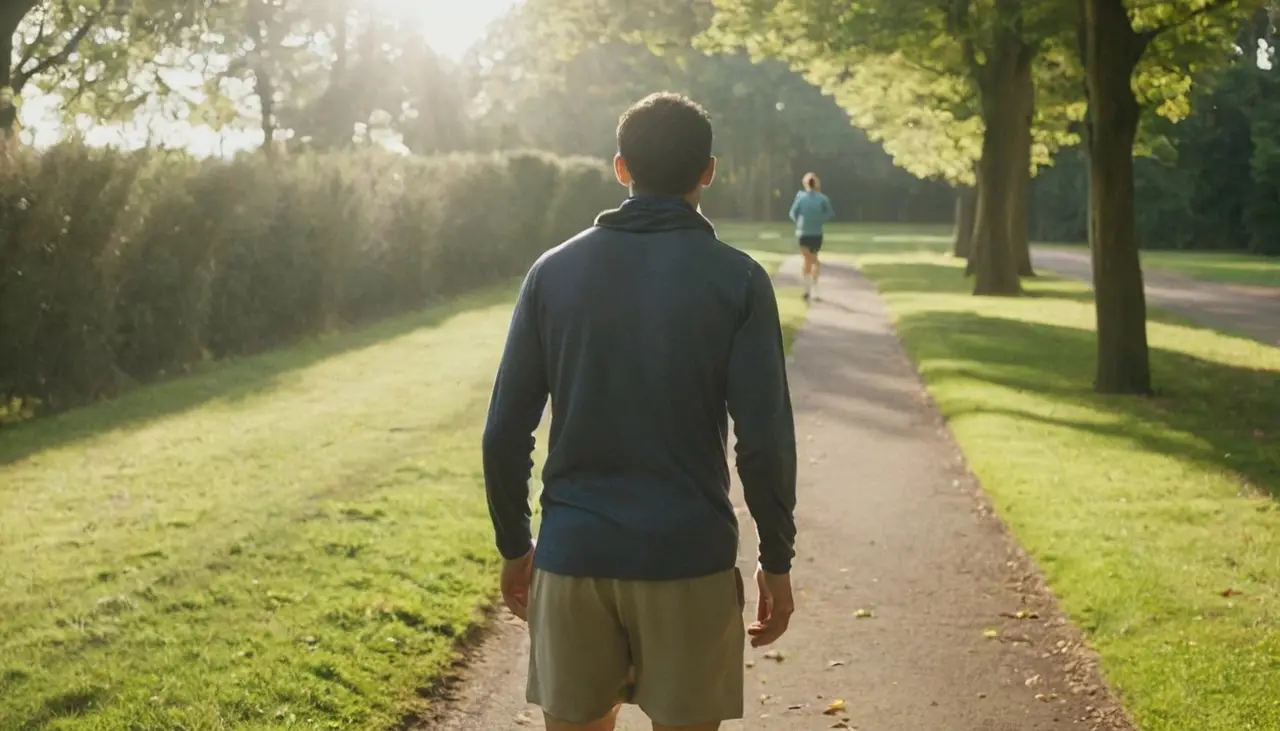
Why does a run feel harder, or a lift feel flat, in the day or two after drinking? The honest answer is that alcohol and exercise lean on a lot of the same machinery — your heart and blood vessels, your sleep, the fluid balance in your body, and the slow overnight repair that turns training into fitness. When one taxes that machinery, the other has less to draw on. That does not make alcohol the villain behind every bad session, but it does make it a variable worth understanding rather than guessing about.
What alcohol is doing while you sleep it off
Start with recovery, because that is where a night out most reliably shows up. A hard workout breaks muscle down a little; the rebuilding happens afterward, largely overnight, and that rebuilding is what makes you fitter. Alcohol interferes with two parts of that.
The first is repair itself. A sports-medicine review of alcohol and athletic recovery describes alcohol as a strong diuretic — it pushes your kidneys to shed water, which can deepen the dehydration a workout already caused — and reports that a drink after exercise lowers the rate at which muscle rebuilds its protein, more so as the amount goes up. In plain terms: the raw materials your muscles were waiting on show up late.
The second is sleep, and this one is sneaky because a drink can make you fall asleep faster. What it costs you is the quality of the night. A review of alcohol and disturbed sleep explains that alcohol suppresses REM sleep early in the night and then triggers a fragmented, restless rebound in the second half — the stretch of sleep that feels shallow, wakeful, and unrefreshing. You can spend eight hours in bed and still hand your body a worse night's recovery than seven clean ones. That is often the real reason the next morning's warm-up drags.
The heart signals your watch is reading
If a wearable is flagging your morning-after — a higher resting heart rate, lower heart-rate variability (the tiny beat-to-beat timing differences a watch reads as a sign your nervous system has settled), a poor sleep score, low "readiness" — it is usually catching something real. Alcohol keeps the body's stress side switched on longer, so the calm, recovered baseline arrives later. The signal is data, not a diagnosis, and it is not issuing you orders; but a pattern across several mornings is more trustworthy than any single flagged day.
There is also a heavier version of this worth naming plainly, because it is the reason "just a few big nights" is not nothing. A big burst of drinking can, in some people, tip the heart into a temporary irregular rhythm — a racing or fluttering heartbeat clinicians sometimes call holiday heart, because it clusters around weekends and celebrations. The review describes it as atrial fibrillation set off by binge drinking, often settling on its own within about a day of stopping. Over years, heavy drinking can also strain the heart muscle itself; the CDC lists high blood pressure, heart disease, and stroke among the long-term effects of excessive use. None of that is meant to alarm a weekend runner — it is context for why the cardio side of this is worth tracking honestly.
How much matters — and why there is no single line
Because this is partly a heart-and-blood-vessel question, the amount you drink genuinely changes the size of the effect. Blood pressure is the clearest example. The American Heart Association states plainly that drinking too much raises blood pressure, and a pooled analysis of seven studies covering 19,548 adults found blood pressure rising with daily intake even in people who did not have high blood pressure to begin with — with no low-dose level that looked protective.
So the relationship runs on two dials at once: how much you drink on a given night, and how often the nights add up. Neither has a universal switch. The same two beers land differently depending on your size and sex, how hydrated you already were, how you slept, what else you take, your age, and the luck of your genetics. That is why "a few drinks after a workout" is a slippery phrase — it can quietly mean something different from one week to the next. If you are trying to read your own pattern, count in something steadier than "a few."
What tends to change when people cut back
Here is the encouraging part, stated as honestly as the rest. When people pull back on drinking for a few weeks, what they most often notice first is not the scale or the mirror — it is recovery becoming visible. The same run feels a touch easier, the lift feels cleaner, the morning heart rate settles, the readiness score stops nagging. Because alcohol was sitting on sleep and repair, easing it off tends to give those back before it changes anything you can see.
Two honest caveats keep this from being a promise. Cutting back can also reveal that alcohol was never the main problem — if the sessions stay rough, the culprit may be training load, a short night for other reasons, stress, illness, an old injury, or thin fueling, and those are worth chasing with a coach or clinician. And the signal that actually tells you something is consistency, not a single standout workout. One great run proves little. A month where fewer sessions get skipped, less soreness lingers, and the mornings feel more predictable — that is the read worth trusting.
A few things that reliably help
None of these is a cure or a product to buy. They are low-stakes adjustments that tend to move the needle for active people:
- Put the drinking night away from the hard session. If Friday out keeps landing on Saturday's long run or heavy lift, simply spacing the two apart usually does more than any recovery gadget.
- Guard the sleep around training. A steady wake time and an unhurried wind-down give the next day's workout a fairer start, since the drink already taxed the quality of the night.
- Rehydrate and eat a real meal. Pace drinks with water and train off actual food, not an empty, dried-out morning.
- Keep some fully alcohol-free nights. They are what give you a clean read on whether drinking is the variable dragging your average week.
- Swap in a non-alcoholic drink after a workout. You keep the post-session ritual without stacking a drinking night onto recovery.
For the evenings the urge to pour comes back on its own, how to handle alcohol cravings and urges is the fuller toolkit, and why a craving shows up right after exercise covers the version that arrives with the cooldown.
Where this fits in the wider picture
The overlap between drinking and training is large simply because drinking is common: NIAAA's 2024 figures put the number of adults who drank in the past year at about 174.4 million — roughly 66.5% of those 18 and older. Plenty of runners, lifters, cyclists, and gym regulars sit inside that number, which is exactly why the fitness framing can also become a place to hide a bigger question — "I work out, so it can't be a problem" is a familiar way to avoid naming one.
This page will not tell you which device to buy, what heart-rate target to hit, or whether to train through a symptom, and it cannot diagnose an irregular rhythm, a strained heart muscle, overtraining, or anything else. Those calls need a clinician who can see you. Talk with one about chest pain, fainting, a newly irregular or racing heartbeat, sudden shortness of breath, exercise that has abruptly gotten much harder to tolerate, or symptoms that feel out of proportion to your training.
One safety point that outranks any workout question: if you drink heavily every day, do not stop cold on your own, because abrupt withdrawal can be dangerous — plan it with a clinician first. Shaking, a racing heart, repeated vomiting, confusion, hallucination, or a seizure after cutting back is a medical emergency; call 911 or go to an emergency room. For confidential help finding alcohol-related care, SAMHSA's National Helpline (1-800-662-HELP) is free and available 24/7.
If you want to keep reading in this direction, the resting-state companion to this piece is drinking and your resting heart rate or wearable data. And a useful next step is deliberately plain: track drinks, sleep, workout type, perceived effort, and how you recover for a few weeks, and let the pattern — not any one morning — do the talking.
This is general education, not medical, coaching, or training advice — questions about symptoms, a training plan, or a heavy daily drinking pattern belong with a clinician who knows your history.
- Mind & mood
Alcohol and Anger Outbursts
Alcohol lowers restraint, which can make anger outbursts easier to act on — and the next-day rebound explains why the morning after feels so raw.
- Body & physical health
Mixing Alcohol and Energy Drinks: Why 'Wide Awake Drunk' Is Riskier Than It Feels
Caffeine does not cancel out alcohol; it can make impairment harder to feel. Know the CDC risk pattern and when mixed drinks become a 911 issue.
- Quitting & sobriety
Why Can't I Sleep When I Stop Drinking?
Why sleep can feel worse after stopping or cutting back on alcohol, when it may point to withdrawal risk, and what to track next.
- Body & physical health
Alcohol and Sleep Apnea
Alcohol can worsen sleep apnea by relaxing throat muscles and breaking up sleep. How to read snoring, gasping, and next-day sleepiness.
- Body & physical health
Alcohol and Restless Legs: Why Your Legs Won't Settle After Drinking
Why drinking can make your legs feel twitchy or hard to settle at night, how alcohol-fragmented sleep fits in, and when to raise it with a clinician.
- Hangovers & the day after
Drinking and Your Energy the Second Day After
Why drinking can seem to affect your energy two days later, what patterns to notice, and when symptoms need medical attention.


Be the first to hear when Clero launches.
Join with email only. Clero is still in development, so this is educational content today — not treatment, a prescription request, or medical advice.
First to hear at launchLaunch news only — no spamUnsubscribe anytime