
Cutting Back on Drinking While Dating
Cutting back on drinking while dating gets easier when you decide your pour before the date. Pick the venue, your first order, one line, and a second-round rule.
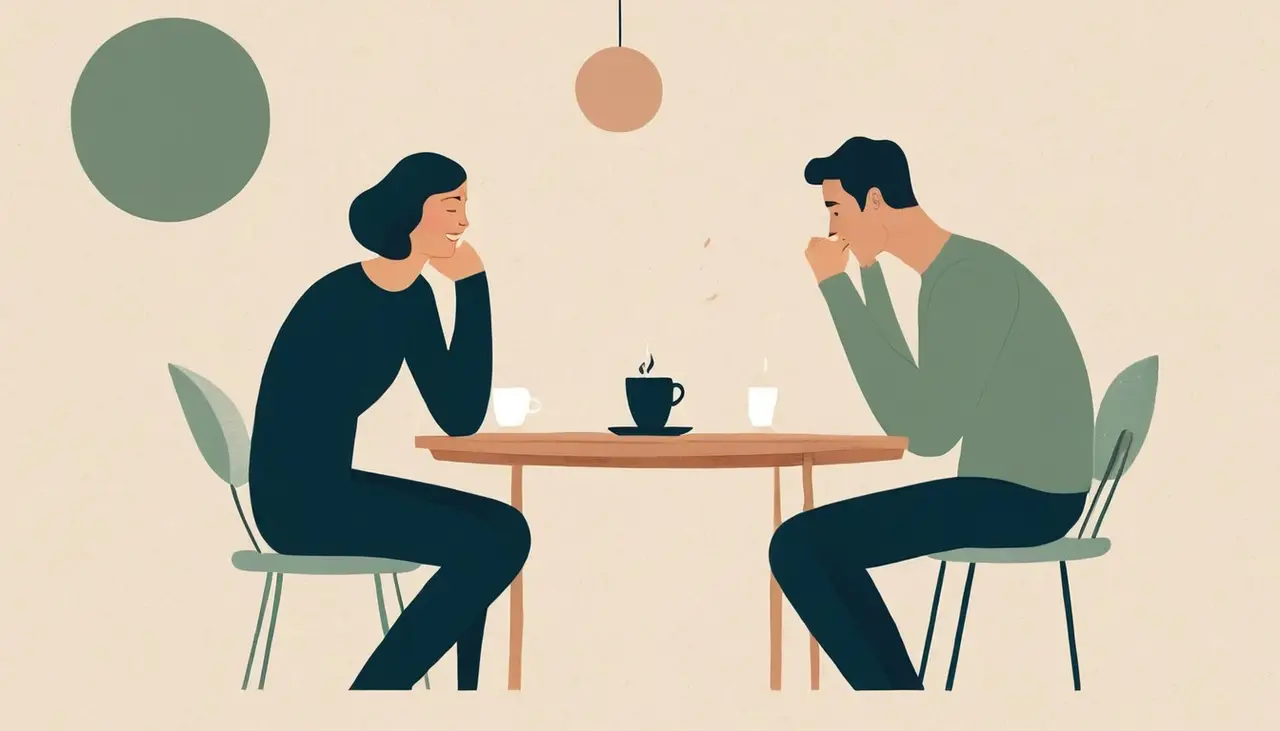
The date is going well. Better than you expected, honestly. You are two hours in, the conversation has found its rhythm, and your glass is nearly empty. Then the server drifts back, or your date catches the bartender's eye, and there it is — the small, gravitational question hanging over the table. Another round?
You had a plan when you left the house. Somewhere between the first laugh and this moment, the plan got quiet.
Here is the thing worth knowing before your next date: that pull is not a character flaw, and beating it does not require willpower you have to summon in the moment. It requires deciding your own pour before the table decides it for you. Call it the Pour Plan — four small choices you make in advance so that the hardest decision of the night is already made by the time you sit down. Most of dating-while-cutting-back is just moving the decision earlier, to a moment when it is easy.
Why the default does the deciding
Dating runs on a script, and the script involves a drink. First-date drinks. Wine with dinner. The nightcap. None of it is neutral — it is a groove worn so deep that "grab a drink" barely registers as a choice. You are far from alone in the groove: among adults ages 18 to 25, about 47.5 percent — roughly 16.6 million people — drank in the past month, and 26.7 percent reported binge drinking, per NIAAA. Drinking is the water the dating pool swims in.
That is exactly why a plan beats willpower. When you leave the choice to the moment, you are asking your in-the-moment self — buzzed, wanting the night to keep going, not wanting to be the odd one out — to override a script that everyone at the table is following. That self loses most nights. The fix is not to fight harder. It is to make the choice somewhere upstream, before the buzz and the momentum and the second-round question ever arrive. Move the decision, and you stop needing the willpower.
The Pour Plan
Four choices. Each one you make before the date, so the date itself asks nothing hard of you.
Pick the container, not just the drink
Where you meet decides more than what you order. A bar puts alcohol at the center and makes anything else feel like a statement. A coffee, a walk, a museum, a mid-afternoon meal, a thing-you-actually-do-together — these put the connection at the center and the drink, if any, off to the side.
Do it now: for your next first date, suggest one format where ordering a soda would not raise an eyebrow. You are not announcing anything. You are just picking a room where your pour is your own business. (If the wider version of this — parties, weddings, work events — is the real snag, that is socializing without drinking at summer events.)
Decide your first order at home
The first order sets the tone for the whole night, and it is the one you have the most control over — because you can decide it before you are anywhere near a menu. Sparkling water with lime. A mocktail. A single drink you plan to nurse. Whatever it is, name it now, sitting on your couch, where the choice costs nothing.
Do it now: say your opening order out loud before you leave. "I'm getting a soda water first." Deciding it in advance means the menu, the mood, and the other person's order do not get a vote. If you want ideas beyond soda, here is what to drink instead of alcohol.
Load one sentence for when it comes up
Someone may ask why you are not drinking. Not because they are judging you — usually just because the script has a blank where your drink should be. You do not owe a stranger your history, your goals, or a speech. You owe them a sentence, and you can load it before the date so you are not composing under pressure.
Any of these is complete on its own:
- "I'm good with this tonight."
- "I'm taking it easy."
- "I'm cutting back a bit."
- "I've got an early morning."
Do it now: pick one and keep it in your pocket. Notice that none of them ends with a "because." A short answer that does not apologize tends to close the topic faster than an explanation, because there is nothing to follow up on. Say more later, if the connection earns it — a fifth date is a different conversation than a first one, and telling a partner you're cutting back is a different one still.
Set the second-round rule before the second round
Back to the moment we started with. For a lot of people, the first drink was never the problem — the second round is, when the night is good and stopping feels socially expensive. The Pour Plan's whole point is that you already answered this at home, so the table cannot reopen it.
Give yourself one line and let it be automatic:
- "I'm going to stick with this."
- "I'm switching to water."
- "You go ahead — I'm set."
Do it now: decide your stopping point before you order anything, the way you would set a budget before shopping. This is not about controlling what your date drinks; order them the next round warmly if that is the vibe. It is about keeping your own count in your own hands. If you do drink and want to keep the pattern visible, NIAAA counts a U.S. standard drink as 0.6 fluid ounces, or 14 grams, of pure alcohol — a generous pour or a strong cocktail can quietly be more than one, which is easy to lose track of when the drinks are spread across dinner and "one more place."
When the plan doesn't hold
Some nights it will not work. You will have the second round anyway, or forget your sentence and over-explain, or pick the wine bar because it was easy. That is not the plan failing. That is one evening, and one evening is not a verdict.
A few lighter dates teach you more than any label on a profile ever could. You might learn that coffee dates suit you. That dinner is fine right up until the wine list lands. That the person across from you genuinely does not care what is in your glass — or that they care more than you hoped, and needed you drinking to enjoy the night. Every one of those is useful. Dating is already a filter; your pour is just one more thing it sorts, and the person who needs you drunk to have a good time has told you something you would rather know on date two than date twenty.
Take the plan, not the pressure
You do not have to become the sober one, disclose on anyone's timeline, or turn every date into a test you might fail. You just move the decision upstream — container, first order, one sentence, a stopping rule — and let the date be about the person instead of the pour.
For your next one, decide those four things before you walk out the door. The less you leave to the moment, the more the night is yours to enjoy. And if the second-round pull shows up as a genuine urge rather than a passing thought, handling alcohol cravings and urges is the fuller toolkit.
One honest note, because a plan is not the same as a diagnosis: if you drink daily, if dating keeps pulling you well past limits you actually care about, or if the idea of a lighter drink makes you uneasy in a way that is hard to name, that is worth a real conversation. Shame keeps people quiet here — it is easy to wave off because "everyone drinks on dates" — and NIAAA names stigma as one of the most consistently reported barriers to getting help.
This is general education, not medical or relationship advice. If you drink daily, don't stop suddenly on your own — a licensed clinician who knows your history can help you change safely, and SAMHSA's free, confidential National Helpline (1-800-662-HELP) can point you to support any time.
- Social events & holidays
How to Handle FOMO When You're Cutting Back on Drinking
FOMO is rarely the whole night — it is the people, the place, the drink, or the feeling. Name which corner is hot, give it one small move, and set the phone down.
- Social events & holidays
How to Handle Thanksgiving When You're Cutting Back on Drinking
Thanksgiving is an all-day drinking cue: plan the timeline, family lines, and first sober holiday pressure before the table fills.
- Social events & holidays
How to Handle Summer BBQs and Cookouts When You're Cutting Back
A cookout has no clock, so bring your own: pick your first drink, your spot, your line, and your exit before you go. Decide once, not forty times.
- Family & relationships
How to Handle a Family Vacation When Everyone Drinks
The Morning-First Plan: decide the morning you want, protect the first group meal, and keep one non-negotiable exit from the nightly drift. No family vote needed.
- Social events & holidays
Drinking at a Wake or Funeral When You're Cutting Back
You can decline the drink and still be there for the goodbye. How to handle the glass at the door, the toast, and the late-night kitchen while cutting back.
- Social events & holidays
Cutting Back on the Saturday Before Father's Day When You Already Feel It Coming
Why the Saturday before Father's Day can feel like its own cutback trigger, with a quiet planning frame and clinician-first safety routing.


Be the first to hear when Clero launches.
Join with email only. Clero is still in development, so this is educational content today — not treatment, a prescription request, or medical advice.
First to hear at launchLaunch news only — no spamUnsubscribe anytime