
Why Do I Crave Alcohol More in the Summer?
Summer packs your week with drinking cues — patios, cookouts, long evenings — and hot nights erode the sleep that helps you resist. Why urges climb in July.
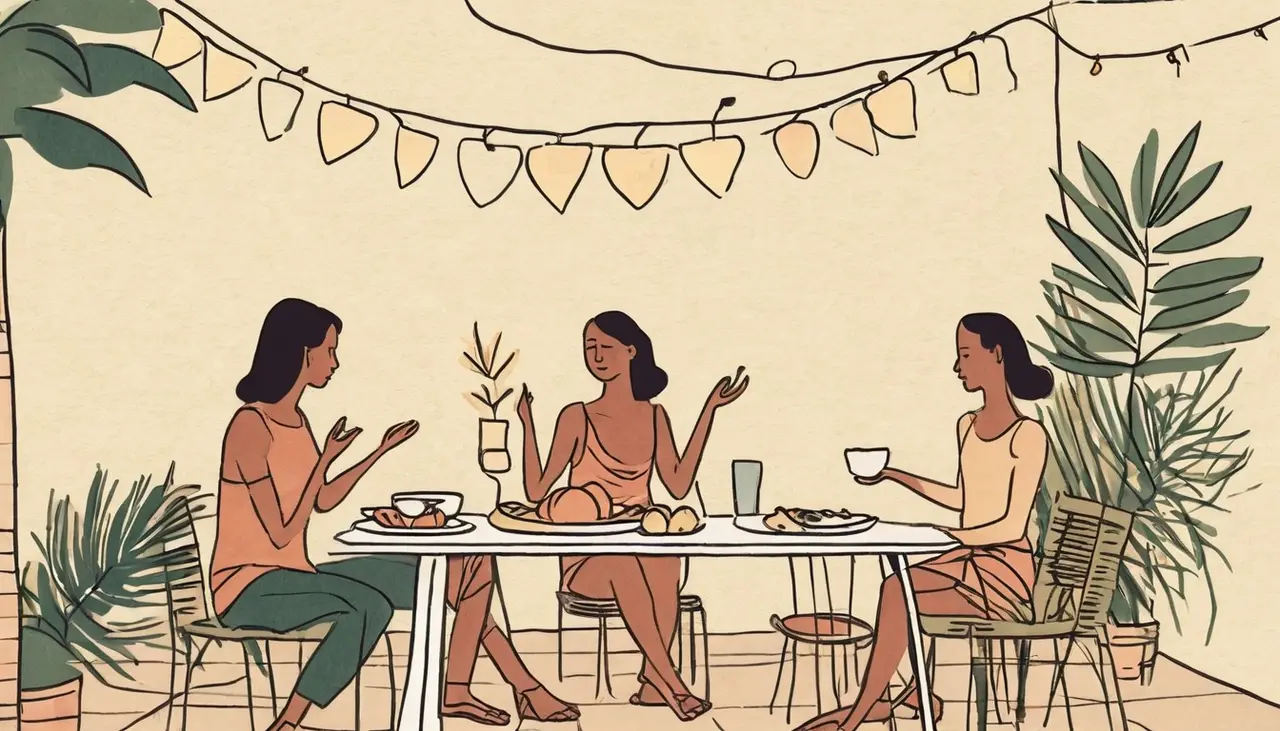
The urge to drink is not spread evenly across the year. For a lot of people trying to cut back, it climbs as the days get longer — the same person who barely thought about a drink in February finds the urge showing up three or four evenings a week by July. The drinking has not changed character. The surroundings have. And once you see why the season turns up the volume, an uptick in July stops looking like a personal failing and starts looking like a predictable, workable pattern.
Craving is mostly a learned response to cues
A craving rarely comes from nowhere. It attaches to context — a time of day, a place, a certain mood, the end of a hard workout, a particular group of people. Over months and years, the brain quietly learns which situations tended to come right before a drink, and it starts producing the urge when those situations reappear, a beat before you have consciously decided anything. That is why cravings feel like they arrive on their own: much of the wanting is a conditioned reflex, not a fresh choice each time. It is the same mechanism structured programs like SMART Recovery build around — one of the four points in its free, secular meetings is simply coping with urges and cravings as they surface.
Summer does not rewire that mechanism so much as change the inputs. The season floods an ordinary week with the exact settings alcohol was paired with for years — patios, cookouts, long light after work, weekends away, weddings, a cold drink handed to you before you have thought about it. More cues, firing more often, add up to more urges. The craving in July is not necessarily stronger than the one in February — it simply gets triggered more times a day, because the environment is thick with the things that trigger it.
There is a second layer on top of the cues: what a drink means shifts with the weather. In winter a drink can read as coping or warmth. In summer it reads as belonging, celebration, cooling off, or the marker that the workday is finally over. That reframing matters, because an urge dressed up as "part of the season" slips past the guard you would put up against an urge you saw as a problem.
Heat, late nights, and the sleep loop
Warm nights and long evenings fragment sleep on their own, before alcohol enters the picture. Add a few drinks and the two compound. Alcohol speeds how fast you fall asleep, but it lightens and breaks up the back half of the night: it suppresses REM sleep early and is followed by a restless rebound later, so overall sleep quality drops even when total hours look unchanged, as a review of the sleep-and-alcohol research lays out. A short, hot, broken night leaves you more depleted the next day — and a depleted brain has fewer resources for sitting with an urge, so the easy evening relief looks more appealing than it did. That is the loop worth naming: drink, sleep worse, wake up frayed, crave sooner. Heat does not create the craving directly; it erodes sleep, and eroded sleep makes urges harder to ride out. Insomnia is one of the most stubborn parts of heavy drinking precisely because it tends to outlast the drinking itself rather than clearing up in the first sober week.
Is it the heat, or the schedule?
This is the natural next question, and the honest answer is mostly the schedule. Warm weather does track with more drinking, but what rides along with it — time off, more social events, later nights, a looser routine, longer daylight after work — does most of the actual work. The temperature contributes indirectly, through the sleep it disrupts and through a plain thirst that a cold drink seems to answer. So a summer that feels like it is "just the heat" is usually a summer dense with cues and short on structure. That distinction is useful rather than academic: you cannot change July's temperature, but you can see the patio, the open weekend, and the 9 p.m. sunlight for the triggers they are.
What the numbers can and can't tell you
Start with scale. In 2024, an estimated 178.7 million people ages 12 and older in the United States — about 62 percent of that group — reported drinking in the past year, according to NIAAA. Summer cues land on an enormous number of people, so a seasonal uptick in wanting is common, not some private glitch.
For a shared way to describe the amount, NIAAA counts binge drinking as the pattern that brings blood alcohol to about 0.08 percent — often 5 or more drinks for men, or 4 or more for women, in roughly 2 hours. That is a definition, not a line where harm switches on; it is just a common yardstick for noticing when a relaxed summer evening has quietly crossed into a heavier pattern.
Here is the limit, stated plainly: research does not put a clean number on the summer effect. There is no published "seasonal craving rate," and individual variation dominates — your drinking history, your sleep, your stress, and how social your particular summer is all pull the pattern in different directions. The evidence can explain the mechanism and define the patterns. It cannot tell you whether your July uptick is harmless or a signal to change course. That part stays a judgment call, ideally not one you make alone.
What to do with this
Three concrete moves, each aimed at a different part of the pattern:
- Map the cue, not your willpower. The next time the urge lands, jot down the place, the time, the people, the mood, and what the drink seems to promise. Urges that repeat at the same hour or the same spot are the most workable ones, because a predictable trigger is one you can plan around. The full toolkit for the moment itself is in how to handle alcohol cravings and urges, and if yours cluster at a set time, when your cravings come at the same time every day goes deeper on that.
- Separate the summer feeling from the drink. Name what you actually want in the moment — cold, social, unhurried, a clean end to the workday. Alcohol may be the old route to that feeling, but naming the feeling gives you more options than arguing with the craving head-on.
- Watch the "this doesn't count" bargain. A vacation or a whole season can turn into one long exception, with the real cutback quietly rescheduled to a cleaner future that never quite arrives. Catching that thought as it forms is often more useful than any substitution trick.
When it's worth more than a plan
Some summers need more than a self-directed plan. If cravings feel unmanageable, if you keep drinking more than you meant to, if cutting back brings on physical symptoms, or if the urge arrives wrapped in depression or a sense of dread, that is the point to bring another person in. A licensed clinician can help sort a seasonal habit from something that needs closer attention. If a medication conversation is one you have been turning over and you do not already have a clinician to raise it with, Clero can connect you with one by telehealth to talk through whether an option fits. And if a craving ever comes alongside thoughts of harming yourself, you do not have to wait it out — the 988 Suicide and Crisis Lifeline is free and available by call or text, 24 hours a day.
Summer turns up the urge to drink not because something is wrong with you, but because it rearranges your days into the exact shapes the urge was trained on — more cues, worse sleep, and a season that hands out permission. Seeing the pattern for what it is turns the next warm evening back into a decision instead of a reflex.
FAQ
Will the craving fade when summer ends?
Some of it will. The purely seasonal cues — the patio, the vacation, the late light — leave with the season. But urges tied to routine, stress, or poor sleep tend to change shape rather than vanish, so early fall is a good moment to notice which ones are still standing once the summer scenery is gone.
Does craving alcohol more in the summer mean I have a drinking problem?
Not on its own. A craving that rises with more opportunities and more social evenings is expected. What is worth paying attention to is a craving that keeps escalating, repeatedly overrides what you intended, or no longer needs an occasion to show up.
This article is general education, not medical advice. If cutting back ever brings on shaking, confusion, a seizure, or hallucinations, treat it as a medical emergency and call 911 or go to an emergency room.
- Body & physical health
Why Do I Crave Salt After Drinking Alcohol or When Hungover?
Salt cravings after drinking are real: alcohol flushes sodium and fluid, and your brain rewards salt. What helps when you're hungover — and what doesn't.
- Cravings & triggers
Why do I crave alcohol?
Alcohol cravings are your brain's learned shortcut — cues, stress, and habit loops firing together, not weak willpower. What drives the pull and what helps.
- Body & physical health
Does Cutting Back on Alcohol Make You Tired?
Yes, feeling more tired after cutting back on alcohol is common, because your sleep is still rebuilding. How long it lasts, and when fatigue is a warning sign.
- Cutting back & moderation
How Long Does It Take to Feel Better After Cutting Back on Drinking?
There is no single clock: mental speed tends to pick up within a month, most cognitive function over 6 to 12. Why sleep and anxiety often get worse first.
- Mind & mood
Why Do I Drink When I'm Sad?
Drinking when you're sad is usually a learned loop: sadness cues the drink, relief reinforces it, a rough morning restarts it. How to spot and interrupt it.
- Body & physical health
Why Do I Crave Carbs After Drinking Alcohol?
Carb cravings after drinking are your body chasing quick fuel: alcohol drops blood sugar and dopamine just as hunger hormones spike. What actually helps.


Be the first to hear when Clero launches.
Join with email only. Clero is still in development, so this is educational content today — not treatment, a prescription request, or medical advice.
First to hear at launchLaunch news only — no spamUnsubscribe anytime