
What to Do With the Alcohol Already in Your House When You're Cutting Back
A safety-first way to think about the alcohol already at home without one-size-fits-all rules or cold-turkey advice.
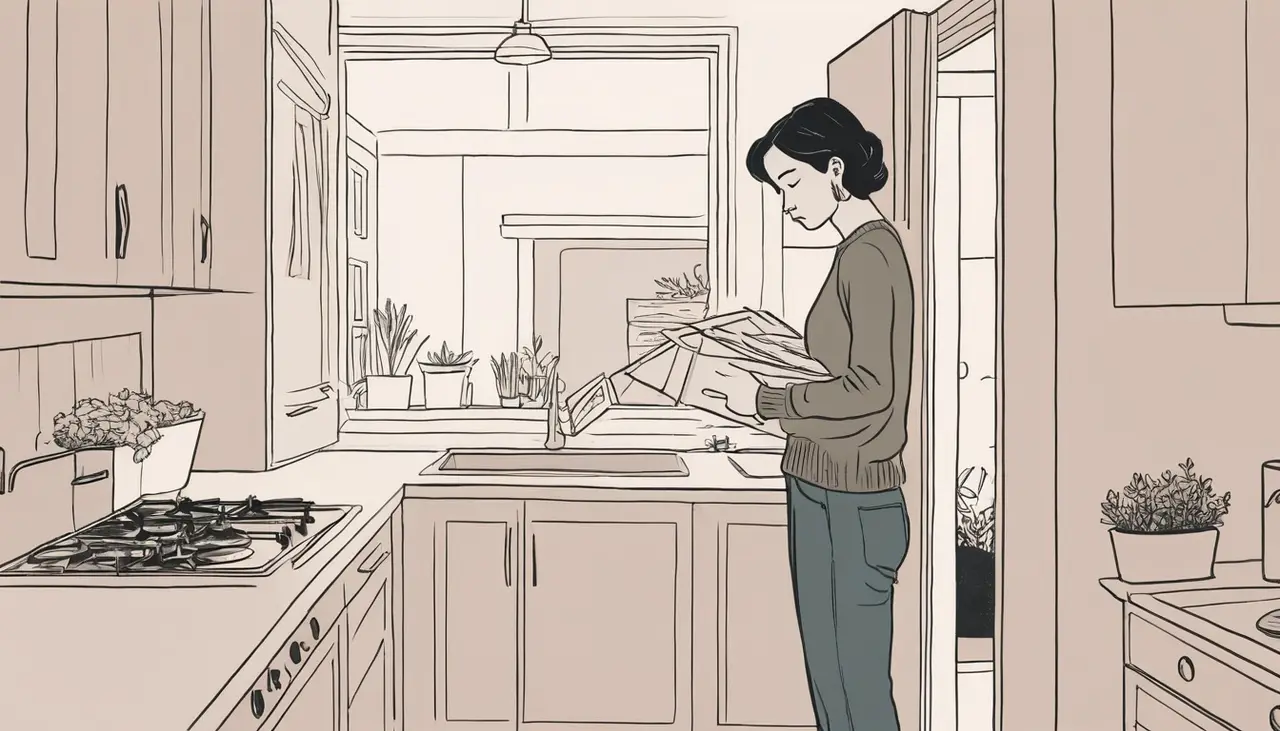
It's a little after six. Dinner's going, the workday is behind you, and there it is on the counter where it always is — the open bottle, the row of cans in the fridge door, the nicer stuff you keep for company. You've decided to drink less this month, and the alcohol you already own hasn't gotten the memo. Pour it all out? Leave it alone? Ask someone to hide it? By the time the question feels urgent, your hand is usually already moving.
Here's the reframe: those bottles are not a test of your character. They're a logistics problem — and logistics problems have fixes that don't require you to win a staring contest with a wine rack every evening.
The pull toward what's already in the house isn't a willpower gap. It's how homes work. What you own is paid for, familiar, and sitting exactly where your evening tends to start, so reaching for it takes no decision at all. That's the material the plan works with. What follows is one plan — the Standing-Bottle Plan — four small moves that turn the automatic reach back into an actual choice, without staging a dramatic purge you may not be ready for.
Why the reach matters more than the willpower
The closer and more routine an option is, the more your surroundings do the deciding for you. A drink at eye level at the hour you always pour is a cue, and the cue fires before the deliberating part of you shows up. You can't argue a cue down in the moment. But you can move it — and every extra step you put between yourself and the bottle is a few extra seconds where the deciding you catches up. The whole plan is about buying those seconds.
It also helps to know what you're actually holding. A U.S. standard drink is 0.6 ounces of pure alcohol — about what's in 12 ounces of 5% beer, 5 ounces of 12% wine, or 1.5 ounces of 40% spirits, by the CDC's count. Knowing that turns "a glass of wine" from a vague unit into something you can actually see when you look at the shelf.
Map the reach
Walk the house once, unhurried, and notice where alcohol actually lives — counter, fridge door, cabinet, garage, the bag from last week you never unpacked. Then mark the one spot tied to your evening start. That's the location doing the most work, and it's usually not the biggest stash. Do it now: name that single spot out loud. "The bottle next to the stove." Naming it is the first thing that makes it moveable.
Add distance to one bottle
Don't empty the cabinet. Move the one bottle that starts the evening somewhere genuinely inconvenient — a high shelf, the basement, a taped box in another room. If someone you trust shares the house and asking won't start a fight, handing it to them to hold works just as well; the point is the same either way. You're not proving strength; you're lengthening the reach so the easy option stops being the closest one. Do it now: relocate exactly one container before dinner tonight and leave the rest where they are. One is enough to make the point to yourself.
Beat it to the first drink
Often the reach is about having something in your hand at a certain hour, not the alcohol itself. Get there first. Pour the seltzer, the tea, the alcohol-free thing you genuinely like, before the old routine cues up. Do it now: put that non-alcoholic first drink where the bottle used to sit, so the convenient option in reach is the one you chose on purpose.
Freeze the reorder
Tonight's supply quietly becomes tomorrow's shopping list unless you decide otherwise. You don't have to swear off buying forever — just uncouple the automatic restock. Do it now: pick one rule for the next week, like no top-up run on the way home or nothing added to the online cart, and keep it a rule about buying rather than a verdict on the whole cabinet.
When a step doesn't hold
One evening where you reached anyway is information, not a verdict. It usually tells you which cue was strongest — which is exactly what the next attempt needs. Keep the useful sentence ("the counter bottle at nine was the hard one") and drop the courtroom speech.
One line here isn't optional, though. If you drink heavily most days, do not treat "pour it all out and stop tomorrow" as a plan you run alone. Stopping suddenly after heavy daily drinking can set off real withdrawal — MedlinePlus lists shakiness, sweating, and a racing heart, and, at the severe end, confusion, hallucinations, or seizures. Those are medical events, not willpower tests. If a stretch without alcohol has ever brought them on, talk with a clinician before you clear the house, and treat a seizure, deep confusion, or hallucinations as a reason to call 911 or go to an emergency room.
So should you just pour it all out?
For plenty of people, removing the supply outright is clarifying — less in the house, less to reach for. For others it backfires into panic, a secret refill, or a bigger next purchase. Neither reaction means you're doing it wrong. The deciding factor isn't grit; it's what the alcohol is doing in your routine and how your body handles going without. If you're a light or occasional drinker cutting back, a full pour-out is low-stakes — try it if it helps. If you're a heavier daily drinker — the CDC counts 8 or more drinks a week for women, or 15 or more for men, as heavy drinking — the pour-out is the easy part; the stopping is the part that needs a plan, and often a clinician. That difference is most of the answer to "keep it or toss it."
It's worth saying how ordinary the harder version of this is. In 2024, an estimated 27.9 million people ages 12 and older in the United States had alcohol use disorder, about 9.7% of that age group per NIAAA. In the same year, roughly 2.1 million of them received any alcohol treatment — about 7.6%. That low share isn't a sign the help fails; it's mostly that the conversation never gets started.
If the bottle question keeps outgrowing a shelf rearrangement, starting that conversation is the next step — and you don't need a specialist for it. A licensed clinician can talk through whether stopping is safe to do on your own and whether a medication like naltrexone fits your situation; Clero exists to connect you with one by telehealth if you don't already have someone to ask. If you'd rather begin with peer support, SMART Recovery runs free groups built partly around coping with urges and cravings.
What to carry back to the counter
Back to six o'clock. The bottle is still there — but now it's on a high shelf, there's a seltzer where it used to be, and you decided this afternoon, not at the moment of reaching, that tonight's supply isn't getting restocked. That's the whole idea of the Standing-Bottle Plan: you don't have to out-argue the alcohol every evening. You just have to move it a little past arm's reach and let the extra few seconds do the work. Pick one of the four moves and run it tonight. One honest week of that will tell you more than any grand purge.
This is general education, not medical advice. If clearing the house would mean stopping suddenly after heavy daily drinking, check with a licensed clinician first; use 911 or an emergency room for seizures, confusion, or hallucinations, 988 for thoughts of harming yourself, and SAMHSA's National Helpline at 1-800-662-HELP for confidential treatment referrals.
- Cutting back & moderation
Can a Heavy Drinker Cut Back?
A safety-first answer on heavy drinking and cutting back, with clinician-first routing and no at-home taper instructions.
- Family & relationships
Cutting Back When Your Sibling Asks Why You're Not Drinking
When your sibling keeps asking why you're not drinking, one flat answer repeated beats a better argument. The Two-Foot Rule for getting through the family thing.
- Social events & holidays
Drinking and the Pressure to Toast at a Summer Dinner or Event
How to think through the specific pressure of a coordinated toast when you are cutting back, without one-size-fits-all etiquette rules.
- Medication & treatment
Do I Have to Tell My Doctor I'm Cutting Back on Drinking?
No, you don't have to tell your doctor you're cutting back — but one honest sentence usually helps more than it costs. When it matters, and how to start small.
- Mind & mood
Drinking and Feeling Lonely When You Can't Tell Anyone You're Cutting Back Yet
Why the private early cutback window can feel lonely, what to notice inside it, and when emotional or alcohol-related support matters.
- Cutting back & moderation
What to Drink Instead of Alcohol
Category-level ideas for non-alcoholic drinks at home, at a bar, or with friends when you are cutting back without brand recommendations.


Be the first to hear when Clero launches.
Join with email only. Clero is still in development, so this is educational content today — not treatment, a prescription request, or medical advice.
First to hear at launchLaunch news only — no spamUnsubscribe anytime