
How to Talk to Your Kids About Your Drinking
General principles for parents who are cutting back and want to explain the change without over-sharing, over-promising, or putting adult weight on a child.
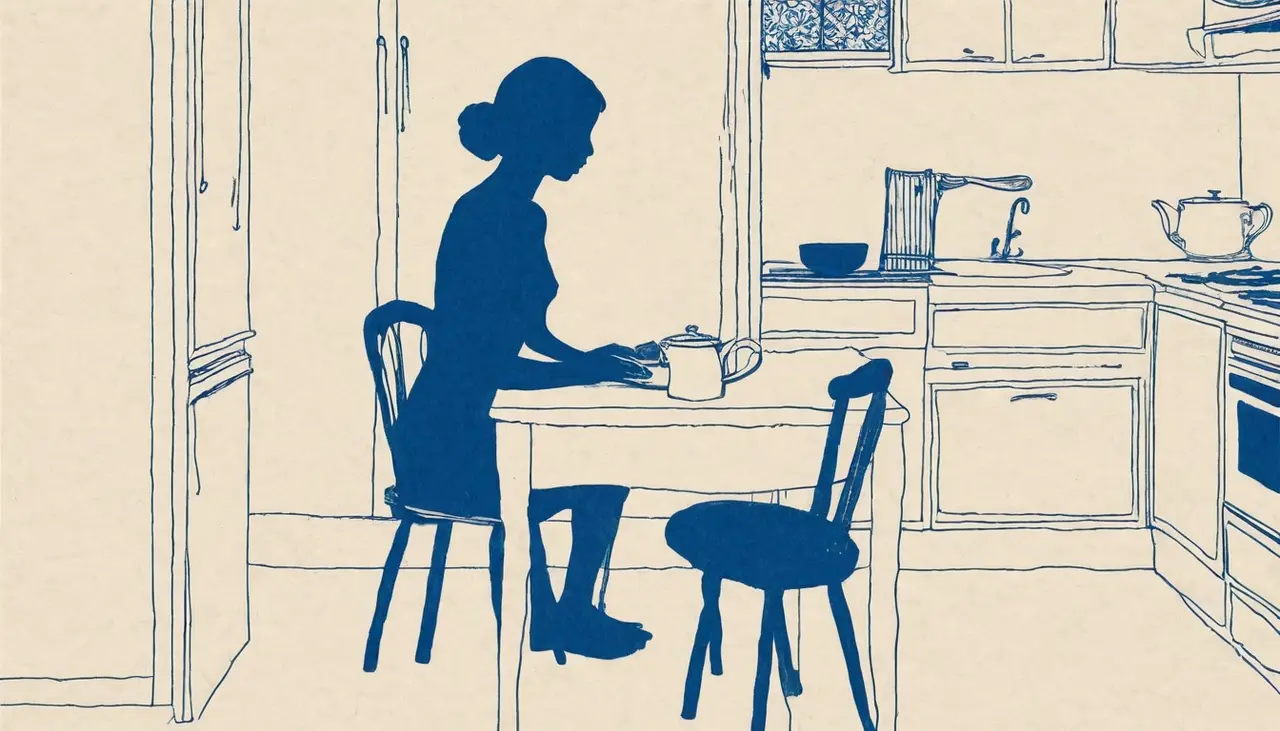
The dinner where you don't pour a drink goes fine. It's the pause afterward that gets you — your youngest back at their homework, your teenager giving the water glass one beat too long of a look before saying nothing. Nobody asked anything. But you can feel the question sitting in the room, and you would rather answer it on purpose some quiet evening than by accident on a worse one.
Here's the workable part: you don't need a perfect speech, and you don't need the whole drinking question resolved before you say a word. You need a way to say something true at a weight a child can carry.
The dread you feel before this conversation isn't a character flaw, and putting it off doesn't make you a coward. Self-judgment stalls parents here the same way it stalls everything else about alcohol — NIAAA names stigma as one of the most consistently reported barriers to seeking help for alcohol concerns, and the voice saying a good parent wouldn't need this talk is the same voice that keeps people from ever raising the subject with a clinician. You're also in enormous company. In an analysis of a 2023 national survey, an estimated 19 million U.S. children lived with at least one parent with a substance use disorder — mostly involving alcohol, which accounted for over 12 million of those children. Very few of those households have found the words either.
What follows is one way to build them: the Light Backpack talk. Four moves, one organizing idea — everything you say to a child is something they have to carry, so pack light.
Why the weight matters
Kids notice patterns long before they have words for them. A young child mostly registers the visible: the glass that isn't there, a calmer bedtime. A teenager registers more — mood, sleep, arguments, how the room changes after the second drink — and has usually been running a private theory about it for a while. So this talk rarely introduces new information. What it decides is whether your kid gets to process what they've noticed with you, or keeps processing it alone.
Home is also where children build their first working model of what alcohol is and how adults handle it. In the 2024 national drug use survey, 12.1% of drinkers ages 12 to 20 said their most recent alcohol in the past month came from a parent or guardian — a reminder that a family's relationship with alcohol is part of a kid's alcohol education whether or not anyone narrates it. Changing your drinking, and saying so plainly, is itself a lesson. If your bigger worry is what they're witnessing rather than what to say, worried about drinking around your kids takes that up directly.
Start from what they've seen
Open with their observation, not your emotion. "You might notice I'm not drinking tonight" and "I've been so ashamed of myself" are both honest, but they're different objects: the first names a visible change a child can verify with their own eyes; the second hands them an adult's emotional load. Match the opener to age. For a young child, concrete and simple carries best — a parent is choosing not to drink, alcohol is for adults, grown-ups are handling the grown-up parts. A teenager can hear more, and will trust the version that doesn't talk down to them.
Do it now: write one sentence describing what your kid has most likely already noticed. That sentence — theirs, not yours — is your opening line.
Say one small, true thing
Keep it short. A child usually needs one clear explanation and room to come back later; a long confession tends to relieve the adult and overload the kid. And skip the promises you can't fully control. "I'm never drinking again" feels generous in the moment, but if you're not certain, it's a debt taken out in their name. Smaller is safer: "I'm drinking less because I like how our evenings go without it," or "I'm making a change, and adults are helping me with the adult parts of it."
Do it now: say your explanation out loud and time it. Past thirty seconds, start cutting.
Keep the adult weight with adults
Three loads never go in a child's backpack, at any age. The monitor's load — counting your drinks, checking the fridge, reminding you of your promise. The reason's load — "I'm doing this for you" can be privately true, but said aloud it makes a child feel responsible on the days the change gets hard. And the confidant's load — shame, marriage strain, fear about your own health belong with another adult or a licensed professional, not with a kid who happens to be a good listener. If the adult you'd naturally tell is your partner and that conversation is its own hurdle, how to tell your partner you're cutting back walks through it.
Do it now: name the adult who gets the heavy version of this story. If no name comes to mind, that gap — not the wording of the kid talk — is the first thing to fix.
Leave the door open
One talk is not the talk. A younger child may shrug and go back to homework; that's success, not indifference — it landed light. A teenager may test whether the change is real, or come back days later with the hard one: "Do you have a problem?" You don't owe an instant verdict. "That's a fair question, and I want to answer it carefully" is a real answer. So is honesty without self-diagnosis: the concern is heard, a change is underway, and adults are supporting the adult parts.
Do it now: pick the question you're most afraid of and decide your holding line for it, before you need it live.
When it goes sideways
It will, at least once. You'll over-share one night, or a teen will roll their eyes, or a young kid will raise it loudly in a checkout line. One clumsy exchange isn't a verdict on you or on the change. It's also repairable in a way kids learn from: "Yesterday I told you more than you needed. The part worth keeping is that I'm drinking less, and it's not yours to manage." Watching a parent correct course is its own kind of reassurance.
When it needs more than a talk
Some situations call for professional support before, or alongside, anything you say at the table: drinking that's heavy and daily, a child who has been frightened by your drinking, a home carrying real conflict or instability. A family therapist or your child's pediatrician can help with the kid-facing side. And if stopping has ever brought on shaking, confusion, hallucinations, or a seizure, that's a medical emergency — call 911 or go to an emergency room; the talk can wait.
The adult-facing side deserves the same seriousness. In 2024, an estimated 27.9 million Americans ages 12 and older had past-year alcohol use disorder, and about 2.1 million of them — 7.6% — received any alcohol treatment that year. That gap isn't evidence that help fails; often it means the conversation about help never happens.
If you're working on the drinking itself and don't have a clinician to think it through with, Clero connects parents in exactly that spot with a licensed clinician by telehealth to talk through what support — including medication such as naltrexone — might fit.
Pack light, carry the rest elsewhere
Back at that table: the goal was never a speech your kids will remember. It's a water glass that stops being news. Before you talk, write down three things — what your child has probably noticed, the one small true thing you want them to know, and which adult gets the heavy version. That's the whole backpack. Everything else you carry yourself, with help that has an adult's shoulders.
This is general education about a family conversation — not medical or family-therapy advice, and not guidance for custody or legal questions. If stopping drinking ever brings on shaking, confusion, hallucinations, or a seizure, call 911 or go to an emergency room. If you have thoughts of harming yourself, call or text 988. For confidential treatment referrals, SAMHSA's National Helpline is 1-800-662-HELP (4357).
- Alcohol Questions
Alcohol and Weight Changes
A non-shaming Q&A on alcohol, body-composition changes, and what cutting back can and cannot tell you without diet or medication advice.
- Alcohol Questions
Drinking and the Pressure to Toast at a Summer Dinner or Event
How to think through the specific pressure of a coordinated toast when you are cutting back, without one-size-fits-all etiquette rules.
- Alcohol Questions
How Long Does It Take to Feel Better After Cutting Back on Drinking?
A realistic Q&A on why feeling better after cutting back has no universal timeline, what patterns people notice, and when to talk with a clinician.
- Alcohol Questions
How Can I Drink Less When I Am Stressed?
A moderation-valid Q&A for people who want to drink less during stressful weeks without committing to a new identity.
- Alcohol Questions
Naltrexone FAQ
Naltrexone blunts the reward a drink delivers, so alcohol's pull can loosen over time. Can you drink on it, how it differs from Antabuse, and who should be careful.
- Alcohol Education
How to Tell an Adult Child You're Cutting Back on Drinking
Tell an adult child you're cutting back with a postcard, not a speech: what's changing, what it means for the next visit, and what you're asking for. Nothing else.


Be the first to hear when Clero launches.
Join with email only. Clero is still in development, so this is educational content today — not treatment, a prescription request, or medical advice.
First to hear at launchLaunch news only — no spamUnsubscribe anytime