
Does Cutting Back on Alcohol Make You Tired?
Yes, feeling more tired after cutting back on alcohol is common, because your sleep is still rebuilding. How long it lasts, and when fatigue is a warning sign.
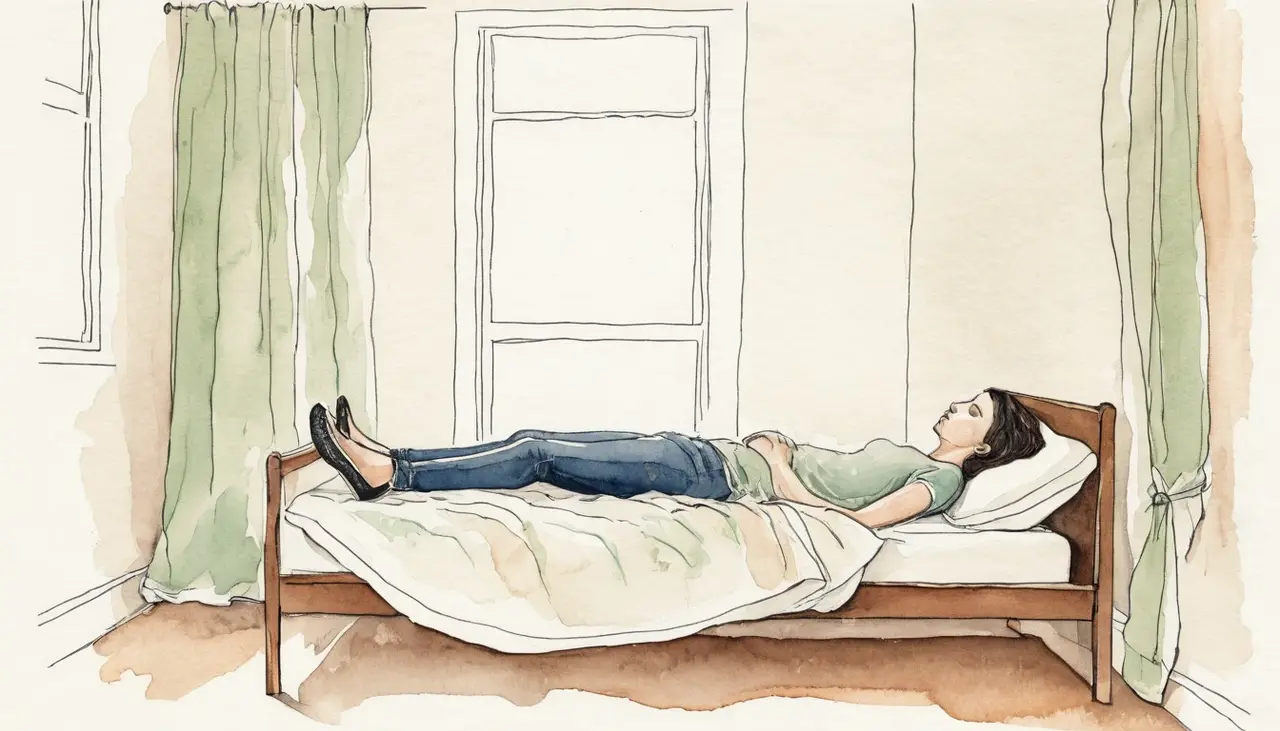
You cut back, you braced for feeling better, and instead you are dragging. That is real, and it is more common than the "quit and glow up" stories let on.
Short answer: yes, some people feel more tired for a while after drinking less, and it usually says more about sleep and routine catching up than about anything going wrong. But tiredness after cutting back can also overlap with alcohol withdrawal for people who drank heavily or daily — so this is a symptom worth reading carefully, not powering through.
Why would drinking less make me more tired, not less?
Because the thing you removed was quietly wrecking your sleep, and your body is still sorting that out.
A drink at night makes you drop off faster, which is exactly why it feels like it helps. But that sedative effect fades over the night, and the second half turns lighter and more broken up. In one peer-reviewed review of alcohol and sleep, researchers describe how the early sedation is offset later by fragmented, wakeful sleep — so overall sleep quality drops even when the total hours look normal. You were spending nights "asleep" without getting the deep, restorative kind.
When you take that nightcap away, two things happen at once. Your nights start rebuilding toward real rest, and your body notices how tired it actually was underneath. For a stretch, those can feel like the same thing: you sleep longer and still wake up heavy. That is not the cutback failing. It is the tab coming due on sleep you never fully got.
Is this a hangover, or something else?
Different pattern, even if the heavy-limbed feeling is similar.
A hangover points backward at one night — you can usually name the drinks that caused it, and it lifts within a day (though the energy dip sometimes stretches further; drinking and your energy the second day after covers that lag). Fatigue after cutting back is wider and slower. It can show up across several lighter days, on nights you did not drink at all, or during the first week when your whole evening shape has changed. The useful question shifts from "what did last night do to today?" to "what is changing across the week?"
You can absolutely have both at once — hungover from a heavier night, and worn down from the broader effort of drinking less. That does not call for a dramatic reading. It calls for specifics: what you drank, how you slept, what else was going on.
How long does the tiredness last?
Honestly, there is no clean number to give you, and anyone who promises one is guessing.
For a lot of people the low-energy stretch eases over days to a few weeks as sleep reorganizes. But sleep does not always bounce back on a tidy schedule. In heavier or longer-term drinking, insomnia and disrupted sleep can linger well into abstinence rather than resolving in the first month, according to a framework paper on alcohol use disorder and sleep. So if you drank a lot for a long time, give yourself more runway than a Dry-January headline suggests — and treat worsening or stalled fatigue as a reason to check in with a clinician, not a personal failing. The rest of the recovery clock keeps its own schedule as well; how long it takes to feel better after cutting back sets out what tends to shift in the first month against what takes closer to a year.
Could it be something other than the alcohol?
Yes — and this is the part worth slowing down on, because energy is never only about last night's drinks.
A drinking pattern quietly organizes a lot: when you eat, how you wind down, how you handle stress, when you socialize. Pull the alcohol out and the whole scaffold wobbles for a bit; the day can feel flat before it feels better. On top of that, tiredness has plenty of causes that have nothing to do with cutting back — poor sleep for other reasons, low mood, a thyroid issue, a medication, an undiagnosed sleep problem. Some causes overlap with the drinking rather than sitting outside it: alcohol can affect red blood cells and iron status, and that one shows up on a blood test rather than in how you slept.
Two worth flagging specifically:
- Sleep-disordered breathing. Alcohol relaxes the muscles in your throat, which can worsen snoring and obstructive sleep apnea, per the Sleep Foundation — sometimes in people who do not normally snore. If drinking was masking or worsening an apnea problem, daytime exhaustion can hang around, and that is a treatable thing worth naming to a clinician.
- Mood. Low energy and low mood travel together. If the tiredness comes with flatness, loss of interest, or hopelessness that does not lift, that is its own reason to talk to someone — not something to wait out.
None of this is a diagnostic checklist to run on yourself. Persistent tiredness is better treated as a signal worth bringing to a conversation than as proof the cutback is backfiring. And if what you're actually noticing is long nights and naps on top — stopped drinking and sleeping a lot — that heavier catch-up pattern gets its own page.
When is tiredness actually a warning sign?
When the drinking was heavy or daily and stopping suddenly brings on symptoms that are clearly more than fatigue.
Cutting back is not risk-free for everyone, and the risk tracks with how much and how long you drank — the heavier and more daily the pattern, the more the body has adapted, and the more an abrupt stop can jolt it. MedlinePlus describes alcohol withdrawal as what can happen when someone who has been drinking heavily on a regular basis suddenly stops, with possible signs including shakiness, sweating, a racing heart, and — at the severe end — seizures, fever, severe confusion, hallucinations, or an irregular heartbeat.
Those severe signs are a medical emergency, not tiredness to reason away. If you or someone with you develops seizures, severe confusion, hallucinations, a fever, or an irregular heartbeat during a stretch without alcohol, call 911 or go to an emergency room. If cutting back leaves you feeling unsafe with yourself, you can reach the 988 Suicide and Crisis Lifeline any time by call or text for free, confidential support.
Short of an emergency, talk with a clinician if you stopped suddenly after heavy daily drinking, have a past history of withdrawal symptoms, feel shaky or foggy, or are so wiped out that driving, work, or looking after anyone feels unsafe. This is exactly the kind of thing a clinician sorts out for people all the time — whether the fatigue is part of a drinking change, a sleep problem, a mood issue, a medication, or something medical. Clero can make that drinking-change question a private clinical review.
What can I actually do while I wait it out?
Keep it plain, and change one thing at a time so you can read the signal.
For a week or so, jot down a few basics rather than starting a whole wellness project:
- Sleep: bedtime, wake time, naps, and how rested you feel.
- Inputs: alcohol amount, caffeine timing, meals, exercise.
- Context: stress, mood, and any symptom that feels out of character.
The point is to notice when the tiredness shows up — after specific drinking days, after alcohol-free days, after bad sleep, after stressful evenings. Neutral notes beat catastrophic ones: "slept nine hours and still felt heavy" tells you something; "my body is broken" tells you nothing you can use.
And resist the urge to fix it by piling on supplements, sleep aids, a strict diet, and a new workout all at once. Change five variables and the pattern turns unreadable. Start with observation and sleep, keep safety first, and bring a clinician in early if the drinking was heavy or the tiredness is severe or stubborn.
Feeling tired after drinking less is discouraging, but it is usually a sign of your sleep and your body recalibrating — not evidence you did the wrong thing. Give it a little runway, watch the pattern, and get a real person involved if anything about it feels off.
Educational reading, not medical advice — and not a taper plan or a diagnosis. If your drinking was heavy or daily, put a clinician at the start of any change, not the end; if severe withdrawal symptoms appear, treat it as an emergency and call 911. For confidential treatment referrals, SAMHSA's National Helpline is 1-800-662-HELP.
- Cutting back & moderation
When Your Doctor Told You to Cut Back but Didn't Tell You How to Start
What to ask after a clinician says to cut back on drinking but does not give a clear target, timeline, or first step.
- Hangovers & the day after
Can I Drive the Morning After Drinking?
Not necessarily — sleep doesn't clear alcohol from your system, and hangover fog impairs driving too. How to judge the morning, and what to do if you're unsure.
- Body & physical health
Does Alcohol Make You Hungry? Why the Drunchies Hit So Hard
Yes — alcohol scrambles hunger signals and lowers the brakes at the same time. Why the drunchies hit, and what actually changes the late-night pattern.
- Cutting back & moderation
How Long Does It Take to Feel Better After Cutting Back on Drinking?
There is no single clock: mental speed tends to pick up within a month, most cognitive function over 6 to 12. Why sleep and anxiety often get worse first.
- Cravings & triggers
Why Do I Crave Alcohol More in the Summer?
Summer packs your week with drinking cues — patios, cookouts, long evenings — and hot nights erode the sleep that helps you resist. Why urges climb in July.
- Hangovers & the day after
Does Eating Actually Sober You Up?
No — food can't lower your blood alcohol. Eating before drinking slows absorption, but once alcohol is in your blood, only time sobers you up. Here's the math.


Be the first to hear when Clero launches.
Join with email only. Clero is still in development, so this is educational content today — not treatment, a prescription request, or medical advice.
First to hear at launchLaunch news only — no spamUnsubscribe anytime