
Does Eating Actually Sober You Up?
No — food can't lower your blood alcohol. Eating before drinking slows absorption, but once alcohol is in your blood, only time sobers you up. Here's the math.
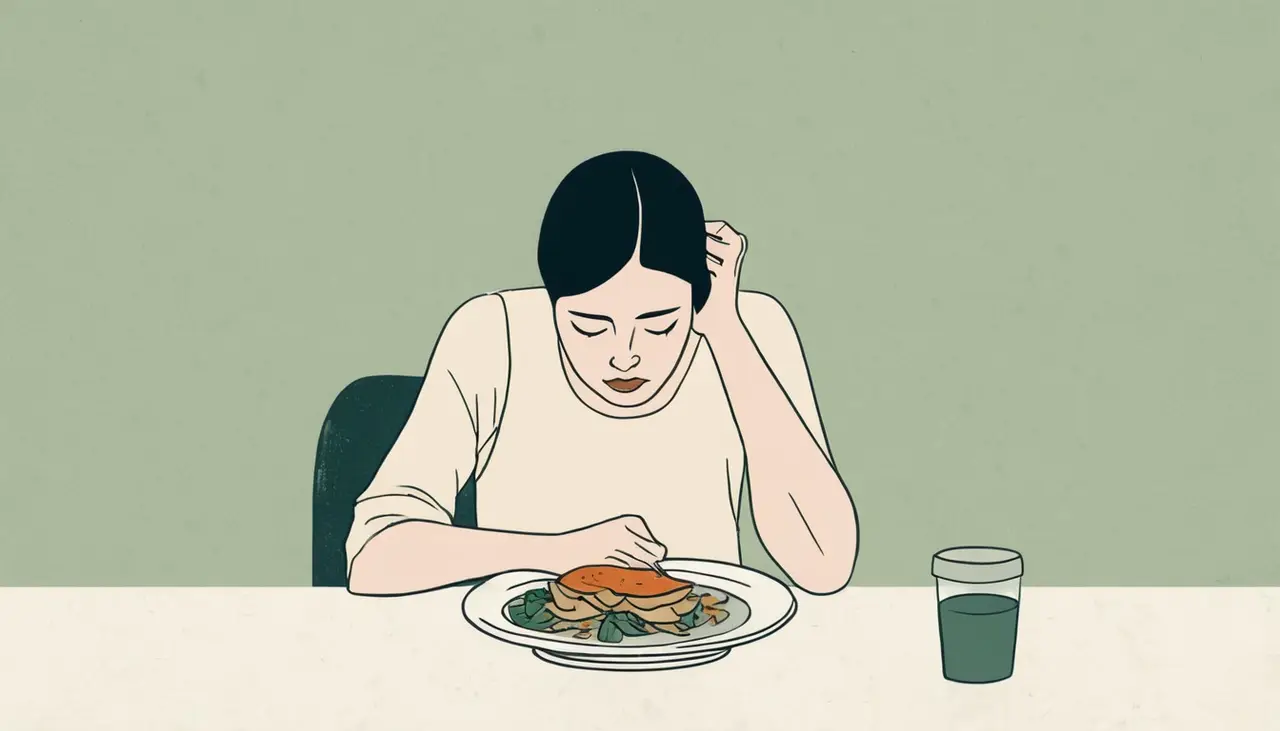
Eating does not sober you up fast after alcohol is already affecting you. Food can change how a drinking night feels. It does not erase impairment on demand.
That is the clean answer. A meal may help your stomach feel less empty or make you feel steadier. It should not be used to decide whether you can drive, work, care for someone, or make a high-stakes choice.
Food before drinking is different from food after drinking
Food before or during drinking can change the experience of the night. It may slow the rush of alcohol into the body and make the buzz feel less abrupt. But once alcohol is already affecting you, eating is not a reset button.
The common mistake is treating comfort as clearance. Less nausea does not mean sober. More awake does not mean safe. A full stomach does not prove your attention, reaction time, or judgment have returned.
If you are searching this while drunk, the safest assumption is simple: do not use food as your test.
Food changes absorption, not clearance
Food matters most before alcohol is already in the bloodstream. NIAAA's Core Resource says an empty stomach increases alcohol absorption compared with a full stomach. That is why eating before or during drinking can slow the rush and make the night feel less abrupt — the other direction of the same fact is what happens when you drink on an empty stomach.
That is not the same as sobering up afterward. The same NIAAA resource explains that alcohol is absorbed faster than it is metabolized, and that metabolism proceeds steadily in a given person regardless of coffee or other sober-up attempts. Food can make you pause. It can help you stop drinking more. It cannot clear alcohol on command.
So keep the rule plain. If the next thing is driving, work, childcare, or any task that needs clear judgment, eating is comfort or interruption. It is not clearance.
The amount may be bigger than the label in your head
NIAAA defines a U.S. standard drink as 0.6 fluid ounces, or 14 grams, of pure alcohol. CDC gives the common examples: 12 ounces of 5% beer, 5 ounces of 12% wine, or 1.5 ounces of 80-proof distilled spirits. If the spirits label shows proof rather than a percentage, proof is simply ABV doubled, so 80 proof is the 40% bottle in that example.
That matters because late-night food myths often show up after oversized pours. "I had three drinks" may mean three standard drinks, or it may mean more if the glass was large, the cocktail was strong, or the drink was refilled without much attention.
Food does not change that math after the fact.
Fast sober-up searches are usually safety searches
People rarely ask this question out of curiosity. They ask because the night went sideways. They need to leave. They have work. They are worried someone will notice. They want the feeling to stop.
That urgency is exactly why the answer has to stay blunt. A meal cannot make impairment disappear. NIAAA says no hangover remedies have been scientifically proven effective, and time is required for recovery from alcohol use.
NIAAA also states that during a hangover, attention, decision-making, and muscle coordination can be impaired. That is why a late-night meal or morning snack should not be used as a green light for anything that depends on clear judgment.
The same principle applies before the hangover fully arrives. If alcohol is still affecting you, the answer is not to stack food, coffee, a shower, or willpower and call it solved. The answer is to avoid the task that requires sobriety.
Binge patterns make the myth riskier
NIAAA defines binge drinking as a pattern that typically brings blood alcohol concentration to 0.08% or higher, often 5 or more drinks for males or 4 or more for females in about 2 hours. That definition is a useful warning about speed and amount.
Fast drinking creates the exact conditions where food can feel falsely reassuring. You eat, you feel less hollow, and you decide the problem is under control. But the drinking pattern still happened, and the body still needs time.
This is where the adjacent question belongs: if you often need a food fix after drinking more than planned, the pattern may be worth changing before the next night starts. The late-night meal is not the strongest part of the story. The repeated need for a rescue plan is.
What food can still be
Food can be care. It can be a way to stop drinking more, sit down, slow the night, and make a safer plan. It can help you shift from "keep going" to "I am done."
That is useful. Keep it in its lane.
Try the plainer decision: eat if you want to eat, but do not treat eating as permission to do anything that requires sobriety. Arrange a ride, hand off the task, sleep where you are safe, or wait until you are truly clear.
When this is more than a one-off question
If this search keeps repeating, use it as data. Ask what was happening before the late-night food: drinking too fast, drinking on an empty stomach, trying to keep up, gaming or scrolling for hours, using alcohol to handle anxiety, or ignoring the point where you meant to stop.
If you drink heavily or daily and feel shaky, sweaty, anxious, nauseated, or unwell when alcohol wears off, do not use food as a withdrawal plan. Talk with a licensed clinician before making a major cutback.
The bottom line is still short: food may change how you feel. It does not sober you up fast.
FAQ
Can food make me less drunk?
Food may make you feel less empty or nauseated, especially if you eat before or during drinking. It does not reliably remove impairment once alcohol is already affecting you.
Does greasy food sober you up?
No food type should be treated as a sober-up tool. The main issue is time, safety, and not doing tasks that require sobriety.
Is eating after drinking still a good idea?
It can be a comfort step and a way to stop drinking more. Just do not use it as a clearance test.
This article is general education, not legal, driving, nutrition, or medical advice. If alcohol may still be affecting you, do not use food to justify a safety-sensitive task.
- Mind & mood
Does Alcohol Change Your Personality? What Actually Changes — and What Only Feels Like It Does
Alcohol can make you feel like a different person, but lab evidence suggests observers mainly see a narrower social shift.
- Body & physical health
Why Does Alcohol Make You Feel Warm?
Alcohol makes skin feel warm by moving blood toward the surface, but that can cool your core. Why the cold-weather myth is risky.
- Body & physical health
Does Alcohol Make You Hungry? Why the Drunchies Hit So Hard
Yes — alcohol scrambles hunger signals and lowers the brakes at the same time. Why the drunchies hit, and what actually changes the late-night pattern.
- Hangovers & the day after
Does a Shower Help a Hangover? Hot vs. Cold, Explained
A shower may ease hangover discomfort, but it will not sober you up or reverse alcohol overdose. When hot, cold, or 911 is the safer call.
- Body & physical health
Can Alcohol Cause a Stroke? What the Risk Actually Looks Like
A calm explainer on alcohol as one stroke risk factor, the blood-pressure link, FAST warning signs, and when to call 911.
- Cravings & triggers
Does Exercise Help With Alcohol Cravings? What Movement Can Do
Exercise won't cure an alcohol craving, but it can carry you through the few minutes it's loudest. Why a ten-minute walk beats a workout plan, and when to move.


Be the first to hear when Clero launches.
Join with email only. Clero is still in development, so this is educational content today — not treatment, a prescription request, or medical advice.
First to hear at launchLaunch news only — no spamUnsubscribe anytime