
How to Handle Being an Introvert When You're Not Drinking
If you're an introvert who isn't drinking, don't try to out-talk the party. Shrink it: one corner, one person, one stretch of time, one exit you already know.
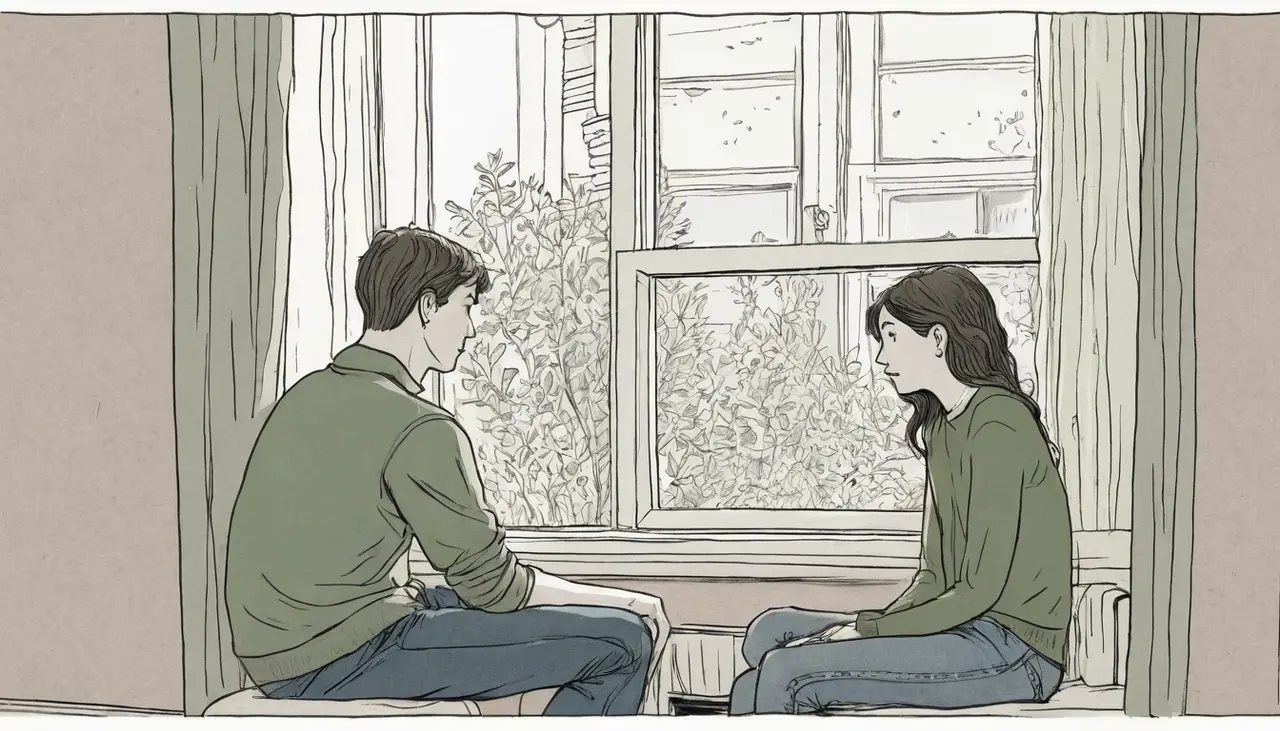
You are three sentences into a conversation and the other person has already glanced over your shoulder to see who else is in the room. The music sits a notch too loud. Everyone around you seems to be running at a speed you can't quite match, and the thing you used to reach for to bridge that distance — the drink that made the first twenty minutes survivable — isn't in your hand tonight. So you stand there, holding a seltzer, quietly doing the math on how soon you can leave.
Here's the part worth saying first: none of that means the night is going badly. It means the room is expensive for you, and alcohol used to pay part of the bill without you noticing. Take away the payment and the cost lands back on your side — the longer pauses, the louder volume, the sense you're a beat behind everyone else. That is not a character flaw, and it is not something you have to out-talk. What you can do is change the size of the room.
Call it the Small-Room Method. You are not trying to become the loudest person at the party, or to love a setting you were never going to love. You are shrinking the event down to a version small enough to hold in one hand — one corner, one person, one stretch of time, one exit you already know the way to. Big rooms swamp quiet people. Small rooms don't. Every move below is a way to make a big room behave like a small one.
Why the drink felt like it was helping
"Social lubricant" is the everyday phrase, and it points at something real. A couple of drinks turn down the volume on self-consciousness — that running commentary about how you're coming across — so a room feels easier to stand in. But the drink doesn't make the room cost less. It moves the cost to a tab you settle later, and it hides how much effort the evening was quietly taking.
There's a second effect underneath the chemistry, and it's oddly encouraging. A lot of what alcohol seems to "do" at a party is expectation. You believe the drink will loosen you up, so you loosen up — some of that lift shows up before the alcohol has done much at all. Which means the loosening was partly yours to begin with. You can reach some of it on purpose, without the glass.
The room, meanwhile, keeps accelerating. On its third round, everyone else is looser, louder, moving faster than you are. NIAAA describes binge drinking as the pattern that pushes blood alcohol to about 0.08% — often five or more drinks for men, or four or more for women, in roughly two hours. If the old version of these nights regularly hit that speed, of course the sober version feels like a different event. It is one. You're the person who stayed at walking pace while the room shifted into a jog.
The Small-Room Method
Four moves. You won't need all four every time — pick the two or three that fit the specific event in front of you.
Draw your walls before you go
A big room has no edges; you can wander it endlessly, which is exactly what wears you down. So draw the edges in advance. Decide your arrival time and, more to the point, your leave time before you're standing in the doorway. Arriving a little late skips the thin, awkward opening stretch. Leaving before the room gets sloppy lets you exit on your own terms instead of white-knuckling it to the last guest.
Do it now: name the hour you'll leave, and tell one person, "I can only stay till nine." Said out loud, a wish becomes a wall.
Anchor to one person
Working the room is a full-contact sport, and you are allowed to sit it out. Find one person you can stand near — someone easy, or someone who also looks like they'd rather talk to one human than perform for twelve. A single good conversation in a corner is a complete, successful night. Circulating is optional. It was always optional.
Do it now: before you arrive, pick the one person most likely to be your anchor. If they don't show, your backup anchor is a task — which is the next move.
Give your hands a job
Standing empty-handed in a loud room, nothing to do and nowhere to aim your attention, is the hardest possible version of this. So take a job. Hold a drink that isn't alcohol, so "what are you having?" answers itself and goes quiet. Better still, take an actual task — refill the ice, carry plates, check on the food, walk the dog someone brought. A job hands you a reason to move, a reason to pause a conversation, and somewhere to put your eyes.
Do it now: within ten minutes of arriving, put something in your hands — a glass, a tray, a chore. Anything but standing there.
Keep an exit you can use without a speech
Big rooms feel like traps because leaving one seems to demand an announcement and a solid excuse. It doesn't. Give yourself a low-detail line you can use without a performance: "I'm pacing tonight," or "I'm good for now," or simply, "Heading out — this was nice." You owe no one a paragraph about your drinking. A short break counts too: five minutes in the kitchen or on the front step is a door you can step through and come back from.
Do it now: choose your one sentence in advance, so you're not writing it under pressure. Keep it under six words.
When a night goes sideways anyway
Some evenings the method won't rescue you. You'll do everything right — arrive late, anchor to one person, keep your hands busy — and still leave feeling stiff and wrong-footed, convinced you were the awkward one in the room. One rough night is not a verdict on whether you can do this. It's one data point, gathered in a loud room, on a random Tuesday.
And here's the honest limit: a few of these settings are simply going to stay draining, method or no method. That's real information, not a failure. Some events you'll want fewer of. Some you'll want shorter. Some you'll keep because the one person there is worth the whole tiring rest of it. Wanting the room smaller is not the same as wanting to vanish from your own life.
One practical thing to keep an eye on: the counting still matters if you do decide to drink. A U.S. standard drink, per the CDC, is 0.6 fluid ounces — 14 grams — of pure alcohol, and a casual party pour is often more than one. The CDC frames moderate drinking as two drinks or less in a day for men, one or less for women. Those are shared measuring sticks, not a personality test you fail by being quiet.
What to carry out the door
Shrink the room. That's the whole thing. One corner, one person, one job for your hands, one clear time you'll leave and one short line for when you go — any two of those turn an event you'd have dreaded into one you can walk through as yourself. You don't have to become someone louder. You have to make the room a size you can hold.
Before the next event, do one small thing right now: pick your leave time and the one person you'll aim for. That's the whole assignment. And if the harder truth is that you lean on alcohol to get through nearly every social setting, or that going without it has started to feel physically rough, that's worth bringing to a clinician — being introverted is not a condition to fix, but heavy or daily drinking is worth a real conversation.
This is general education, not a diagnosis or medical advice. If cutting back ever feels physically unsafe, or if the fear or low mood around these events becomes hard to carry, talk with a licensed clinician; for a free, confidential referral you can call SAMHSA's National Helpline at 1-800-662-HELP (4357), and if you ever feel unsafe with yourself, call or text 988.
- Alcohol Education
How to Handle Summer BBQs and Cookouts When You're Cutting Back
A cookout has no clock, so bring your own: pick your first drink, your spot, your line, and your exit before you go. Decide once, not forty times.
- Alcohol Education
How to Handle a Family Vacation When Everyone Drinks
The Morning-First Plan: decide the morning you want, protect the first group meal, and keep one non-negotiable exit from the nightly drift. No family vote needed.
- Alcohol Education
When a Friend Quietly Stops Drinking Too While You're Cutting Back
You don't have to say anything when a friend quietly stops drinking too — their reason is theirs. What one neutral sentence offers, and how their example helps.
- Alcohol Education
How to Handle New Year's Eve When You're Cutting Back
New Year's Eve is easier to manage when you plan the first glass, the long middle, midnight, and the ride home before the party.
- Alcohol Education
How to Handle Christmas When You're Cutting Back on Drinking
Christmas drinking pressure is season-shaped: map the office party, family visit, gifted bottles, and off nights before December decides.
- Alcohol Education
How to Handle Halloween When You're Cutting Back on Drinking
Halloween gets easier when you decide the cup, the shot answer, and the exit before the night starts moving.


Be the first to hear when Clero launches.
Join with email only. Clero is still in development, so this is educational content today — not treatment, a prescription request, or medical advice.
First to hear at launchLaunch news only — no spamUnsubscribe anytime