
How to Do a Cutback Body Scan When Cravings Show Up
A practical, non-clinical body-scan check for noticing where an alcohol craving is showing up.
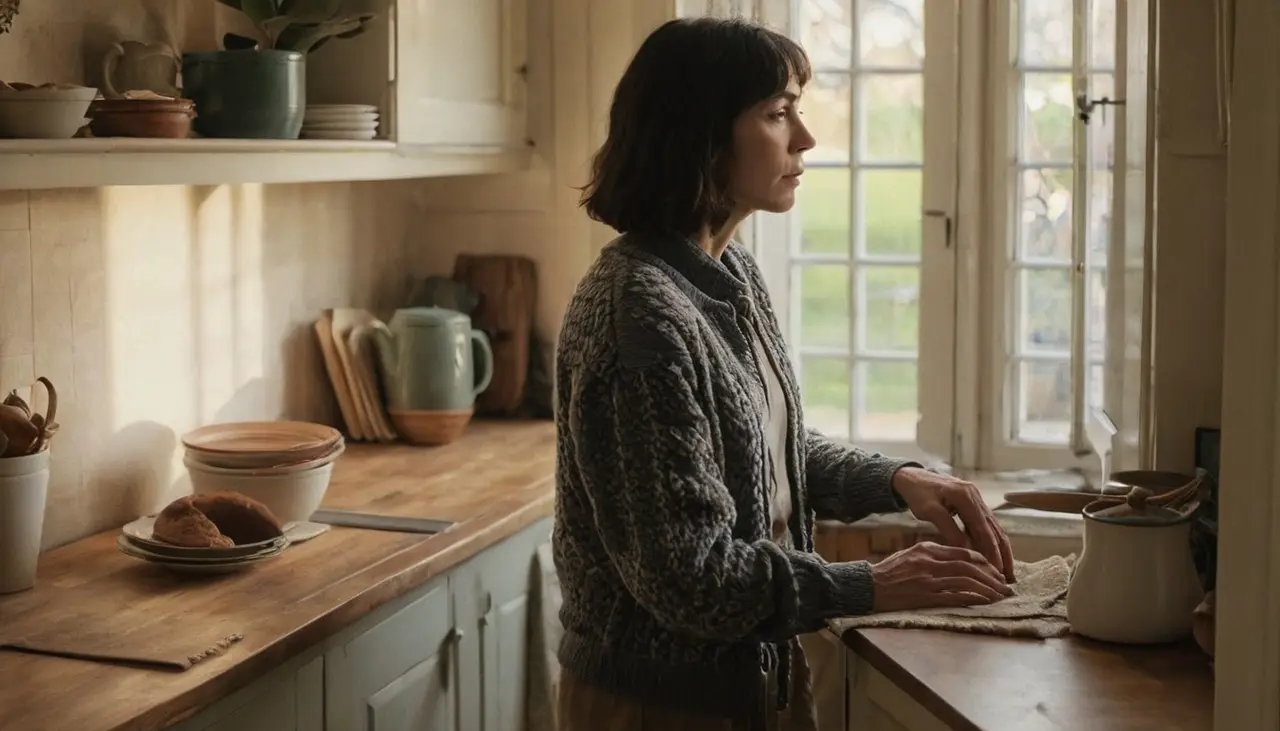
The clock rolls past six and something in your body shifts before a single thought forms. Maybe your hand is already drifting toward the counter. Maybe your chest has gone tight, your stomach feels hollow, or your legs will not sit still. You have not decided anything. But some part of you is already leaning toward the pour.
Here is the useful thing about that moment: a craving almost always shows up somewhere you can point to. It has a location, a temperature, a size. And a feeling you can locate is a feeling you can work with — very different from one that runs the whole show from the shadows.
This is not a willpower test, and you do not have to feel the craving perfectly for any of this to help. Wanting a drink when the evening has meant a drink for years is your brain doing what it was trained to do. What you need is not more grit — it is a quick way to find out what is happening in your body before it makes the decision for you. So this page hands you one: a short, repeatable check called the Five-Stop Scan.
Why the body is worth checking first
A craving feels like a single, solid thing — drink — but underneath that word there is usually a pile of separate signals wearing the same coat.
The thought says one thing. The body might be saying tired, hungry, wound-up, lonely, or just done with the day and needing the evening to turn into something else. Cravings compress all of that into one urgent block. The scan slows the first automatic move long enough to pull the block apart, so you can answer the real signal instead of the one on the label.
None of this comes easily to everyone. NIAAA points to stigma as one of the most consistently reported barriers to getting help — and for many people that shows up as a quiet "reflective tools are not for someone like me." They are. Checking in with your own body is not a personality type. It is a skill, and skills get easier with reps.
The Five-Stop Scan
Think of your body as a short route with five stops. You are not looking for the right answer at each — just anything noticeable, then turning what you find into one small move. The whole thing takes about a minute.
Name the moment
Before you scan anything, say the plain version to yourself: "I am having a craving." That is it. Not "I am failing," not "here we go again" — just the neutral fact.
Naming it does something small and real: it puts a sliver of space between you and the urge, so you are observing the wave instead of standing inside it. Do it now: say the sentence, out loud if you can. "This is a craving. It will pass or it won't, but right now I am just going to look at it."
Walk the five stops
Now move through the route, top to bottom: head, chest or throat, stomach, hands, legs. Give each a second. Is anything tight, hot, buzzing, empty, heavy, restless? If a stop feels like nothing, "nothing obvious" is a real answer — write it down and keep going.
Keep the words plain and drop the story. Not "I'm anxious about the meeting tomorrow," just "chest, tight, warm, about the size of a fist." You are taking inventory, not building a case. Do it now: run the five stops once and land on the loudest. Most cravings have a headquarters — the spot where the signal is strongest.
Read the wave
Once you have found the loudest stop, get curious about it. How big is it — a coin, a fist, your whole chest? What temperature — warm, cool, hot? Is it still, or pulsing, expanding, pulling?
This sounds fussy, but it is the part that changes things. A sensation you are measuring is one you are watching from the outside, and a craving you are watching tends to lose its grip. Do it now: put one number on the urge, zero to ten. Not to get it to zero — just to mark where it is, so you can tell in ten minutes whether it moved.
Match the move to the signal
Here is where the scan earns its keep. The point was never to find the craving — it was to answer the right need. So look at the loudest stop and pick the move that fits.
Stomach hollow and it is late afternoon? Hunger and craving blur at that hour — eat something first and re-check. Legs restless, whole body buzzing? That is a body asking to move: a walk, a shower, ten minutes of anything physical. Hands twitching toward the glass? Give them a different job — a cold seltzer in the usual glass, a task, your phone to text one person. Chest tight and urgent, like the evening cannot start until a drink appears? That is often the day asking for a transition, and a drink is just the transition you already know. Do it now: name the loudest stop and the move it points to, and do that for the next ten minutes.
Re-check the number
After the move, run the number again. Did the ten drop to a seven? A four? Did it not budge?
The target was never a clean zero. It was one point of movement, which tells you the signal was reachable — and which move reached it. Over a week you learn your own map: the 6 p.m. hollow stomach that was really hunger, the Friday chest-tightness that was really the week not letting go. Do it now: jot the before-and-after number down. Three cravings in a row and a pattern usually shows up.
When the scan does not settle it
Some nights you will run all five stops, name the move, do it, and still want the drink as badly as before. The scan did not fail, and neither did you. A craving that does not pass on schedule is information, not a verdict — sometimes the honest read is that the real need is support, not a seltzer.
The scan gathers information and buys a few minutes. It cannot diagnose anything, promise the urge will pass, or substitute for care when the pattern is bigger than one evening. If the drinking regularly crosses into heavy territory, this is not the tool that keeps you safe.
A word on scale, because it matters for knowing where you stand. People reach for shared yardsticks to describe how much they drink. NIAAA counts a U.S. standard drink as 0.6 fluid ounces, or 14 grams, of pure alcohol — though a generous home pour or strong cocktail can quietly be more than one. And NIAAA describes binge drinking as the pattern that brings blood alcohol to about 0.08% — often 5 or more drinks for men, or 4 or more for women, in roughly two hours. Those describe a pattern, not a line where harm politely switches on. Where drinking starts to cost you has no single number: it shifts with how much and how often, and with your own body, history, and health. An honest read of your own pattern is what tells you whether a body scan is the right tool, or whether the safer move is a conversation with someone qualified to look at the whole thing.
When to reach past the scan
Talk with a clinician if cravings feel unmanageable, if you keep drinking more than you meant to, or if you drink heavily most days and want to cut back. About 14.4 million U.S. adults — roughly 5.5% — reported heavy drinking in the past month, per NIAAA's 2024 figures, so if this is you, you are far from alone. If heavy daily drinking is your pattern, do not use a body scan as a substitute for planning any change with a clinician — stopping suddenly can be genuinely dangerous.
That danger is not abstract, so know the line. Full-body agitation can be ordinary restlessness — the kind the scan handles fine. But shaking, tremor, a racing heart, repeated vomiting, confusion, hallucination, or a seizure after cutting back are withdrawal warning signs, not waves to ride out. Treat them as a medical emergency: call 911 or go to an emergency room. If a craving ever tips into feeling unsafe with yourself, call or text 988, the Suicide and Crisis Lifeline. And SAMHSA's National Helpline is a free, confidential, 24/7 line at 1-800-662-HELP for finding help nearby.
What to carry out
Back to that quiet moment after six, before the pour. The craving will still show up tonight. What changes is that you now have somewhere to look: name it, walk the five stops, read the loudest one, match a move, re-check the number. Five small steps, a minute total, none heroic.
So the next time the pull arrives, do not argue with it — locate it. Find the loudest stop and give it the one thing it is actually asking for. Do that three cravings running and the map underneath your evenings starts to show. Once the scan points you toward a move, how to handle alcohol cravings and urges is the fuller toolkit for riding the wave out.
This is a coping check, not a diagnosis or a treatment plan — if drinking has started to feel bigger than a craving you can scan and ride out, take it to a licensed clinician who knows your history.
- Medication & treatment
How to Drink Less Without AA: A Practical Cutback Framework for People Who Aren't Doing a Program
Drinking less without AA works best as four weekly jobs: measure honestly, plan a number, prepare for the hard moment, and check in.
- Cravings & triggers
How to Handle Alcohol Cravings and Urges
A practical toolkit for the moment a craving hits: spot your triggers, set up your environment, and use simple delay, distract, and ride-it-out tactics from NIAAA.
- Medication & treatment
How to Find a Doctor for Alcohol Use Disorder: A Practical, Non-Medication-First Search Guide
Start with FindTreatment.gov, a primary-care visit, alcohol-focused telehealth, or an FQHC. What to ask before the first appointment.
- Cravings & triggers
What Is HALT? The Hungry, Angry, Lonely, Tired Craving Check
HALT stands for Hungry, Angry, Lonely, Tired — a 10-second check that asks what a craving is really about. Fix the real need first, before it becomes a drink.
- Cravings & triggers
How to Plan for a Rough Cutback Night Before It Happens
A practical pre-event planning framework for the nights you already know may test your cutback.
- Cutting back & moderation
How to Do a No-Drink Month at Home
A practical 30-day no-drink month structure you can run at home without an app, a program, or a promised outcome.


Be the first to hear when Clero launches.
Join with email only. Clero is still in development, so this is educational content today — not treatment, a prescription request, or medical advice.
First to hear at launchLaunch news only — no spamUnsubscribe anytime