
Hangover at Work
A blunt, practical answer for handling a hangover at work without cure claims, safety workarounds, legal advice, or employment advice.
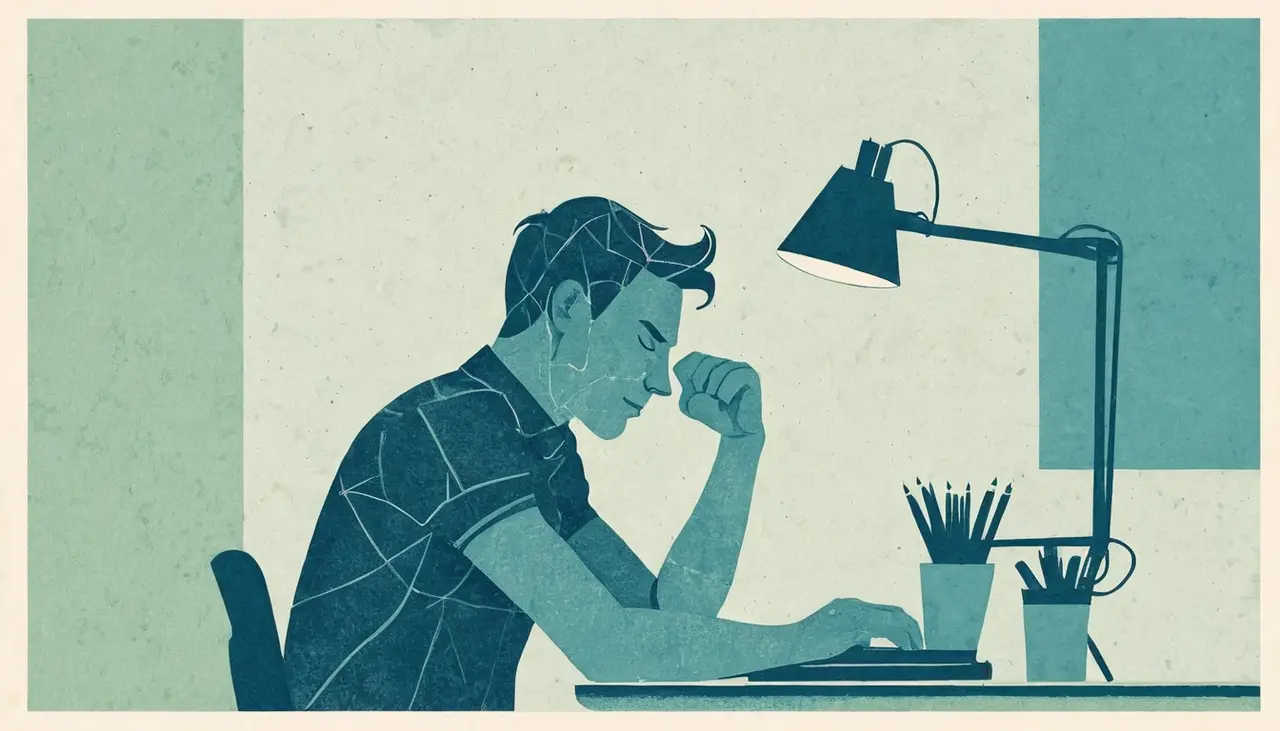
A hangover at work is an impairment problem before it is a productivity problem.
Keep that straight. There is no cure here, no loophole, and no way to make risky work safe while you are still impaired.
The plain facts
A hangover can last longer than the buzz. NIAAA says hangover symptoms peak when blood alcohol concentration returns to about zero and can last 24 hours or longer. That means "I am not drunk anymore" does not always mean "I am working at full speed."
Attention can be worse. Decisions can be worse. Coordination can be worse. NIAAA states that hangovers can impair attention, decision-making, and muscle coordination, which matters for tasks such as machinery, driving, or caring for others.
No supplement changes that fact. NIAAA also says no hangover remedy has been scientifically proven effective and that there is no way to speed the brain's recovery from alcohol use. Time is the unglamorous answer.
That is the deal.
What trips people up
Most people try to solve the optics first. Look normal. Sound normal. Get through the meeting. Hide the nausea. Avoid being found out.
That order is wrong. The first question is whether the work in front of you can harm someone if your attention, judgment, or coordination are off. If yes, do not use this page as a workaround. Follow the safety rules that apply to your role and setting.
The second question is whether this is rare or part of a pattern. One bad morning is different from a repeating cycle of drinking, waking up impaired, and trying to pass as fine at work.
What you can do today
Keep it simple. Do not stack a miracle plan on top of a brain that needs time.
Hydrate if you can. Eat if you can. Rest when you can. Avoid pretending your judgment is sharper than it is. Move non-urgent decisions if that is available to you. Do not use more alcohol as a fix. Do not mix guesswork with safety-sensitive tasks.
None of that is a cure. It only holds down the risk of a day that has already happened.
Some symptoms are past the point of riding out. Confusion, fainting, chest pain, trouble breathing, repeated vomiting, or severe dehydration are not ordinary hangover territory. Call 911 or go to the emergency room. A webpage cannot tell you those signs are safe.
What not to do
Do not turn the day into a performance test. Do not prove toughness by taking on the riskiest task. Do not try to fix the morning with more alcohol. Do not make a big life vow while your body is still paying for last night.
Also do not let embarrassment make the safety call worse. If you need to step back from a task because your attention or coordination are off, the reason can stay plain and bounded. You do not need to narrate the night. You do need to avoid putting yourself or other people in a bad position just to protect an image.
The private lesson can wait until later in the day. The safety decision cannot.
If your job has written impairment or safety rules, follow those rules instead of trying to improvise a personal exception while you feel rough.
The rule exists for days like this.
The work pattern matters
The hangover itself will pass. The pattern may not.
If hangovers are starting to affect deadlines, attendance, concentration, caregiving, commuting, or how people see you at work, the alcohol is no longer staying in its own lane. The CDC lists issues at school or work among the social and wellness problems associated with long-term alcohol use. Read that as a category, not a diagnosis: the drinking is showing up where you need reliability. If that is the question you are actually sitting with, the two-week work audit turns it into something you can check instead of guess at.
Write the pattern down in plain terms:
- How often have you worked hungover in the past month?
- Did you drink more than planned the night before?
- Did you know work would be hard and drink anyway?
- Did you hide symptoms, miss work, or make a safety call you regret?
- Did the morning make you promise a change you have promised before?
Do not turn the list into self-punishment. Use it as evidence.
Calling it a one-off
Sometimes it is a one-off. You drank too much, slept badly, and paid for it the next day. That can still be worth taking seriously without turning it into a life sentence.
The problem is the false one-off. The third "one-off" in a month is a pattern. The fifth Monday of bargaining with yourself is a pattern. The private calculation about whether anyone can tell is a pattern.
Name it while it is still small enough to name plainly.
The deal, stated straight
You cannot hack a hangover into full performance. You can reduce immediate risk, get through the day as safely as your situation allows, and look at the drinking pattern before the next workday gets pulled into it.
If this keeps happening, bring it to a clinician or another qualified support. You do not need a dramatic label. You need a more honest read on why the same morning keeps returning.
FAQ
Is it safe to work hungover?
It depends on the work, your symptoms, and the safety stakes. If the task could harm you or someone else when attention or coordination are off, do not treat "hungover but present" as safe.
Is there a proven hangover cure?
No. NIAAA says no hangover remedy has been scientifically proven effective and that the brain's recovery from alcohol cannot be sped up by a remedy.
Does one hangover at work mean I have a drinking problem?
Not automatically. Repeated hangovers that affect work, safety, or reliability are a reason to review the pattern and consider outside help.
The bottom line is simple. A hangover at work is a warning light. Treat it like one.
This article is general education — not medical, legal, or employment advice. It cannot make risky work safe while you are impaired, and it is no substitute for the safety rules of your role or a conversation with a clinician.
- Understanding your drinking
Why Do I Black Out When I Drink?
An answer-first Q&A on why alcohol blackouts happen, why they can happen after different amounts for different people, and when a memory gap is a safety warning.
- Mind & mood
Can Alcohol Cause Panic Attacks? Why They Hit After Drinking
An answer-first explanation of alcohol rebound anxiety, 3 a.m. panic, medical red flags, and how to read the pattern without self-diagnosing.
- Family & relationships
How to Apologize After Drinking Too Much
A practical repair framework for apologizing after overdrinking, with safety exclusions, no coercive scripts, and no promise that an apology fixes harm.
- Hangovers & the day after
How To Sober Up Fast: What Actually Changes the Answer
A blunt, safety-first answer on why there is no reliable fast sobriety hack, what food and showers cannot do, and when the moment needs help.
- Body & physical health
Can You Develop Alcohol Intolerance? Why Drinking Feels Different
Yes, someone who drank comfortably for years can start reacting badly. Intolerance hits during or soon after a drink; a hangover arrives hours later. How to tell.
- Hangovers & the day after
Hangover Headache Won't Go Away: What To Know
A safety-first answer on lingering hangover headache, what NIAAA says about duration, and when not to self-explain symptoms as just a hangover.


Be the first to hear when Clero launches.
Join with email only. Clero is still in development, so this is educational content today — not treatment, a prescription request, or medical advice.
First to hear at launchLaunch news only — no spamUnsubscribe anytime