
Why Do Alcohol Cravings Hit at Night?
A moment-of-need Q&A on nighttime alcohol cravings, common cues, short-term tactics, and when to ask for support.
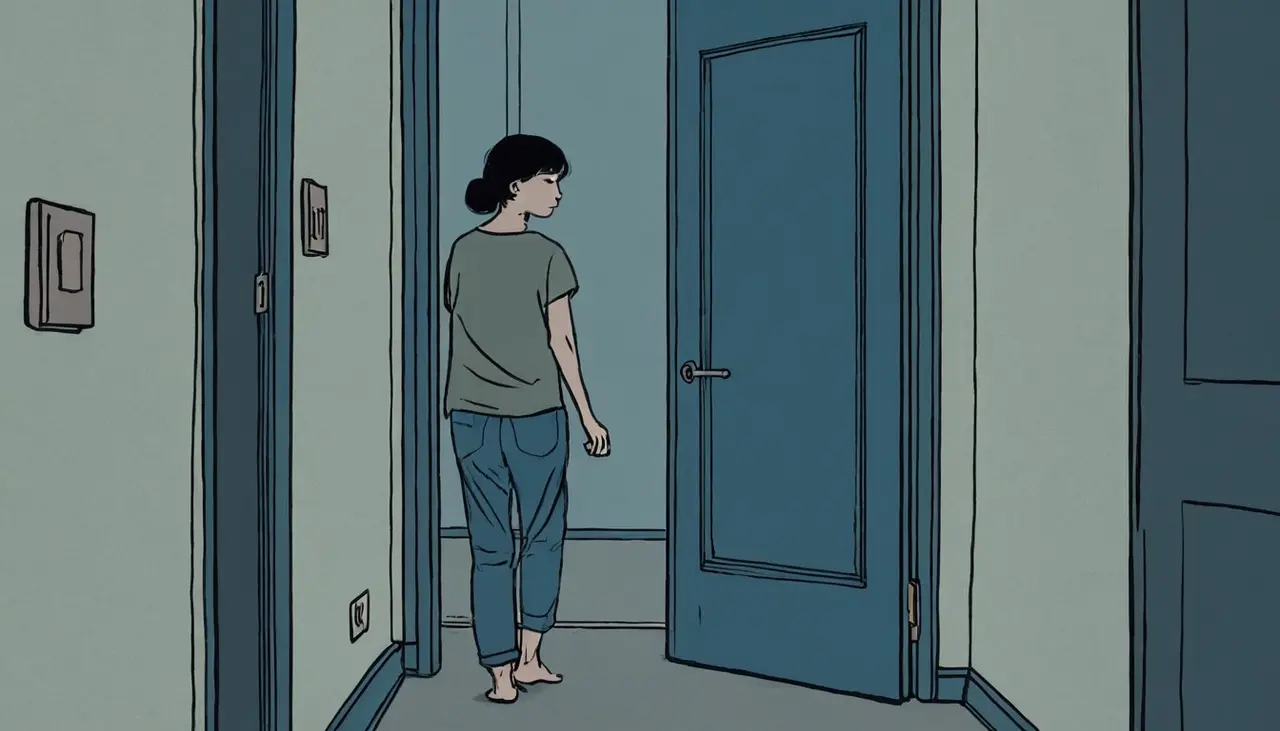
It is 9 p.m. The dishes are done, the house has gone quiet, and something in you leans toward the kitchen before you have decided anything. You know the pour you are reaching for. You know how the glass feels in your hand. And you have not made a single conscious choice yet — the evening just handed you the same cue it hands you every night, and your body started answering.
Here is the useful part: that gap between the cue and the drink is where you actually live. It is small, but it is real, and it is workable.
You are not weak for feeling this at night. Nighttime is when the day stops giving you structure — work ends, dinner is over, the kids are down, and the phone gets louder because there is less to compete with it. A feed-forward look at how alcohol reshapes sleep and the nervous system describes how heavy drinking tangles up rest, so tiredness and restlessness stack on top of the quiet hours. If drinking became part of that nightly transition, the urge shows up on schedule, before thought. That is a pattern, not a character flaw. What follows is one tool for the gap: the Ten-Minute Detour — you do not fight the urge, you reroute around the cue that started it and let the wave pass while you are somewhere else.
How the urge actually moves
A craving feels like a straight line pointing at a drink. It is closer to a wave. It rises, crests, and comes back down, usually faster than it feels like it will in the moment — especially if you stop feeding it by staring at the bottle. Programs that teach people to handle urges without drinking, like SMART Recovery's work on coping with urges and cravings, lean on exactly this: you do not have to win an argument with the urge or outlast it by sheer grit. You have to let it move through while you are pointed at something else.
That is what a detour does. You are not blocking the road. You are taking the next exit and coming back once the wave has passed.
Take the exit
Five steps. None of them is "decide the rest of your life." Each buys you a piece of the ten minutes.
Change the room
Get out of wherever the drink usually happens. The couch, the kitchen, the specific chair — the setting is half the cue. Stand up and physically move to a different room. Do it now: walk to another room and stay there for the length of one song.
Put something in your hands
An empty, restless hand is what the cue is counting on. Fill it. Water, tea, a snack, a cold seltzer, laundry to fold, a book, a game on your phone — the point is occupation, not virtue. Do it now: pour a nonalcoholic drink and hold it the way you would hold the other one.
Name the cue out loud
Say what is actually happening: "This is the 9 p.m. urge," or "This is the after-dinner pull." Naming it turns a vague, total feeling into a specific, passing event — one you have handled before and can handle again. Do it now: say the sentence, out loud, once.
Buy time instead of willpower
You do not have to decide never. You only have to decide not yet. "I can decide after I shower." "I can decide after I text someone back." "I can decide after this episode." Do it now: pick one after-this and start it.
Write the morning line
One sentence, not a lecture: "If I drink tonight, tomorrow morning will probably feel like ___." You are not shaming yourself — you are letting the version of you who wakes up have a small vote before the version of you at 9 p.m. decides for both. Do it now: finish that sentence on paper or in your phone.
Run the detour and you have spent ten minutes doing something other than pouring. Often that is enough for the wave to break on its own.
Set the detour up before dark
The detour is easier to take when the road is already marked. Cravings win less often when the plan was made in daylight, not improvised at 9 p.m. with a tired brain.
Before the evening starts, pick one friction point and set it:
- Move the alcohol out of the easiest-to-reach spot, or out of the house entirely.
- Eat dinner before you are hungry and irritable — both make the pull louder.
- Stage a nonalcoholic drink where the first real drink usually happens.
- Decide, in advance, what the first ten minutes after dinner will be.
- Text one person a low-stakes heads-up: "Trying to get through tonight without drinking. Nothing to fix, just saying it out loud."
If your aim is to drink less rather than stop, make the target something you can actually check. "Less tonight" is a wish. "Nothing before 9," or "two drinks and then I stop," or "write it down before I pour" gives the evening a line you can see.
A quick note on counting, because vague numbers help no one. A U.S. standard drink, per NIAAA, is 0.6 fluid ounces — about 14 grams — of pure alcohol, and a heavy pour, a strong cocktail, or a tall craft beer can quietly be two or three of those. NIAAA also describes binge drinking as the pattern that brings blood alcohol to roughly 0.08 percent, often 5 or more drinks for men or 4 or more for women in about two hours. Those are shared measuring sticks, not a line where harm clicks on. Risk climbs with how much you drink and how long the pattern runs, and where it starts to cost you depends on your own body, your genes, your sleep, and what else you have going on — there is no single amount that is safe for everyone or harmful for everyone. If your nights routinely land in that range, that is worth a real conversation, not a panic.
When the detour does not work
Some nights you will do all five steps and pour anyway. That is not the tool failing and it is not you failing — it is one night, and one night is not a verdict on the next.
What a rough evening gives you is data. The morning after, look back without the flinch:
- When did the urge actually start?
- What was happening right before it?
- Which step did you skip, or where did the detour break down?
- Did the urge shift at all before you drank?
You are not grading yourself. You are learning the exact shape of your cue so the next detour has a better map. A pattern you can name is a pattern you can plan around.
When it is bigger than a craving
The detour is a tool for a manageable urge, not a substitute for care when the ground shifts under you. Reach outward if cravings feel unmanageable most nights, if you keep drinking far past what you meant to, or if the drinking is quietly stacking up consequences you find yourself hiding. You do not have to decide you have "a problem" first — you can talk the nightly pattern through with a licensed clinician while it is still just a pattern.
Two situations call for more than a detour. If you feel physically unwell when you go without a drink — shaking, sweating, a racing heart, nausea, or confusion — do not white-knuckle it. Stopping suddenly after heavy daily drinking can be dangerous, and that is a medical question: call SAMHSA's National Helpline at 1-800-662-HELP (4357), free and confidential, 24/7, to plan a safe next step, and if the symptoms turn severe — a seizure, real confusion, hallucinations — treat it as an emergency and call 911. And if a hard night ever tips into thoughts of hurting yourself, you are not alone with it: call or text 988, the Suicide and Crisis Lifeline, any time.
Tonight, before the usual window arrives, mark one exit in advance — the room you will move to, the drink you will hold, the person you will text. You do not have to out-argue the 9 p.m. urge. You just have to have somewhere else to be for ten minutes.
This is general guidance on nighttime cues and short-term coping, not a diagnosis or a plan for managing physical withdrawal — if going without a drink makes you feel unwell, that belongs with a clinician who knows your history.
- Body & physical health
Does Alcohol Affect Your Thyroid? What the Research Says
How alcohol can affect the thyroid hormone signaling system, why symptoms and lab results need clinical context, and when to ask for testing.
- Hangovers & the day after
Drinking and Constipation the Day After
Alcohol can slow the next-day bathroom pattern for some people; compare the whole night around it, and know when bowel changes need care.
- Body & physical health
Does Alcohol Make You Hungry? Why the Drunchies Hit So Hard
Yes — alcohol scrambles hunger signals and lowers the brakes at the same time. Why the drunchies hit, and what actually changes the late-night pattern.
- Understanding your drinking
What Is a Blackout From Drinking?
A blackout is a memory gap for events during intoxication — not passing out. Why someone can talk, text, and get home with none of the night recorded.
- Mind & mood
Can Alcohol Cause Panic Attacks? Why They Hit After Drinking
An answer-first explanation of alcohol rebound anxiety, 3 a.m. panic, medical red flags, and how to read the pattern without self-diagnosing.
- Medication & treatment
The alcohol medication gap: what 2024 Medicaid prescription data shows
Medicaid filled 3 opioid-addiction prescriptions for every 1 alcohol-addiction prescription in 2024, though alcohol use disorder is nearly 6x as common.


Be the first to hear when Clero launches.
Join with email only. Clero is still in development, so this is educational content today — not treatment, a prescription request, or medical advice.
First to hear at launchLaunch news only — no spamUnsubscribe anytime