
Stopped Drinking and Sleeping a Lot: What It Can Mean
Sleeping a lot after you stop drinking often means your body is collecting the rest alcohol was disrupting. How to tell catch-up sleep from withdrawal.
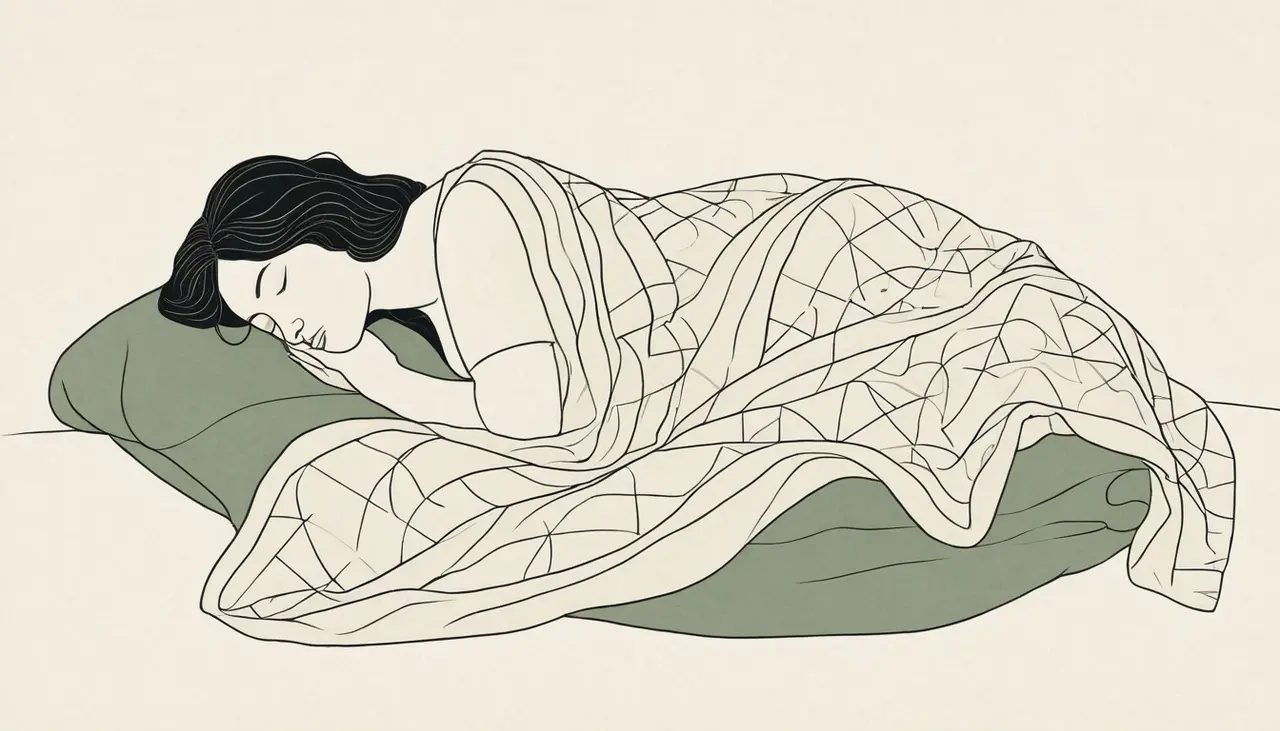
Extra sleep is one of the more common surprises people report in the first days and weeks after they stop or cut back on alcohol. It can feel backwards — you expected more energy, and instead you are sleeping ten hours and still dragging. The useful question is not whether sleeping more is good or bad. It is what the extra sleep is standing in for, because the same long nights can mean your body is finally catching up, or they can sit next to something that needs attention.
What alcohol was doing to your sleep in the first place
Alcohol is a sedative, which is why a drink can make you feel drowsy. But the sedation is front-loaded and misleading. Alcohol taken near bedtime suppresses REM sleep in the first half of the night and is followed by a REM rebound in the second half — the lighter, dream-heavy, easily-broken stretch that leaves you staring at the ceiling at 3 a.m. So even a night that starts with fast, heavy sleep ends fragmented. That same rebound is why dreams can turn strangely vivid when you stop — alcohol and vivid dreams when you cut back covers that side of it.
The deeper problem is that alcohol makes your sleep worse per hour. Reviewers describe how alcohol's sedative effect speeds sleep onset but is offset later by lighter, more fragmented sleep, so overall quality declines even when total sleep time looks unchanged. For months, you may have been logging hours in bed that did very little for you. When the alcohol comes out of the picture, some of that lost recovery gets collected — sometimes all at once, in long, heavy nights.
There is also a rebound piece. Your brain adapts to steady alcohol by turning down its own calming signals and turning up its excitatory ones, so that when alcohol clears, the adaptations are briefly left unopposed, producing a keyed-up, restless nervous system. In the same person, that can swing the other way into exhaustion once the acute edge passes. This is why the first alcohol-light stretch rarely feels like a clean upgrade. It arrives in pieces.
What the evidence says to expect — and where it stops
The honest version is that sleep after cutting back does not follow a tidy schedule. A large review of alcohol use disorder and sleep notes that disturbances like taking longer to fall asleep, waking more during the night, and getting less deep slow-wave sleep often persist well into abstinence rather than resolving in the first 30 days. So a run of unusually long or unusually broken nights early on is common, and it is not a sign the change isn't working.
That same body of evidence stops short of telling you what your pattern means, because too much varies from person to person — how much and how long you drank, your baseline sleep, other health conditions, stress, and mood all pull on it. More sleep is best read as a signal to observe, not proof that everything is fine and not proof that something is wrong.
The comparison people actually want: is this just a hangover, or withdrawal?
Two nearby things get confused with post-cutback sleep, and telling them apart is most of the work.
Hangover fatigue is tied to a specific recent drinking episode. It shows up the next day with the familiar package — dehydration, headache, queasiness, anxiety, and a slow-brain feeling — and it fades over that day. If your tiredness tracks to "I drank, and now I'm wrecked today," that is the hangover lane, and it resolves on its own.
Post-cutback sleepiness behaves differently: it plays out across several alcohol-light days, often mixed — better mornings in some stretches, unexpected naps in others, evenings that are still restless. It is a pattern over a week, not a single next-day slump. One long sleep after a stressful, sober weekend is usually just information. A pattern that keeps interfering with work, driving, or caring for someone else is worth a clinician's read.
Withdrawal is the third possibility, and it is the one that changes the stakes. Ordinary rebound rest looks like sleeping longer, waking a little clearer, and still being able to handle the basics of your day. Withdrawal looks like sweating, shaking, a racing heart, confusion, agitation, or seeing or hearing things that are not there — and in that picture the sleepiness is beside the point. Those are not "sleeping a lot" symptoms. They are reasons to get medical help quickly.
Why the withdrawal question is not paranoia
Roughly 14.4 million U.S. adults reported past-month heavy alcohol use in 2024, according to NIAAA's summary of federal survey data. That number does not predict who will have a rough time stopping. It is here to make one point: heavy daily patterns are common enough that "just quit and see what happens" is not a safe default plan for everyone. After heavy, daily drinking, a sudden stop is the specific situation where withdrawal can turn dangerous, and a clinician can help you plan a safer way to stop.
What to actually do with the extra sleep
Keep it simple and concrete. For a week or two, jot one short daily note: when you went to bed and woke, whether you napped, whether the night was broken, whether you drank or cut back, and how you felt — rested, groggy, low, anxious, shaky. The goal is a clear pattern you can hand to yourself or a clinician, not a case against yourself. "I slept ten hours three days running and still felt wiped" is far more useful than "something feels off."
Resist stacking fixes. If you add supplements, a new wind-down routine, and a strict wake-up alarm all at once, you lose the thread of what your body was actually doing. Change little; watch closely.
And if you don't already have a clinician to talk this through with, that is a normal starting point, not a failure — Clero connects you with a licensed clinician by telehealth to look at your drinking and what a safe next step could be. That is the right kind of help when your prior pattern was heavy or daily and you want a real plan before you change it.
When to move from watching to acting
If a dry stretch or a sharp cutback brings on a seizure, hallucinations, severe confusion, chest pain, or anything that feels medically unsafe, call 911 or go to an emergency room — that is acute withdrawal, and it is a same-day medical situation. If the extra sleep comes with a mood that drops hard or any thought of harming yourself, call or text 988, the Suicide and Crisis Lifeline, now.
More sleep after cutting back is a clue, not a verdict. Read it beside the rest of the week — your mood, your ability to function, and whether things are gradually steadying. If the picture is ordinary and improving, keep observing. If it is severe, worsening, or shadowed by withdrawal symptoms, that is your signal to get real help judging it.
This is general education, not medical advice. If you feel unsafe with yourself, call or text 988; if stopping brings seizures, confusion, or hallucinations, call 911. To find alcohol-treatment options, SAMHSA's free, confidential National Helpline is 1-800-662-HELP.
- Body & physical health
Alcohol and Weight Changes
No page can tell you whether alcohol changed your body, only what to watch. Count standard drinks, note the calories in the glass, and read what moves with them.
- Hangovers & the day after
Can I Drive the Morning After Drinking?
Not necessarily — sleep doesn't clear alcohol from your system, and hangover fog impairs driving too. How to judge the morning, and what to do if you're unsure.
- Cutting back & moderation
How Long Does It Take to Feel Better After Cutting Back on Drinking?
There is no single clock: mental speed tends to pick up within a month, most cognitive function over 6 to 12. Why sleep and anxiety often get worse first.
- Body & physical health
Can You Develop Alcohol Intolerance? Why Drinking Feels Different
Yes, someone who drank comfortably for years can start reacting badly. Intolerance hits during or soon after a drink; a hangover arrives hours later. How to tell.
- Cravings & triggers
Why Do I Crave Alcohol After Exercise?
Exercise and alcohol share the brain's reward wiring, so a workout can prime a craving — and habit wires the two together. How to tell which cue is pulling.
- Quitting & sobriety
Strategies For Successful Sobriety
Sobriety strategies work best when they tell you what to do at the hard hour: name the trigger, shorten support, set a line, route danger.


Be the first to hear when Clero launches.
Join with email only. Clero is still in development, so this is educational content today — not treatment, a prescription request, or medical advice.
First to hear at launchLaunch news only — no spamUnsubscribe anytime