
Stop Drinking Mood Swings: Why Feelings Can Get Louder
Mood swings after you stop drinking are mostly chemistry — a brain rebalancing after alcohol, not a character flaw. What settles on its own, and what needs help.
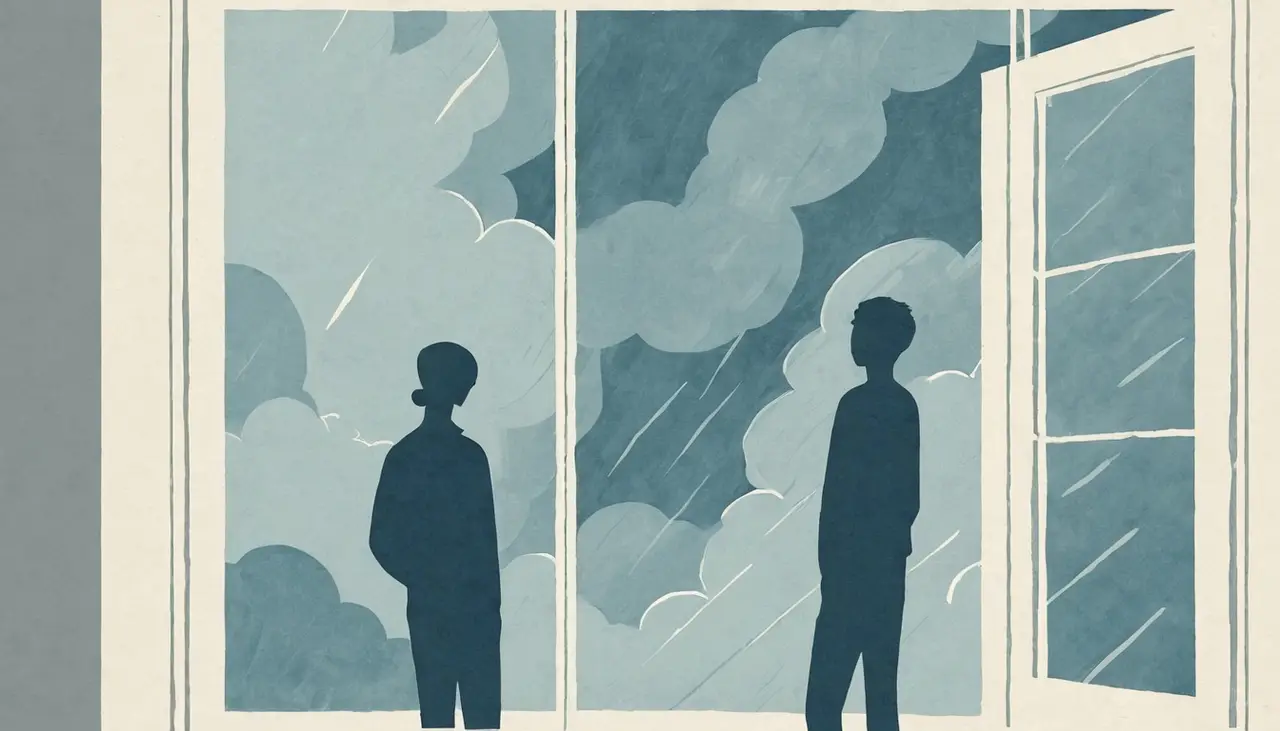
Cut back or stop drinking and the feelings can arrive with the volume turned up: sharper irritability, tears that come from nowhere, a restlessness with no obvious cause. It is a common experience, and the confusing part is usually the same for everyone — the mood swings feel like a personal failing when they are, in large part, chemistry catching up. So it is worth knowing what is actually happening under the surface, and how to tell the ordinary version from the version that needs help.
Why the volume goes up
Your brain runs on a balance between signals that calm things down and signals that rev things up. Alcohol pushes hard on the calming side and quiets the revving side — that is a lot of why a drink can feel like it takes the edge off. Do that regularly for months or years and the brain stops treating it as a one-off. It adapts: it turns down its own calming machinery and turns up the revving side to keep its footing against the alcohol that keeps arriving.
Then the alcohol clears. According to a review of the neurochemistry of alcohol withdrawal, those adaptations are still in place and now have nothing to push against — the calming side is underpowered, the revving side is running hot, and nothing is holding the balance. The nervous system ends up tilted toward overexcitement. You feel that tilt as anxiety, restlessness, trouble sleeping, and a fuse that is shorter than usual. It is not a character flaw. It is a brain rebalancing after being leaned on.
There is a plainer layer on top of the chemistry. Alcohol often becomes the hinge in a day — the switch from work to home, the thing that softens frustration, the signal that the evening has finally started. Remove the hinge and the feelings it used to smooth over show up unbuffered. Both things can be true at once: the brain is re-tuning itself, and the old shortcut for managing emotion is simply not there anymore.
What settles, and when
The reassuring part is that the tilt is temporary for most people — just not overnight, and not on a schedule anyone can promise you. A systematic review of how the brain recovers after people stop drinking found that basic processing speed tends to improve within about a month, most functions recover within six to twelve months of staying off alcohol, and a few take closer to two years. That is a measure of thinking, not mood specifically, but it maps the same terrain: the brain re-settles gradually, in stages, not all at once. Early weeks are often the rawest stretch, which is also when the feeling that "this will always be like this" is least reliable.
One question is worth separating out from the rest: is this a mood swing, or is this depression? A clinical review of co-occurring alcohol use and depression draws a useful line — depressive symptoms driven by drinking often lift as abstinence continues, while a depression that exists independently tends to stay put. That distinction is exactly why a few weeks can be clarifying, and why a low mood that does not budge, or that deepens, deserves a clinician's eye rather than more waiting.
Where the evidence runs out is the individual. How heavily and how long you drank, how you are sleeping, what else is going on with your mental health, other medications, stress you used to blur — all of it shifts the picture. The mechanism explains why mood can get louder. It cannot tell you, from a page, which part of your particular week is chemistry and which part is the rest of your life.
Working with it, not against it
A few concrete things help more than white-knuckling through:
- Describe it plainly before you judge it. "I snapped at 6pm before dinner." "I felt proud in the morning and raw by night." "I go restless the second things get quiet." Sentences like those give you something to work with; labels like "I am unstable" or "I can't handle this" only close the door. Plain descriptions also leave room for more than one cause — sleep, hunger, stress, the drinking change — instead of pinning everything on your character.
- Track it, but keep it simple. Once or twice a day, note your mood in a word or two, how you slept, whether you drank, the strongest trigger, and whether the feeling changed what you did. The point is to catch a pattern early, not to build a case against yourself. If tracking sends you spiraling, stop tracking and reach for support instead — rumination is not the goal.
- Separate the feeling from what you do with it. Being irritable is one thing; driving angry, escalating a fight, or scaring yourself is another, and the second deserves faster help. When a wave hits, one low-drama reset — eat something, leave the room, step outside, put the argument on hold for ten minutes — can keep a single sharp moment from becoming the whole evening. It does not treat the underlying cause. It just buys the brain time to come back down.
When it is more than a rough patch
Most mood swings around a drinking change are uncomfortable but not dangerous. Some signals are different. If you were drinking heavily every day and stopped suddenly, and the mood changes come with shaking, sweating, confusion, fever, or hallucinations, treat that as a medical situation, not a mood to manage. MedlinePlus lists seizures, severe confusion, hallucinations, fever, and irregular heartbeat as reasons for emergency care — call 911 or go to an emergency room. Withdrawal at that level is not something to tough out alone.
If the feelings turn toward hopelessness, self-harm, or not feeling safe with yourself, that is its own emergency. The 988 Suicide and Crisis Lifeline is reachable by call, text, or chat, any hour.
And if the pattern keeps returning after the early weeks, or you want to talk through whether the drinking itself is worth addressing, that is a conversation for a licensed clinician — not a self-test you run again in private. If you do not already have someone to bring it to, Clero can connect you with a licensed clinician by telehealth to review what is going on and whether a medication for alcohol use disorder fits your situation.
The measured version
Feelings getting louder after you stop drinking is, for most people, a brain finding its balance without the substance it had been counting on — real, temporary, and not a sign you are doing it wrong. The useful move is to watch the pattern without moralizing it, protect the people around you from the sharpest moments, and treat the danger signs and the stubborn low moods as separate problems that get outside help sooner rather than later.
FAQ
How long do mood swings last after you stop drinking?
There is no promised timeline, and it varies with how much and how long you drank. The rawest stretch is often the early weeks, and the brain's broader recovery tends to unfold over months rather than days. If the mood changes are severe, keep getting worse, or come with withdrawal symptoms, that is a reason to talk with a clinician rather than wait it out.
Does feeling irritable mean cutting back isn't working?
Not usually. Irritability is more often a sign the routine is changing, sleep is shifting, and the nervous system is rebalancing — not evidence you have failed. It is a signal to notice, not a verdict on your progress.
How do I know if it's mood swings or depression?
The honest answer is that a few weeks off alcohol is one of the clearer tests: low mood tied to drinking often eases as abstinence continues, while a depression that exists on its own tends to persist. If sadness, hopelessness, or loss of interest stays flat or deepens despite the change, that points toward getting it evaluated rather than assuming it will pass on its own.
This is general education, not medical advice. If a stretch without alcohol brings on shaking, confusion, hallucinations, or a seizure, call 911 or go to an emergency room; for thoughts of self-harm, reach the 988 Suicide and Crisis Lifeline any time.
- Hangovers & the day after
Can I Drive the Morning After Drinking?
Not necessarily — sleep doesn't clear alcohol from your system, and hangover fog impairs driving too. How to judge the morning, and what to do if you're unsure.
- Body & physical health
Why Do I Crave Salt After Drinking Alcohol or When Hungover?
Salt cravings after drinking are real: alcohol flushes sodium and fluid, and your brain rewards salt. What helps when you're hungover — and what doesn't.
- Medication & treatment
Scared to Stop Drinking? What to Ask a Doctor
If you are scared to stop drinking, ask a licensed clinician about your current drinking pattern, any symptoms you notice when you drink less, your medical history, and what level of support is appropriate. This page is questionprep only. It does not give detox instructions, taper schedules, or personal risk assessment.
- Helping someone who drinks
When Your Spouse Drinks Too Much
You cannot control a spouse's drinking, but you can name its impact, set boundaries, and get support. Plan a sober conversation and route danger.
- Understanding your drinking
What Is a Blackout From Drinking?
A blackout is a memory gap for events during intoxication — not passing out. Why someone can talk, text, and get home with none of the night recorded.
- Medication & treatment
What medications can you take to stop drinking?
Naltrexone, acamprosate, and disulfiram are FDA-approved for alcohol use disorder; a healthcare provider can weigh other options for your health history and goals.


Be the first to hear when Clero launches.
Join with email only. Clero is still in development, so this is educational content today — not treatment, a prescription request, or medical advice.
First to hear at launchLaunch news only — no spamUnsubscribe anytime