
I Can't Stop Fidgeting. I'm Craving That Burning Feeling So Bad.
A safety-first pain-point FAQ for restless, physical alcohol cravings, with withdrawal and crisis routing but no at-home protocol.
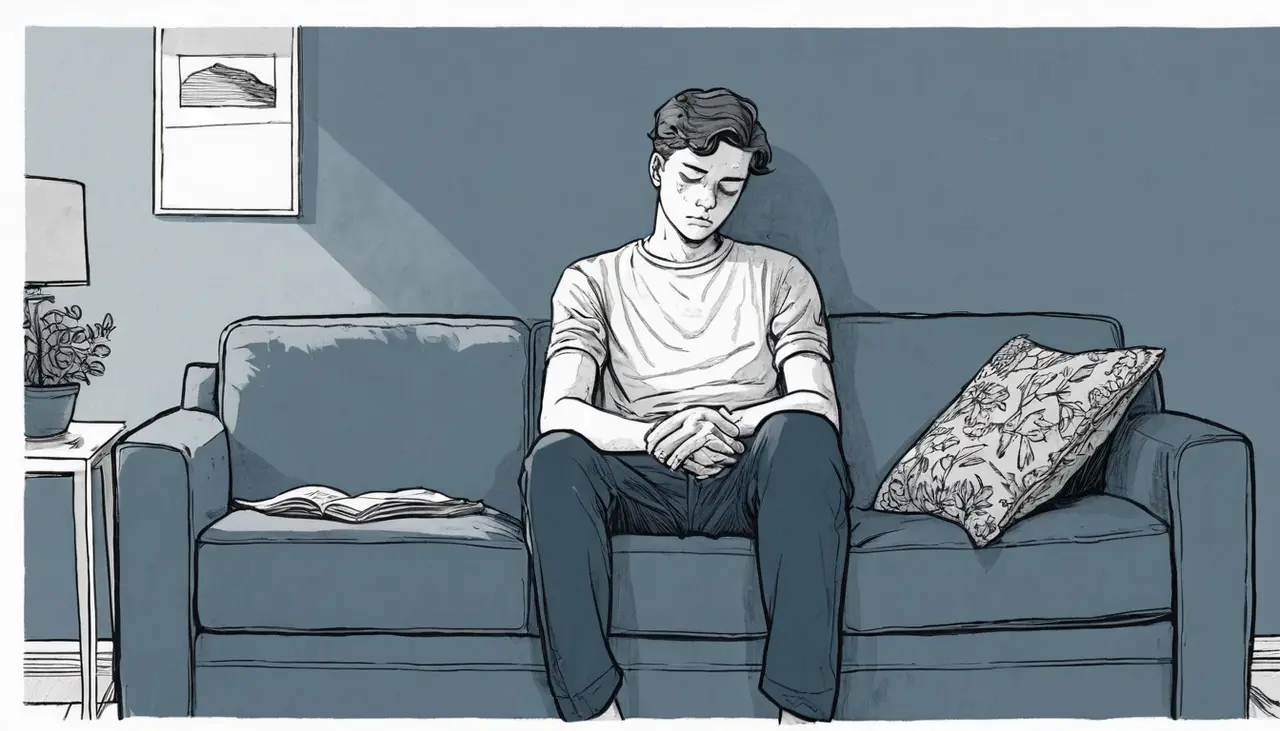
Restless hands, pacing, a hot want that feels like your body is already moving toward a drink before you have decided anything — that is a real form of craving, and you are not imagining it.
You searched something that is hard to put into words. "I can't stop fidgeting" and "that burning feeling" may be the closest language you have for an urge that shows up in the body, not just the head. So let's start there, sort out what is likely a craving from what might be a warning sign, and get you something concrete to do with it.
Why does a craving show up in my body?
Because a craving is not only a thought. It can arrive as restlessness, pacing, tight shoulders, heat in the chest, scanning the room, an itch to do something right now. Cravings tend to rise, crest, and fall — often within minutes — but while one is cresting your body can feel like it is running ahead of you.
Alcohol acts on the brain's balance between its "go" signals and its "calm down" signals. After heavy or regular drinking, that balance shifts, and the restless, keyed-up feeling is part of what the body does while it readjusts. That is the general mechanism. What it does not tell you is which of several possible causes is driving your restlessness today.
Is this a craving, or is it withdrawal?
This is the question worth slowing down on, because craving language can hide something more urgent. You often cannot tell the two apart from the feeling alone — but the timing and the symptoms give you real signal.
MedlinePlus describes alcohol withdrawal as symptoms that can follow when someone who has been drinking heavily and regularly suddenly cuts back or stops. Lean toward the withdrawal reading if your restlessness started after a recent cutback or stop from heavy regular drinking, especially alongside shaking, sweating, nausea, or vomiting.
Some withdrawal signs are not "wait and see" signs. If there are hallucinations (seeing or hearing things that are not there), a seizure, severe confusion, a high fever, or an irregular heartbeat, call 911 or go to the nearest emergency room now. Those can signal a dangerous form of withdrawal, and they are not something to push through with willpower or to sit with alone.
What if it feels more like panic than withdrawal?
Restlessness and a racing, can't-sit-still feeling can also be panic or anxiety, which overlap with craving and can feed each other. A webpage cannot tell you which one you are having.
If the distress tips into feeling unsafe with yourself — thoughts of suicide, a fear you might harm yourself, or emotional pain that feels unmanageable — reach out right now. The 988 Suicide and Crisis Lifeline is free, confidential, and available 24/7 by call, text, or chat. You do not have to be certain it is "bad enough." If you are asking the question, that is reason enough to reach out.
What can I actually do with this right now?
Even without a protocol you can safely follow at home, there are concrete moves that help — mostly about naming the signal precisely so you or someone else can act on it.
- Name it narrowly. "My body feels restless and I am craving alcohol" is clearer and more useful than "I'm losing it." Precise words lower the panic and travel better to anyone you ask for help.
- Check the timing. Did the restlessness begin after cutting down, stopping, or delaying a drink? That single detail is what separates an ordinary craving from a possible withdrawal concern.
- Screen for the danger signs. Any shaking, sweating, hallucinations, confusion, fever, seizure, or heart-rhythm changes? If yes, this is no longer a wait-it-out craving — call 911 or go to the nearest emergency room now.
- Write the words down. Restless. Craving. Last drink. Recent amount. Symptoms. Safe or not safe. When the feeling is loud, reading from a short note is a bridge out of panic — and it is exactly the information a clinician or emergency line needs.
None of that is a diagnosis. It is a way to organize what is happening so the next step is clearer than "I feel weird."
How do I describe this without sounding dramatic?
Lead with timing and safety, in plain words. When a craving feels physical, people often talk around it to avoid seeming overdramatic — and that is the moment to do the opposite.
Say when you last drank. Say whether you stopped suddenly after drinking heavily most days. Say which symptoms are present. And if it is true, say plainly, "I'm scared I might do something unsafe." You do not have to diagnose yourself before you are allowed to ask for help. The goal is not to sound composed; it is to give the person on the other end enough to route you well.
When is this more than a craving?
Treat it as more than a craving when the pattern is heavy, daily, sudden, or severe, or when you feel physically or emotionally unsafe. The CDC's page on alcohol and your health lays out what heavy and binge drinking mean; if your recent pattern fits, the fidgeting question deserves more caution, not less. Restlessness after a sudden stop from heavy regular drinking is a reason to get medical guidance before trying to ride it out alone.
For the acute danger signs — a seizure, severe confusion, hallucinations, an irregular heartbeat — the move is the same as above: 911 or the emergency room, now. For thoughts of harming yourself, it is 988 (call or text). These are not overreactions; they are the resources built for exactly these moments.
If none of that is happening and you simply want to bring the craving pattern to someone — the timing, how much you have been drinking, what your body does — that is a good conversation for a clinician. If you do not already have one, Clero is building a way to connect with a licensed clinician by telehealth to talk through whether a medication for alcohol cravings fits your situation; it is not for anything urgent or unsafe, which is what 911, the ER, and 988 are for.
Asking is not the failing part. Most people who could use this conversation never have it: in 2024, an estimated 27.9 million people ages 12 and older in the U.S. had past-year alcohol use disorder — about 9.7% of that age group, and only about 2.1 million of them, roughly 7.6%, received any alcohol-use treatment. Bringing the question to someone puts you in the smaller, harder-doing group.
FAQ
Why do my hands feel restless when I want a drink?
Because a craving can run through the body, not just the mind — restlessness, pacing, and heat are common ways an urge shows up. It can also overlap with anxiety, sleep loss, medication effects, or early withdrawal, which is why the restlessness alone cannot tell you the cause.
How do I know if it is a craving or withdrawal?
You often cannot know from the feeling by itself. The clues are timing and symptoms: withdrawal is more likely if the restlessness followed a sudden cutback from heavy regular drinking, and shaking, sweating, hallucinations, seizures, confusion, fever, or an irregular heartbeat mean you should get medical help — call 911 or go to the emergency room for the severe signs.
This page is general information, not a diagnosis or a home-treatment plan; for the acute signs above call 911 or go to the ER, for thoughts of harming yourself call or text 988, and for a non-urgent craving pattern bring it to a licensed clinician.
- Hangovers & the day after
Vomiting the Day After Drinking: What To Know
A safety-first guide to day-after vomiting after alcohol, with clear red flags and no home remedy or detox protocol.
- Cutting back & moderation
Can a Heavy Drinker Cut Back?
A safety-first answer on heavy drinking and cutting back, with clinician-first routing and no at-home taper instructions.
- Understanding your drinking
Why Do I Black Out When I Drink?
An answer-first Q&A on why alcohol blackouts happen, why they can happen after different amounts for different people, and when a memory gap is a safety warning.
- Hangovers & the day after
Drinking and Heart Palpitations the Day After
Next-day palpitations can follow drinking, but chest pain, fainting, severe breathlessness, or a new irregular rhythm need urgent care.
- Body & physical health
What Is Alcohol Poisoning? The Signs to Know and When to Call 911
A fast, safety-first guide to alcohol poisoning, the warning signs that matter, and why calling 911 comes before at-home fixes.
- Understanding your drinking
Finding Spanish-Language Alcohol Support for a Loved One
Ask which language your loved one prefers for speaking and reading. Find official Spanish information, then check interpreting and follow-up with each service.


Be the first to hear when Clero launches.
Join with email only. Clero is still in development, so this is educational content today — not treatment, a prescription request, or medical advice.
First to hear at launchLaunch news only — no spamUnsubscribe anytime