
How To Not Drink at a Party
A low-drama party plan for not drinking, built around the first round, the first question, and the first exit point.
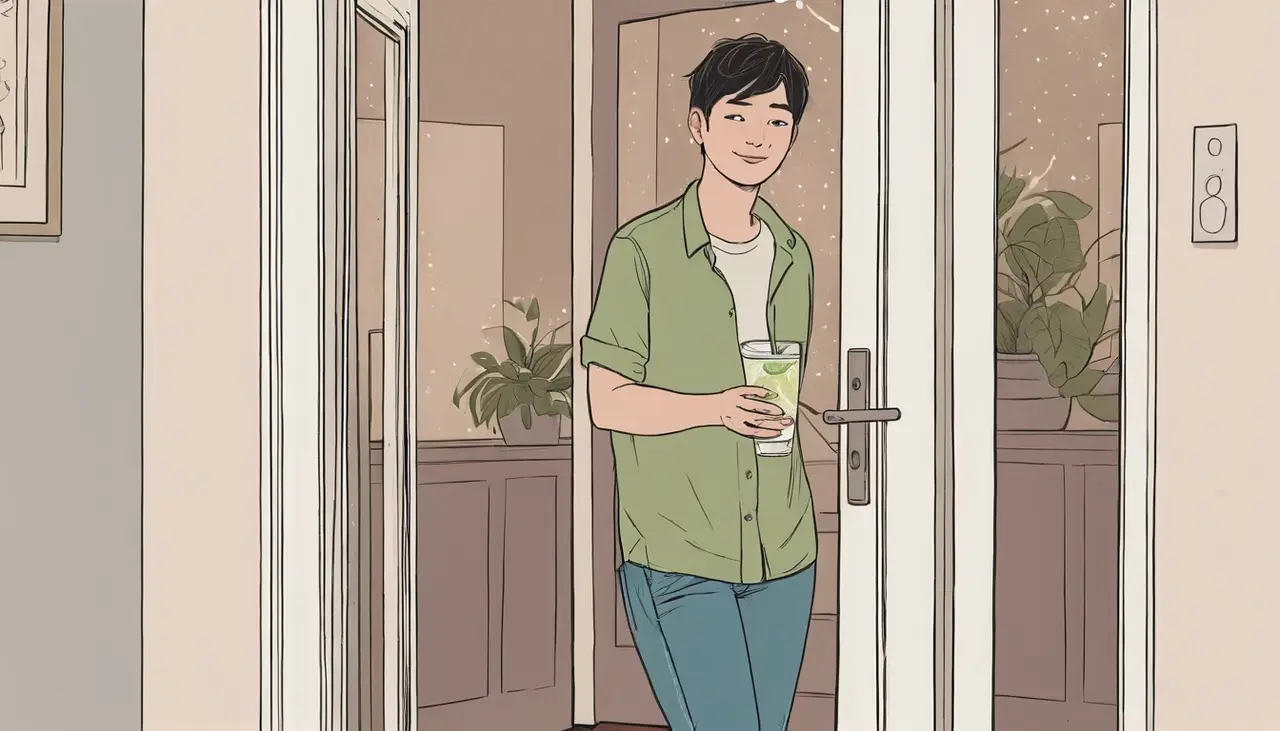
Not drinking at a party usually gets easier when you plan three moments before you arrive: the first round, the first question, and the first exit point.
That is the whole framework. You do not owe a full explanation, and you do not have to turn one party into a public statement about who you are.
The First-First-First plan
The hard part of a party is rarely hour three. It is the first five minutes.
Someone asks what you want. Someone starts pouring. Someone notices your empty hand. Someone says, "Come on, just one." If you decide in that moment, the room gets a vote. If you decide before you arrive, the room has less power.
The First-First-First plan is simple:
- First round: know what you will hold or ask for first.
- First question: know the sentence you will use if someone asks why.
- First exit point: know when you are allowed to leave, even if nothing dramatic happens.
It is not a personality makeover. It is a friction plan.
First round: remove the opening negotiation
The first round sets the script. If you are still deciding when someone offers a drink, you may end up explaining, defending, or accepting something you did not want.
Choose the opening move before you arrive. "I'm starting with water." "I'm good for now." "I'll grab something in a minute." "Nothing for me yet." Short sentences work because they do not invite a debate.
You do not need a special beverage brand or a perfect substitute. You need a first answer that buys you space. If holding a glass helps you avoid repeated offers, use whatever non-alcohol option is available and boring enough not to become a conversation.
If you are tracking amount, use standard language after the fact. NIAAA defines a U.S. standard drink as 0.6 fluid ounces, or 14 grams, of pure alcohol. Party pours can be larger than that, which is one reason "I only had a few" can be hard to interpret later.
First question: answer less than you want to
Most people overprepare the explanation. Then the explanation becomes the event.
Try one of these:
- "I'm not drinking tonight."
- "Taking it easy tonight."
- "Early morning tomorrow."
- "I feel better skipping it tonight."
- "I'm good, thanks."
If someone asks again, repeat the same sentence with less detail, not more. Repetition is not rude. It is clarity.
You also do not have to disclose whether you are cutting back, taking a break, moderating, avoiding a bad pattern, or testing a new routine. Privacy is allowed. A party is not a hearing.
First exit: leave before the room argues for you
Pick an exit point before you need it. That might be a time, a social cue, or an internal cue: after dessert, after the birthday toast, after one hour, when drinking games start, when you start bargaining with yourself, or when you feel irritated by other people drinking.
Leaving early does not mean the night failed. It may mean the plan worked.
The exit point matters because party pressure often rises later. The first hour may be easy; the second may make not drinking feel visible; the third may make "just one" sound reasonable. Decide ahead of time what counts as enough.
What if everyone is drinking?
That is common. NIAAA reports that about 174.4 million U.S. adults, or 66.5%, drank alcohol in the past year in 2024.
Common does not mean required. It does mean the social script around drinking is strong — strong enough that many people end up only ever drinking in social settings — and you may feel it even when no one is being cruel.
If the room is built around rounds, shots, drinking games, or repeated toasts, make the plan more concrete. Stay near someone who knows you are not drinking. Keep your own cup. Step outside before the pressure peaks. Leave when the event turns into a drinking event instead of a party.
What if not drinking makes me notice binge pressure?
Parties can make public-health definitions feel less abstract. NIAAA defines binge drinking as a pattern that typically brings blood alcohol concentration to 0.08% or higher. CDC reports that 17% of U.S. adults binge drink.
Those facts are not there so you can monitor everyone else. They are there because party settings can make faster drinking feel normal. If your reason for not drinking tonight is that one drink often becomes many, that is a real reason.
Where three handles stop being enough
The scope here is one event, held by three handles: first round, first question, first exit. That is the whole job they do, and it is worth being clear about the edges.
They will not make every party easy, and they will not make every friend gracious. Someone may still push, and the room may still feel strange for the first hour. The handles are there to remove the negotiation, not the discomfort. They also do not settle the larger questions: whether you drink at the next event, whether you owe anyone an identity, or whether one night says anything about your character. Those are yours to answer slowly, outside a party.
If those handles are not enough because drinking feels physically hard to stop, because you feel unsafe, or because parties reliably lead to blackouts or loss of control, the issue is bigger than party etiquette.
FAQ
What do I say when someone asks why I am not drinking?
Use a short sentence and repeat it: "I'm not drinking tonight," "Taking it easy," or "I'm good, thanks." You do not owe a full explanation.
Should I avoid parties while cutting back?
Sometimes. If a specific party is built around heavy drinking or you already know you will feel trapped, skipping it can be a practical choice, not a failure.
What if I planned not to drink and drank anyway?
Use the details. What happened at the first round, first question, or exit point? A slip in the plan can show you where the next plan needs more support.
This article is general social planning, not medical advice or a safety plan; if drinking feels hard to control or stopping feels physically unsafe, talk with a licensed clinician.
- Medication & treatment
How to Drink Less Without AA: A Practical Cutback Framework for People Who Aren't Doing a Program
Drinking less without AA works best as four weekly jobs: measure honestly, plan a number, prepare for the hard moment, and check in.
- Social events & holidays
How to Handle a Baseball Game or Stadium Event While Cutting Back
At a ballgame, set your number before the first pitch and count the 24-ounce souvenir cup as two drinks, not one. A plan that runs on the game's own rhythm.
- Social events & holidays
How to Handle Labor Day Weekend When You're Cutting Back
Cutting back on Labor Day starts with a plan for each gathering. Set an arrival and exit time, count actual pours, and have a reply ready for refills.
- Understanding your drinking
Found Hidden Bottles of Alcohol? What to Do Next
Hidden alcohol proves there is secrecy, not why it happened. Wait for a sober moment, name what you found, ask one direct question, and keep safety first.
- Social events & holidays
How to Handle Summer BBQs and Cookouts When You're Cutting Back
A cookout has no clock, so bring your own: pick your first drink, your spot, your line, and your exit before you go. Decide once, not forty times.
- Cravings & triggers
How to Plan for a Rough Cutback Night Before It Happens
A practical pre-event planning framework for the nights you already know may test your cutback.


Be the first to hear when Clero launches.
Join with email only. Clero is still in development, so this is educational content today — not treatment, a prescription request, or medical advice.
First to hear at launchLaunch news only — no spamUnsubscribe anytime