
Why Does Alcohol Give Me Acid Reflux at Night?
Alcohol weakens the valve that holds stomach acid down, and lying flat removes gravity's help — why reflux flares at night. What eases it, and when it needs care.
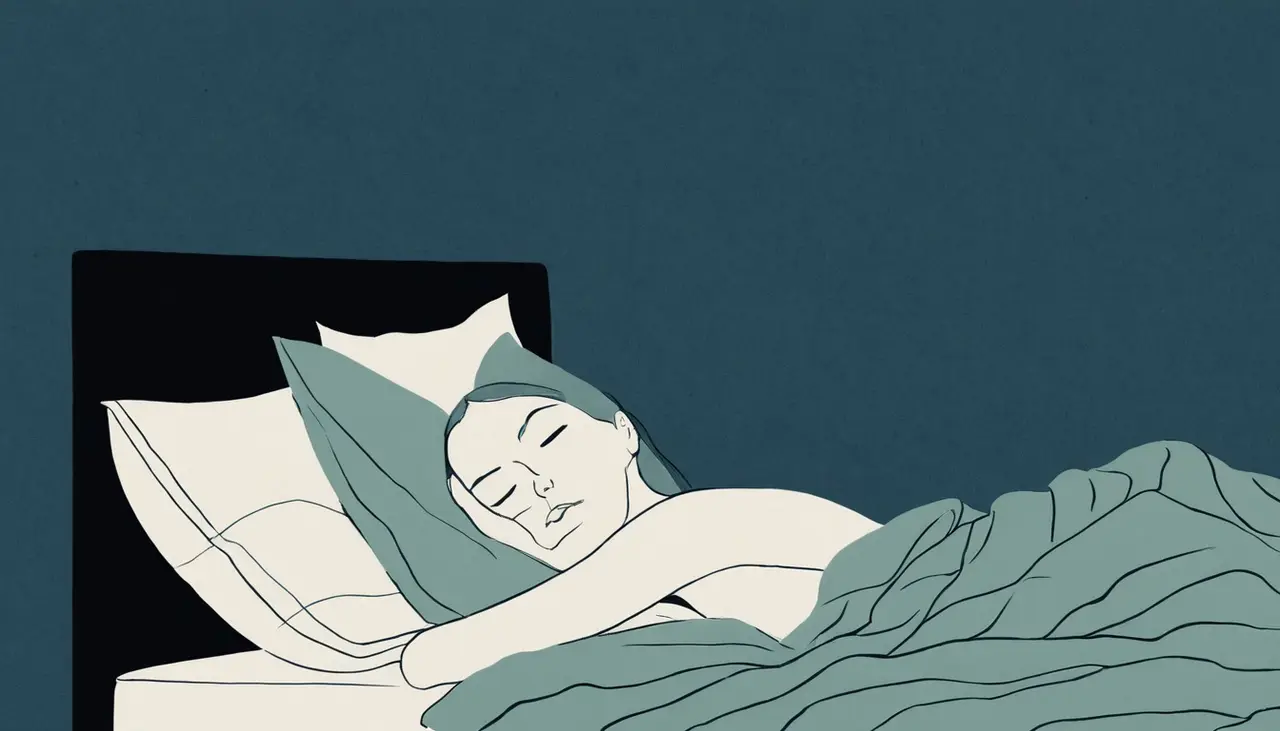
Here is the thing most people notice but rarely connect: the reflux that shows up in bed after a few drinks is not simply last night's dinner repeating on you. Alcohol changes the plumbing between your stomach and your throat, and lying down removes the one thing that was quietly holding that plumbing in check — gravity. Put those two together and you get the burning, the sour taste, the cough or throat-clearing that arrives right as you are trying to fall asleep. So why does drinking so often turn ordinary heartburn into a nighttime event?
The valve, the acid, and the slowdown
At the bottom of your esophagus — the tube running from throat to stomach — there is a ring of muscle that works like a one-way valve. It opens to let food down and then squeezes shut to keep stomach contents where they belong. When it weakens or relaxes at the wrong moment, acid can flow back up into the esophagus, which is the reflux you feel. That is the mechanical heart of it, and it is the same whether or not you have been drinking.
Alcohol pushes on that system from three directions at once. The Cleveland Clinic's overview of reflux notes that alcohol weakens that valve, makes the stomach more acidic, and slows digestion down. A looser valve is easier to breach. More acid means whatever gets past it stings harder. And a slower stomach keeps a full, heavy load sitting there longer, with more time and more pressure to find its way back up. None of these needs the others to cause trouble, but stacked together on a drinking night they line up neatly against you.
Now add the bed. Standing or sitting, gravity keeps stomach contents pooled at the bottom where they belong, so a weak valve has less to fight. Lie flat and that help disappears — the stomach and the esophagus are suddenly on the same level, and acid has a clear path back up. That is why the same sensation you would shrug off at the dinner table can feel sharp and alarming in bed. The reflux did not necessarily get worse; you removed the thing that was compensating for it. And when acid climbs all the way up to the voice box overnight, it is part of why your voice sounds rough the morning after drinking.
Why the night specifically
Sleep adds a second layer that has nothing to do with acid and everything to do with why the whole experience feels bigger after dark.
Alcohol is a poor sleep aid dressed up as a good one. It can knock you out faster, but as the night goes on it fragments sleep and shifts its structure — researchers describe alcohol near bedtime suppressing REM sleep early and then, as it wears off, triggering a rebound of lighter, more broken sleep in the second half of the night. That second half, roughly the small hours, is when you are sleeping lightest and waking most easily. A twinge of reflux that would never surface during deep sleep is exactly the kind of thing that can surface then. So the timing you notice — fine at midnight, awake and burning at 3 a.m. — is not a coincidence. It is the point where fragile sleep and a working reflux mechanism meet.
There is also a plainer reason nights feel worse: you are lying still in the dark with nothing to distract you. A chest or throat sensation that competes with conversation at dinner has your full attention at 2 a.m., and full attention on a chest sensation can spin up its own anxiety, which makes the night feel more urgent than the reflux alone would.
How much, and how close to bed
If you are trying to work out your own pattern, the useful variables are how much and how late — and they matter more than any single number.
Reflux after drinking tends to track with the size of the load and how close to sleep it lands. More alcohol and a bigger, later meal put more pressure on a valve that alcohol has already loosened; finishing earlier and lighter gives the stomach time to empty before you lie down. There is no universal cutoff here — a pour that leaves one person fine sends another straight into a bad night, and the same person's tolerance shifts with what they ate, their weight, whether they already have a reflux condition, pregnancy, other medications, and plain genetic luck. So the honest read is a relationship, not a threshold: risk climbs with the amount and with the lateness, and where your personal line sits is something only your own nights can tell you.
It helps to describe the drinking in a shared unit rather than "a couple." NIAAA defines a U.S. standard drink as 0.6 fluid ounces, or 14 grams, of pure alcohol — roughly a 12-ounce regular beer, a 5-ounce glass of wine, or a 1.5-ounce shot. A generous home pour or a strong mixed drink can quietly be two or three of those. That definition is only a measuring stick for comparing your own nights to each other; it is not a line where reflux switches on or off.
What you can actually try
None of the following is a cure or a treatment plan — they are low-stakes adjustments that make it easier to see whether alcohol is really driving your nights, and to take some pressure off the valve while you find out.
- Put a gap between the last drink and lying down. Reflux is worst when you drink and go straight horizontal. Finishing earlier and staying upright a while lets the stomach empty and the valve settle before gravity stops helping.
- Raise the head of the bed. Propping your upper body up — a wedge, or blocks under the bed's head, rather than just extra pillows that fold your stomach — keeps gravity mildly on your side on the nights it flares.
- Eat earlier and lighter on drinking nights. A big late meal stacked on top of drinks is the classic setup for the lying-down burn. Less volume, finished sooner, means less to push back up.
- Keep some fully alcohol-free nights. Alternating gives you a clean comparison — if the burning follows the drinking and skips the dry nights, you have your answer without guessing.
- Swap in a non-alcoholic drink at the usual point. Reaching for something in the same glass at the same time keeps the ritual without adding another load before bed.
For the nights the urge to pour is the real obstacle, how to handle alcohol cravings and urges is the fuller toolkit.
Where a pattern needs a person, not a page
Habits are worth trying because they are reversible and cost nothing. What they cannot do is diagnose you, and a few symptoms genuinely belong to a clinician rather than a checklist.
Some are urgent right now. New, severe chest pain — especially with shortness of breath, sweating, pain spreading to the jaw or arm, fainting, or sudden weakness — can be a heart emergency, not reflux, and the right move is to call 911 or go to an emergency room rather than wait it out. Reflux and a heart problem can feel maddeningly similar in the moment, which is exactly why severe chest pain is not something to talk yourself out of.
Others are not emergencies but still warrant a real appointment: reflux that is frequent, waking you often, or clearly worsening, and especially trouble swallowing, unexplained weight loss, vomiting blood, or black, tarry stool. Those are signals that go beyond "I overdid it last night," and a clinician — not a cutback article — is who reads them.
If part of what makes this hard is that the reflux is tangled up with drinking you already feel uneasy about, that is worth naming too. Embarrassment is a common reason people put off care, and it is a bad one: the drinking is context a clinician wants, not a verdict they are waiting to deliver. You are also far from alone in sorting through a body signal after drinking — about 174.4 million U.S. adults reported drinking in the past year in 2024, per NIAAA, and a great many of them are quietly wondering the same thing you are.
The one habit worth keeping no matter what: write down the timing, what you drank, what and when you ate, when you lay down, and whether anything on the red-flag list showed up. A pattern that repeats on paper is far easier for you — or a clinician — to read than one you are trying to remember at 3 a.m. For nearby reading, see alcohol and acid reflux or heartburn and waking up at 3am after drinking.
This is general education, not a diagnosis or a treatment plan. If you drink heavily every day, don't stop suddenly on your own — a hard stop can be dangerous — so talk with a clinician first; for confidential 24/7 support, SAMHSA's National Helpline is 1-800-662-HELP (4357), and if you ever feel unsafe with yourself, call or text 988.
- Body & physical health
Alcohol and Acid Reflux or Heartburn
Alcohol triggers acid reflux three ways at once: a looser valve above the stomach, more acid, slower emptying. Why drinking near bedtime is the worst of it.
- Body & physical health
Alcohol and Gut Health
Alcohol hits the gut in specific ways: more stomach acid, a looser valve at the top, a leakier gut wall. Why the morning after is a cluster, not one symptom.
- Body & physical health
Alcohol and Restless Legs: Why Your Legs Won't Settle After Drinking
Why drinking can make your legs feel twitchy or hard to settle at night, how alcohol-fragmented sleep fits in, and when to raise it with a clinician.
- Mind & mood
Alcohol and Brain Fog
Brain fog after drinking is mostly a wrecked night of sleep, not alcohol still in your blood. Why it lingers some mornings, and what else stacks into it.
- Medication & treatment
Caring for a Sibling's Children During Alcohol Rehab
Keep agreed temporary care clear: write down routines, adult contacts, and who answers the children's questions. What to discuss before care changes.
- Hangovers & the day after
Why Am I So Hungry the Day After Drinking?
Ravenous the day after drinking? Alcohol drops blood sugar, disturbs hunger hormones, and cuts deep sleep — a real biological push to eat, not weak willpower.


Be the first to hear when Clero launches.
Join with email only. Clero is still in development, so this is educational content today — not treatment, a prescription request, or medical advice.
First to hear at launchLaunch news only — no spamUnsubscribe anytime