
How to Choose a Naltrexone Provider for Alcohol Use Disorder
No naltrexone provider is best for everyone. Use five quality checks: credentials, full assessment, tailored care, evidence, and follow-up.
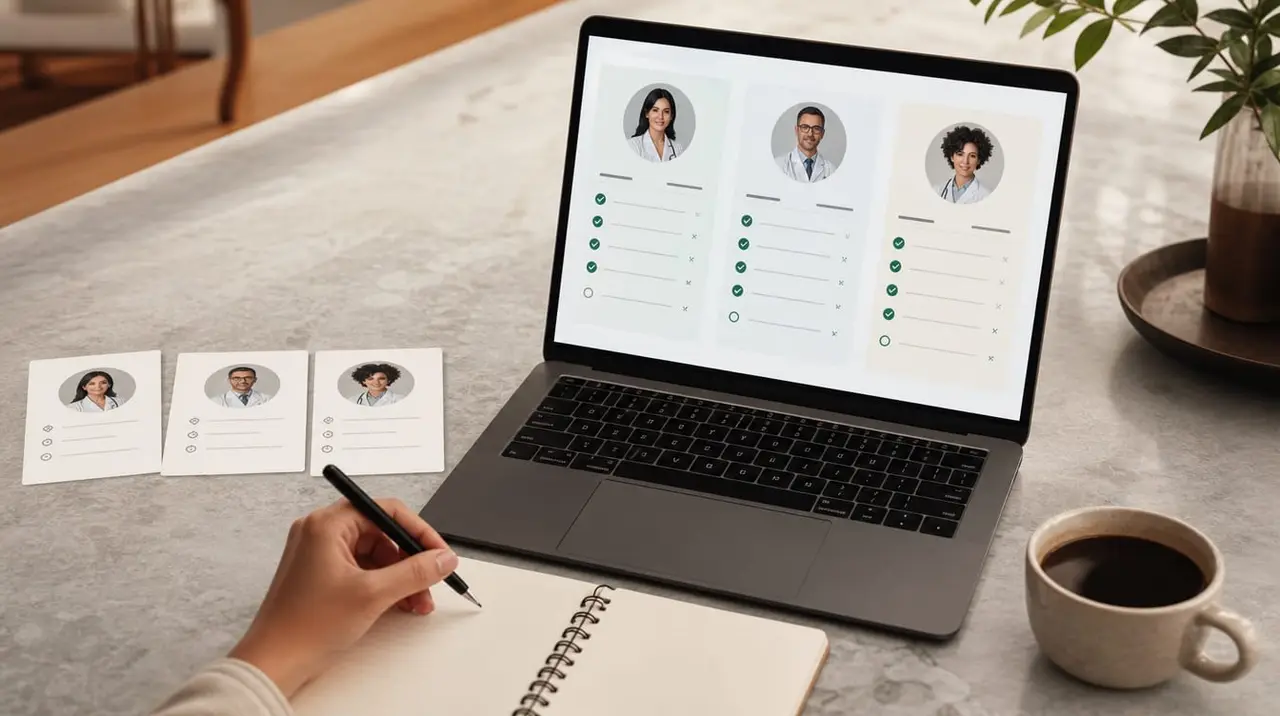
There is no single best naltrexone provider for everyone. A careful telehealth clinician and a careful in-person clinician can both be sound choices; a thin evaluation can happen in either format. The useful comparison is not which setting wins. It is whether the individual provider meets the same quality standard.
Naltrexone is approved by the U.S. Food and Drug Administration for alcohol dependence. Choosing who evaluates you is therefore a healthcare decision, not a ranking exercise. The right provider is one who can review your full picture, explain their reasoning, and stay involved after the first visit.
The short version
- Telehealth and in-person care are both legitimate ways to be evaluated for naltrexone; neither format is better in the abstract.
- The non-negotiable in either format is a licensed clinician who reviews your full health history before deciding whether naltrexone fits.
- NIAAA's five quality signs — credentials, a full assessment, an individualized plan, science-based care, and continuing support — work as the same audit on any candidate.
- What separates providers is how they run: assessment depth, who makes the clinical decision, and what follow-up exists. Speed and format tell you little on their own.
Telehealth and in-person care use the same quality test
Telehealth changes where the conversation happens: by video or phone rather than in the same room. It does not, by itself, tell you whether the assessment will be complete. In-person care likewise does not guarantee a thoughtful plan merely because you are in an office.
The format can still matter to you. You may already have a primary-care clinician who knows your medical history. You may prefer speaking from home. You may need an office that can administer an injectable medication, since MedlinePlus says naltrexone injection is given by a healthcare provider. Those are practical differences, not proof that one whole category provides better care.
The prescriber also does not have to be a rehab clinic or an addiction specialist. Primary-care physicians, family physicians, internists, psychiatrists, and addiction-medicine clinicians may prescribe oral naltrexone after a real clinical review, as may nurse practitioners and physician assistants where their license and scope allow. Primary care is a legitimate place to start: the American Academy of Family Physicians publishes alcohol-use-disorder medication guidance for family physicians. Ask who will make the clinical decision in your case, rather than assuming the name of the clinic settles it.
Side-by-side at a glance
| Factor | Telehealth provider | In-person provider |
|---|---|---|
| How you connect | Phone or video visit, often with messaging between visits | Face-to-face visit in an office |
| Who makes the prescribing decision | A licensed clinician | A licensed clinician, sometimes one you already see |
| Oral naltrexone | Can be prescribed after a clinical review | Can be prescribed after a clinical review |
| Extended-release injectable | Requires an in-person process, since the injection is given by a healthcare provider | Can be administered on site where the practice offers it |
| The five quality checks below | Apply unchanged | Apply unchanged |
The cells that decide quality are not in this table. Assessment depth, clinical decision-making, and follow-up vary provider by provider inside both columns.
Five signs of a sound provider
The National Institute on Alcohol Abuse and Alcoholism (NIAAA) Alcohol Treatment Navigator names five signs of higher-quality alcohol care. They work as an audit for a naltrexone provider in either setting.
1. Appropriate credentials
You should be able to learn who will evaluate you, what license they hold, and whether that license permits them to prescribe in your case. A company name, intake form, or medication menu is not a substitute for a named clinical role.
Ask: Who reviews my history and makes the prescribing decision? What are their credentials?
2. A full assessment
The Navigator's standard is broader than a quick drink count. A full assessment considers medical and mental health, other substance use, daily circumstances, support, and the problems alcohol is causing. For a naltrexone question, the review also needs to cover current medications, liver concerns, withdrawal history, and opioid use. The DailyMed label explains that naltrexone blocks opioid drugs, including many prescription pain medicines, so that history cannot be skipped.
Structured screening is part of what "full" means. The U.S. Preventive Services Task Force gives a Grade B recommendation — its second-strongest endorsement — that clinicians screen adults 18 and older for unhealthy alcohol use with brief, well-tested questionnaires such as the AUDIT-C or the Single Alcohol Screening Question (USPSTF, Unhealthy Alcohol Use screening). A telehealth intake can run that screening as rigorously as a clinic. The question is whether it does.
Ask: What does your assessment cover, which screening questions do you use, and what findings would make naltrexone a poor fit or require another kind of care?
3. A plan built for the individual
NIAAA's framework calls for a plan made with the person receiving care and revised when needs change. That means the answer should not be the same for every intake. A provider should be able to connect the recommendation to your health history and drinking goal without promising a particular result.
Ask: How will my goals and health history shape the plan? When would we revisit it?
4. Science-based care
A provider should explain what evidence and approved uses guide the recommendation. That does not require a lecture or an outcome claim. It does require more than “everyone qualifies” or “this always works.” The DailyMed label says naltrexone should be part of a broader management plan rather than treated as a stand-alone answer.
Ask: Why are you considering this option for me, and what support belongs alongside it?
5. Continuing support and a plan for setbacks
The Navigator includes continuing support and a plan for a return to drinking among its quality signs. Before the first visit ends, you should know how follow-up works, where side-effect questions go, and what happens if the plan is not helping or your situation changes.
Ask: Who do I contact after the visit? What follow-up is planned? What happens if I return to drinking or need a different level of care?
Red flags do not belong to one format
Pause if a telehealth or in-person provider:
- will not identify the clinical role or credentials of the person reviewing you;
- claims that everyone qualifies or that every person will have the same result;
- skips questions about opioids, other medications, liver concerns, or withdrawal history;
- offers no way to ask questions after the first visit;
- cannot explain when it would refer someone for urgent, withdrawal, or more intensive care; or
- uses one fixed plan regardless of the person's goals and broader health.
These signs tell you more than the waiting room, website, or appointment format does.
Build a short list, then ask the same questions
NIAAA's Alcohol Treatment Navigator organizes the search into three moves: search trusted sources, ask recommended questions, and choose by comparing quality. The Substance Abuse and Mental Health Services Administration also provides FindTreatment.gov, a confidential locator for treatment providers.
Once you have two or three candidates, send each the same short note:
I want to ask whether naltrexone may fit my situation. Who would review my case, what does the assessment cover, and what follow-up is available after the first visit?
Specific answers make comparison possible. A generic intake link does not. You are looking for a provider who can describe both what they offer and where their service stops.
The final choice may come down to ordinary fit: which qualified provider can complete the assessment you need, answer your questions clearly, and provide follow-up you can use. Telehealth and in-person care can each do that well or poorly. Neither format is the universal winner; the five quality checks decide whether an individual provider deserves your trust.
If you are still deciding whether naltrexone is the right medication to discuss, the overview of medications used to help people stop drinking explains the broader landscape without choosing for you.
This guide is general education, not medical advice or an endorsement of any provider; discuss medication fit and safe changes to heavy drinking with a licensed clinician.
Want the private naltrexone update?
Join the launch list to hear first. Today, this is still educational content, not a prescription request or clinical intake.
- Understanding your drinking
Binge Drinking vs Alcohol Use Disorder: The Difference Between a Pattern and a Diagnosis
Binge drinking is a single-occasion pattern; alcohol use disorder is a 12-month clinical diagnosis. How they overlap and when to ask.
- Medication & treatment
Antabuse vs Naltrexone: Which Is Right for You?
Antabuse makes drinking physically unpleasant; naltrexone makes it less rewarding — nearly opposite tools. How they differ and how to weigh the fit.
- Medication & treatment
Vivitrol vs. Narcan: Same Family, Opposite Jobs
Vivitrol is long-acting naltrexone for ongoing care; Narcan is naloxone for opioid overdose emergencies. Same family, opposite jobs.
- Tools & resources
The Best Apps to Stop Drinking or Cut Back in 2026
Reframe, Sunnyside, I Am Sober, Clero, Oar Health and more — compared by the job each does: tracking, coaching, community, cravings, or clinical care.
- Medication & treatment
What is the difference between naltrexone and Vivitrol?
Naltrexone and Vivitrol are the same medication delivered differently: a daily pill vs. a monthly injection. The real trade-offs, side by side.
- Tools & resources
The Best Podcasts To Help You Quit or Cut Back on Drinking
The best quitting and alcohol-free podcasts depend on what you need tonight: curiosity, science, real stories, or support beyond listening.


