
Alcohol and Sleep Apnea
Alcohol can worsen sleep apnea by relaxing throat muscles and breaking up sleep. How to read snoring, gasping, and next-day sleepiness.
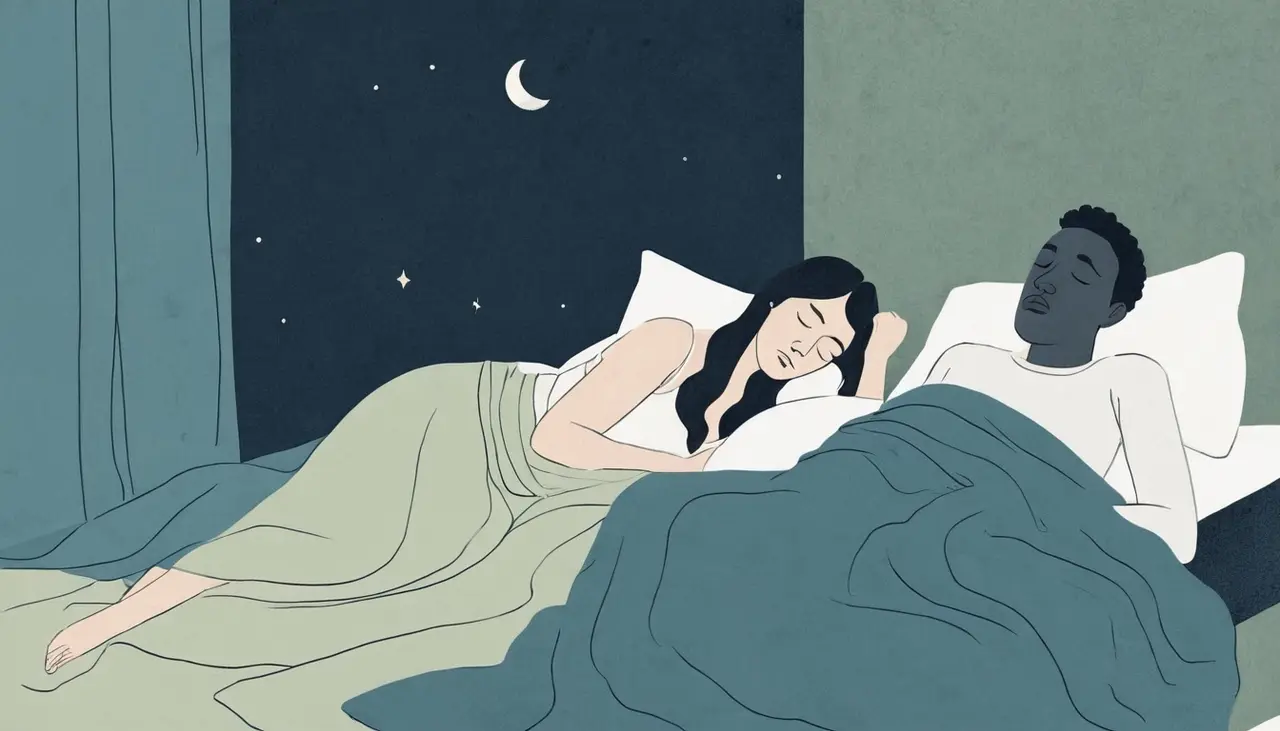
Alcohol can make sleep look easier at bedtime and breathing less stable later. That is the basic tension behind alcohol and sleep apnea: the drink may feel sedating, while the airway and sleep cycle may become less steady.
The useful question is why alcohol can worsen snoring, breathing pauses, and broken sleep in people who are already vulnerable, and which clues are worth bringing to a clinician instead of writing off as a bad night.
The airway problem
Obstructive sleep apnea happens when the upper airway repeatedly narrows or closes during sleep. MedlinePlus describes the basic mechanism this way: during sleep, muscles relax throughout the body, including the muscles that help keep the throat open so air can reach the lungs; in a narrower airway, relaxed tissue can close in and block airflow.
Alcohol can push that system in the wrong direction because it relaxes muscles, including muscles around the throat. Sleep Foundation's alcohol and sleep apnea overview describes alcohol as relaxing upper-airway muscles, which can worsen snoring and obstructive sleep apnea and contribute to oxygen desaturations during sleep. Put more plainly: a throat that is already prone to narrowing may become easier to collapse after alcohol.
MedlinePlus also makes the snoring boundary clear: loud snoring is a telltale symptom of obstructive sleep apnea, but not everyone who snores has it. Alcohol can make the airway less stable, especially near bedtime, and the result may be louder snoring, gasping, more awakenings, or a bed partner noticing breathing changes.
The sleep-quality problem
Alcohol also changes sleep architecture, the pattern of sleep stages across the night. The first part can be misleading. Alcohol may make sleep come faster, which is why people sometimes treat it as a sleep aid.
The trade-off comes later. A review on alcohol and sleep-related problems explains that alcohol's sedating effect can speed sleep onset but is offset later by lighter, more fragmented sleep and increased wakefulness. In other words, falling asleep faster is not the same as sleeping well.
For someone worried about sleep apnea, that matters because fragmented sleep already leaves the body working harder overnight. Alcohol can add another source of disruption, both through the airway and through the sleep cycle itself. Disturbed deep sleep is also where a different kind of night comes from, the kind where someone gets up and walks without waking — does alcohol cause sleepwalking covers that pattern separately.
REM changes add another layer
Rapid eye movement, or REM, is one of the sleep stages alcohol can disturb. A review of disturbed sleep and alcohol use describes alcohol near bedtime as suppressing REM sleep early in the night, followed by REM rebound and sleep fragmentation later.
That rebound can show up as intense dreams, waking more often, or feeling like the second half of the night is restless. It is not proof of sleep apnea by itself. It is one more reason alcohol before bed can make the night less restorative than it felt at the start.
What the evidence can and cannot tell you
The mechanism is clear enough to take seriously: alcohol can relax the airway, worsen snoring and apnea tendencies, fragment sleep, and disturb REM timing. A 21-study systematic review and meta-analysis found alcohol consumption associated with about a 25% higher risk of sleep apnea overall, with a pooled relative risk of 1.25 and a 95% confidence interval of 1.13 to 1.38.
That number is a group-level association, not a personal diagnosis. The evidence cannot tell you from a webpage whether your snoring is benign, whether you have obstructive sleep apnea, or what any device setting should be.
It also cannot turn a public-health pattern into a personal threshold. There is no universal "safe" drink count for a person with possible sleep apnea. Timing, amount, anatomy, medications, sleep position, weight, nasal congestion, and other conditions can all change the picture.
The useful observation is more practical: if snoring, gasping, morning headaches, dry mouth, restless sleep, or daytime sleepiness are worse after drinking, that is information to bring to a clinician. The same pattern is more persuasive when it repeats across several similar nights than when it hangs on one unusually late or stressful evening.
A practical way to read your own pattern
If the pattern is unclear, compare like with like. A late party night after alcohol is not the same as a quiet weeknight without it, so a useful note compares similar bedtimes, similar wake times, and similar stress levels as much as real life allows. Do not try to diagnose yourself from a partner's complaint or a phone recording either; use those as clues, not verdicts.
For two or three weeks, write down only what you can keep up with:
- Whether alcohol was used near bedtime, and roughly how much in standard-drink terms if you know it.
- Whether snoring, gasping, choking, or awakenings were reported.
- Morning headache or dry mouth.
- How sleepy you felt the next day.
- Whether the pattern eases on alcohol-free nights.
The goal is not to prove sleep apnea. It is to replace a vague memory of "I always sleep badly" with something a clinician can actually read. If the worse nights cluster around alcohol, that is a cleaner pattern to bring to care. If they do not, that is useful too. Either way, the record is not a sleep study; it is a clearer conversation starter.
MedlinePlus includes avoiding alcohol before bedtime among lifestyle changes that may be discussed for mild sleep apnea. Treat that as a practical conversation point, not as a cure. If your pattern improves on alcohol-free nights, say so; if it does not, that also helps the clinician look beyond alcohol instead of guessing.
When to get checked
Talk with a clinician if you or a bed partner notice loud snoring with gasping, choking, breathing pauses, severe daytime sleepiness, morning headaches, chest pain, or breathing concerns. Do the same if sleep feels worse after alcohol and you already have a sleep apnea diagnosis or use a device.
Do not change a sleep-apnea device, medication, sedative, or treatment plan based on an article. The job here is to notice the alcohol-sleep pattern and take breathing concerns to someone who can evaluate them.
FAQ
Can alcohol make sleep apnea worse?
It can. Alcohol can relax upper-airway muscles, which may worsen snoring and obstructive sleep apnea in people who are vulnerable.
Does snoring after drinking mean I have sleep apnea?
No. Snoring after drinking is not a diagnosis. It is a pattern worth noting, especially if there is gasping, choking, breathing pauses, or severe daytime sleepiness.
Is there research linking alcohol and sleep apnea risk?
Yes. A 21-study meta-analysis found alcohol consumption associated with about a 25% higher risk of sleep apnea, but that finding is about groups of people. It cannot diagnose one person's snoring or predict what happens on one night.
Why do I fall asleep faster but wake up more?
Alcohol can speed sleep onset early in the night, then contribute to lighter, more fragmented sleep and REM rebound later.
The takeaway is not to panic over a single glass, but to notice the pattern. For an airway that is already vulnerable, alcohol before bed tends to make the night less restful than it feels going in.
This is general education about alcohol and sleep, not a diagnosis, a treatment plan, or a substitute for a clinician who can evaluate your breathing.
- Quitting & sobriety
How do I stop drinking?
Stopping drinking starts with safety, not willpower. If you drink heavily every day or have had withdrawal symptoms, ask a clinician what level of care is safest before you stop suddenly. If you are medically stable, the next step is to choose support that matches your goal, privacy needs, and risk level: therapy, peer support, medication education, primary care, telehealth, outpatient treatment, or a higher level of care.
- Body & physical health
Drinking and Your Cardio Fitness or Workouts
Drinking can make the next day's run feel harder — it slows overnight muscle repair, dehydrates, and breaks up sleep. What your watch is catching, and what helps.
- Body & physical health
Drinking and Your Libido or Sex Drive
Alcohol can dampen sex drive from several directions — lowering testosterone, dulling arousal, flattening next-day desire. How much and how long matter most.
- Tools & resources
How to Track Your Drinking Without an App
You can track your drinking without an app — one ten-second line per day on paper or a phone note. What to log, how to count, and when to read it back.
- Hangovers & the day after
Drinking and Your Memory the Next Day
How alcohol can affect memory formation, why the next day can feel foggy, and when repeated memory gaps should be treated as a safety signal.
- Body & physical health
Alcohol and Testosterone: How Drinking Affects Male Hormones
Yes, alcohol can lower testosterone, especially when drinking is heavier or chronic. How it reaches the brain-and-testes signal loop, and what only a lab can tell.


Be the first to hear when Clero launches.
Join with email only. Clero is still in development, so this is educational content today — not treatment, a prescription request, or medical advice.
First to hear at launchLaunch news only — no spamUnsubscribe anytime