
What are alcohol cravings?
Alcohol cravings are intense urges to drink that are common in alcohol use disorder and rooted in the brain's reward pathways. An educational overview of why cravings happen and the medical, behavioral, and support strategies that can help manage them.
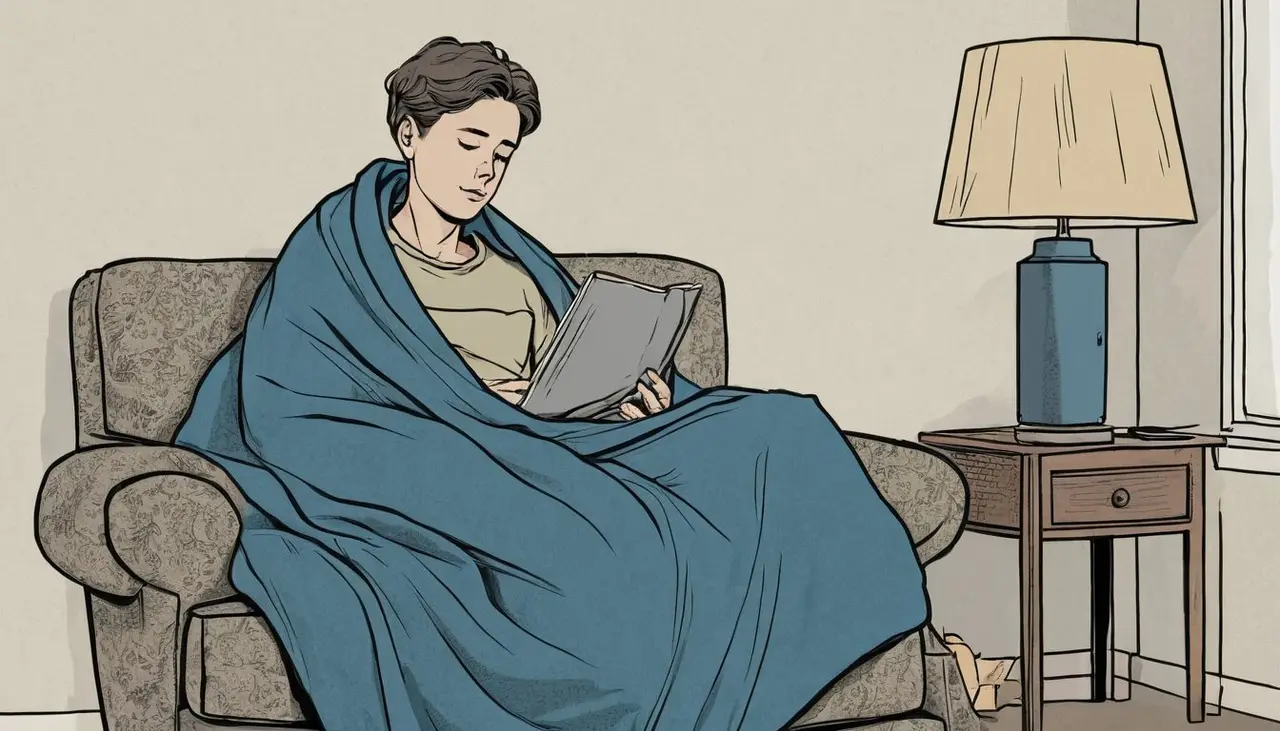
A craving is not the same as wanting a drink because you like the taste or because everyone at the table is ordering one. A craving is the urge that shows up after you have already decided you would rather not — the one that feels automatic, insistent, and oddly hard to argue with. That gap between what you have decided and what your brain keeps asking for is the thing worth explaining. It is not weak character; it is a reward system doing exactly what reward systems are built to do.
What a craving actually is inside the brain
When you drink regularly, alcohol taps into the brain's reward machinery — the same circuits that log anything the brain decides is worth repeating. Two chemicals do most of the talking here: dopamine, which flags something as "do that again," and the body's own opioid-like chemicals, the natural feel-good signals that blunt discomfort and add a little lift. Drink often enough and the brain starts to expect that chemistry on a schedule. When it doesn't arrive, the same circuits push back with a feeling of urgency, restlessness, or low-grade unease. That push is the craving. It is your brain asking for something it has learned to anticipate.
This is why cravings can feel physical and not just psychological, and why willpower alone often loses the argument — you are not negotiating with a preference, you are negotiating with a prediction the brain has already made. People with alcohol use disorder tend to feel this more sharply, because the brain has adapted more heavily to regular drinking. But you do not need to meet the criteria for a diagnosis to get here. Anyone who has been drinking most evenings — or leaning on alcohol to take the edge off stress, anxiety, or a bad night's sleep — can end up with an urge that fires on its own.
What sets a craving off
Cravings rarely come from nowhere. They ride in on cues, and the cues fall into a few recognizable groups:
- Places and things. A bar, an open bottle in the fridge, the walk past a familiar liquor store, a party where everyone else has a glass in hand.
- Feelings. Stress, boredom, loneliness, anger, anxiety. When alcohol has been the go-to response to a hard feeling, the feeling itself becomes the trigger.
- Body states. Being tired, hungry, or already in early withdrawal — the shakiness, irritability, and sweating that follow heavy drinking all turn the volume up on the urge.
- The clock. Drink every evening for a few months and 5 p.m. becomes a cue in its own right. Nothing has to go wrong that day; the time is enough.
Spotting your own cues is genuinely useful, because a cue you can see coming is one you can plan around. But naming a trigger does not dissolve it — awareness gets you to the edge of the urge, not past it. That is where the practical handles below, and sometimes medical support, come in.
What can turn the volume down — and where the evidence stops
There is no single fix that fits everyone, and how intense your cravings are is only part of the picture; your goals, your privacy, and your schedule matter too. A few things are worth knowing about.
On the medical side, some FDA-approved medications work directly on the reward circuitry the craving runs on. Naltrexone is approved for treating alcohol dependence and works by sitting on the opioid receptors — the docking points for those feel-good signals — so a drink lands with less of a lift. The American Academy of Family Physicians describes the same idea plainly: because those receptors seem to carry much of alcohol's pleasant effect, blocking them makes naltrexone a useful add-on to counseling and support, and SAMHSA notes it can reduce both cravings and the amount people drink. Acamprosate is also FDA-approved for alcohol use disorder; topiramate is not, though it is sometimes prescribed off-label. Both work through different routes but aim at the same goal — making the urge easier to sit with. None of these is willpower in a pill, and none works for everyone; whether any of them fits is a decision that needs a clinician who knows your history.
On the behavioral side, the tools are about rewiring the loop rather than the chemistry. Cognitive behavioral therapy and motivational interviewing help you catch the cue-to-drink chain and build a different response. Mutual-support programs are an option too, and they are not all the abstinence-only meetings people picture — SMART Recovery, for instance, is a secular program built around four points, one of which is specifically coping with urges and cravings. Behavioral and medical approaches are often used together, and there is no rule that says you have to pick a lane.
Two honest limits are worth stating plainly. First, the science can describe how these approaches work and roughly what they do, but it cannot tell you in the abstract which one is right for you — that depends on details no article can see. Second, cutting back is a legitimate goal. You do not have to be aiming for lifelong abstinence, and you do not have to hit some imagined bottom, to take cravings seriously or to ask for help with them.
What you can do this week
You do not need an appointment or a program to start. A few concrete handles:
- Log the pattern before you fix it. For one week, jot down when the urge hits, how strong it is, and what came just before — the notes app on your phone is plenty. You are hunting for the cues. If it turns out you always want a drink when you are bored after work, that is not a failing; it is a lever. You can put something in that slot — a walk, a call, a different room — before the craving arrives rather than after.
- Buy time instead of fighting the urge head-on. A craving tends to crest and then ease, often within minutes, if you don't feed it. Delaying on purpose — set a timer, do one small thing — lets the wave pass on its own more often than white-knuckling does.
- Learn the landscape before the conversation. Reading up on naltrexone, acamprosate, and topiramate — what each does, in general terms — means that if you do talk to a clinician, you walk in able to ask sharper questions. The dosing and the "is this right for me" part still belong to that conversation, but the general shape of the options is yours to learn now.
When it is worth bringing in a clinician
If the urges are steady, if drinking is starting to cost you things you care about, or if you have tried to cut back and the craving keeps winning, that is a reasonable point to talk to someone who can look at your whole situation. A clinician can weigh whether medication belongs in the conversation, alongside your goals and history. Clero's role is narrow: move the craving question into a private clinical review instead of leaving it as another search result.
One safety note that sits apart from all of this: if you have been drinking heavily every day, the craving is tangled up with physical dependence, and stopping abruptly can be dangerous. If a stretch without alcohol has ever brought on shaking, sweating, confusion, or a seizure, treat that as a medical emergency — call 911 or go to an emergency room — and plan any real reduction with a clinician rather than going cold turkey on your own.
Cravings are a learned response, which is the frustrating part and also the hopeful one: what the brain learned, it can learn to weight differently, and there are real tools — behavioral, medical, or both — to help it along. You are allowed to start with whichever one is easiest to reach.
This article is general education, not medical advice or a prescription. If cravings feel unmanageable or you are worried about your safety, you can reach the SAMHSA National Helpline at 1-800-662-HELP (4357) any time, or call or text 988 if you feel unsafe with yourself; decisions about medication belong with a licensed clinician who knows your history.
- Understanding your drinking
Wanting a Drink in the Morning: What It Can Mean, Without the Panic
No, a morning craving is not the same as dependence — but relief drinking is medical information. What the timing can mean, and why stopping abruptly can be risky.
- Helping someone who drinks
When a Loved One Is Upset You Are Going to Al-Anon
Al-Anon can be support for you, not an accusation against them. Explain once, keep meeting details private, and do not ask for permission.
- Medication & treatment
What is alcohol use disorder treatment online?
Online alcohol use disorder treatment provides remote access to medical care and behavioral support through telehealth platforms. In 2024, only 7.6% of people with alcohol use disorder received treatment. Private, medication-supported online programs address privacy concerns and access barriers for the 27.9 million Americans affected by alcohol use disorder.
- Quitting & sobriety
How to quit drinking alcohol?
Quitting or reducing alcohol use involves behavioral strategies like tracking your intake and identifying triggers, combined with professional support when needed.
- Mind & mood
Alcohol and Dopamine: How Drinking Trains Your Brain's Reward System
Alcohol trains the brain's dopamine reward system: tolerance shrinks the payoff while the wanting stays. Why cravings outlast the pleasure, and what can shift.
- Medication & treatment
Can I Get Alcohol Treatment Without Alcoholics Anonymous (AA)?
Yes. Alcohol treatment can happen without Alcoholics Anonymous (AA) through medical review, therapy, telehealth care, skills-based support, and structured outpatient programs.


Be the first to hear when Clero launches.
Join with email only. Clero is still in development, so this is educational content today — not treatment, a prescription request, or medical advice.
First to hear at launchLaunch news only — no spamUnsubscribe anytime